Why Your Hands Shake After Coffee — and the Amino Acid That Fixes It

My hands used to give me away. Around 10:15 on a heavy-deadline morning — third cup in — I'd reach for my pen and watch the tip do a tiny tremor over the page. Not dramatic. Just enough that I'd notice, and then feel that fluttery, over-caffeinated hum under my ribs. I love coffee. I've never loved that part.
So when people ask me — and they ask me a lot, because "energy without the jitters" is basically the holy grail of the coffee aisle — I don't hand them a marketing line. I explain what's actually happening in the cup and in their bloodstream. Once you understand the mechanism, the fix stops sounding like magic and starts sounding like chemistry.
First, what a jitter actually is
Caffeine is a methylxanthine. Its whole job is impersonation. When we drink coffee, methylxanthine binds to adenosine receptors, and thereby blocks adenosine from doing the same. Adenosine is your body's "wind-down" signal — it builds up across the day and gently tells you you're tired. Caffeine slides into the parking spot adenosine wanted, so the tired message never gets delivered. This is why caffeine can make us feel more alert no matter the time of day.
That's the good part. The jitters are the same drug turning the dial too far. The jittery effects of caffeine are the result of methylxanthine, and caffeine is the main methylxanthine of coffee, with stimulating effects on our central nervous systems. Block enough adenosine, add a little adrenaline nudge, and your nervous system reads it as low-grade alarm: racing heart, shallow breath, that shaky-hand signature. It isn't "more energy." It's overstimulation wearing energy's clothes.
There are really two levers here. One is how much caffeine hits you at once. The other is what else is in the cup to buffer it. Most people only think about the first one.

The amino acid that takes the edge off
Here's the part I get genuinely nerdy about. There's a compound called L-theanine — an amino acid found naturally in green tea and matcha — and it behaves almost like caffeine's chaperone. On its own it promotes a relaxed-but-alert state. Paired with caffeine, the two seem to cover each other's weaknesses.
This isn't folklore. In a well-known crossover trial by Owen and colleagues, the combination of L-theanine and caffeine was shown to improve cognitive performance and increase subjective alertness. The pairing tends to sharpen focus and task-switching while dulling the twitchy, racing feeling caffeine can bring alone. Green tea drinkers have quietly known the outcome for centuries — theanine is the amino acid in matcha that's how you avoid the jitters.
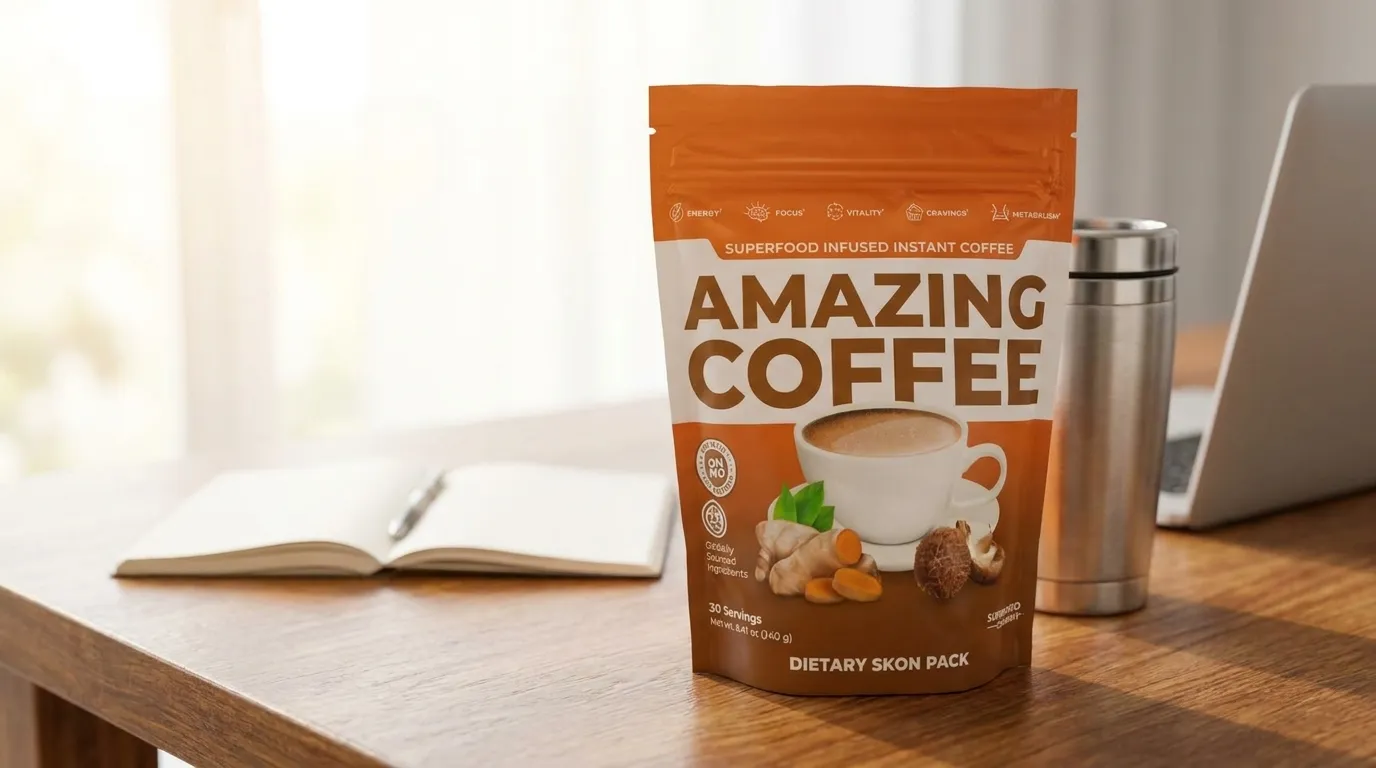
This is exactly why I care that Amazing Coffee is built on more than caffeine. Alongside the coffee itself, the blend leans on Matcha and Green Tea — both natural sources of L-theanine — plus Green Coffee. That combination is the whole point: you're not just dosing a stimulant, you're dosing the stimulant with its buffer already attached.
Why green coffee earns its place
Green coffee is unroasted coffee, and it's rich in chlorogenic acid. The interesting research thread here is metabolic: chlorogenic acid is studied for how it influences glucose handling. That matters for jitters more than people realize, because a big chunk of the classic "coffee crash" is really a blood-sugar story — a spike from what you ate or drank alongside your coffee, followed by a dip that feels like fatigue and shakiness. Smooth the glucose curve and the whole ride gets flatter.
Steadier fuel from an unexpected mushroom
The other quiet workhorse is Cordyceps. This is energy from a different door entirely. Cordyceps contains cordycepin and polysaccharides studied for supporting cellular energy production — specifically ATP synthesis and oxygen utilization — with effects on exercise tolerance seen in trials like Cordyceps sinensis improves exercise performance in healthy older subjects. That's not a caffeine buzz. It's the kind of endurance-style energy that doesn't come with a comedown, layered underneath the coffee lift.
Add in Chaga and Turmeric for antioxidant support — curcumin is a well-documented free-radical scavenger that also upregulates your own antioxidant enzymes — and the cup starts to look less like a stimulant and more like a system.
How I actually use it to stay level
The blend does a lot of the work, but how you drink it matters. My no-jitters routine is boring on purpose:
- Eat something first — even small. A few bites of protein or fat before caffeine blunts the blood-sugar swing. Never caffeine on a truly empty, anxious stomach.
- One rounded teaspoon in 8–10 oz water, hot or over ice. Stir 20 seconds so it fully dissolves.
- Sip it over 15–20 minutes. Slamming a cup delivers all the caffeine in one wave — the exact thing that overshoots the adenosine receptors. Slow the intake, soften the peak.
- Give it a beat before round two. If you want a second cup, wait 60–90 minutes and read your body first.
One customer put the appetite side of this perfectly, and it doubles as jitter advice:
"It really does curb your appetite. You need to allow it to work, after you drink your cup just relax and feel the fullness!!"That "let it work" instinct is right. Calm energy rewards patience.
The feedback I hear most is some version of
"Never a crash feeling like coffee."Another reviewer told us,
"I absolutely LOVE this coffee and can not start my day without it."I read those with a dietitian's skepticism — everyone's caffeine sensitivity is different, and no drink overrides poor sleep — but the pattern (lift without the shakes, no hard landing) lines up with exactly what the L-theanine and slow-sip science would predict.
The honest caveats
Caffeine is still caffeine. If you're pregnant, on medications that interact with stimulants, or managing an anxiety or heart condition, talk to your own clinician before changing your routine — and don't self-substitute a coffee for a prescription, no matter how good it makes you feel. Sensitivity varies wildly; the person next to you might handle four cups while two puts you on the ceiling. Start low.
But the core idea is real and it's chemistry, not hype: the jitters come from unbuffered caffeine hitting fast. Pair it with L-theanine, smooth your blood sugar, and sip slowly, and you keep the lift while losing the shake.
These statements have not been evaluated by the Food and Drug Administration. This product is not intended to diagnose, treat, cure, or prevent any disease. The studies referenced above describe research on individual ingredients, not on the finished product, and individual results vary. Always consult a qualified healthcare professional before starting any new supplement, especially if you are pregnant, nursing, taking medication, or managing a health condition.
Priya is a registered dietitian who reviews the science behind every ingredient we use. She spends her days turning clinical research into plain English.
Ready to try it for yourself?
Shop Superfoods Company