Coffee With Mushrooms and Herbs: What's Actually in the Cup (and Why It Behaves Differently)

The first time I switched a client off her usual third afternoon coffee, she texted me at 4 p.m.: "Where's my crash?" She wasn't complaining. She was confused. She'd had her cup, gotten her work done, and somehow skipped the 3 o'clock slump entirely. That's the question I get more than any other now — not "does it work," but "why does it feel different?"
So let me put on my dietitian hat and actually answer it. Because "coffee with mushrooms and herbs" sounds like wellness theater until you look at what's in the cup and what the research says about each piece. I review the science behind every ingredient we use, and I'd rather give you honest caveats than hype.
First, what does "coffee with mushrooms and herbs" actually mean?
It's a real, growing category — not a TikTok invention. Potential health benefits people seek from mushroom coffee include increased energy, mental focus, and stress reduction, and several brands have gained popularity for these claimed benefits. The idea is simple: take coffee, then add functional mushrooms and herbs that have their own bodies of research, so the cup does more than just deliver caffeine.
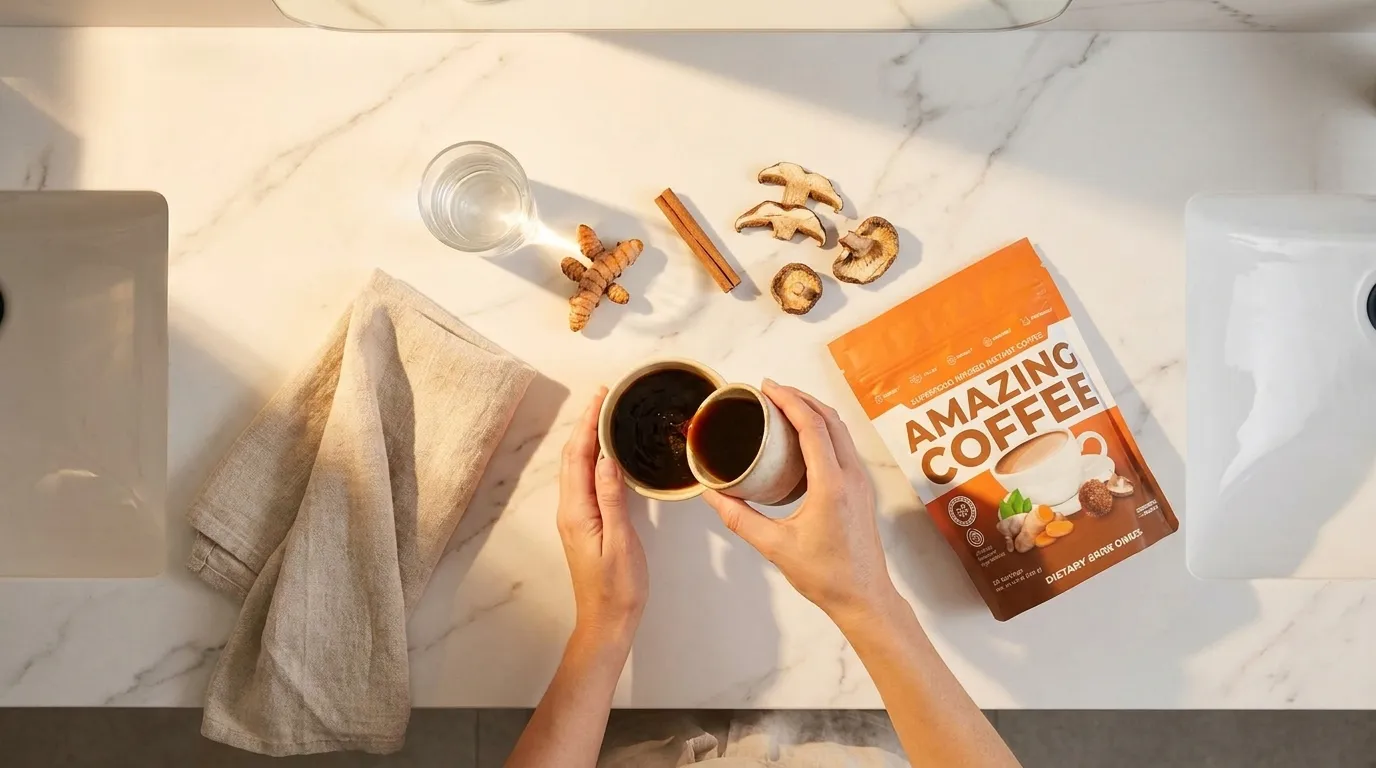
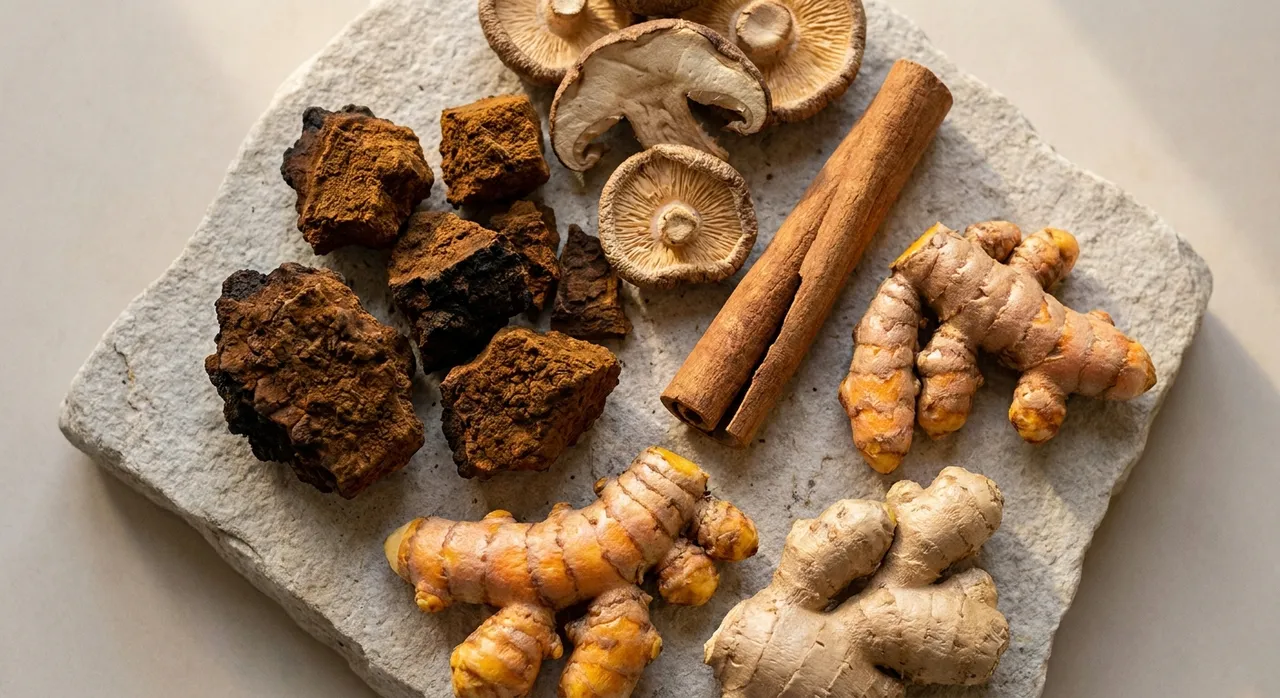
In Amazing Coffee, that blend is specific. The mushrooms are Chaga, Cordyceps, and Shiitake. The herbs and plant extracts are Turmeric, Maca Root, Ginseng, Cinnamon, Ginger Root, Green Tea, Green Coffee, Matcha, and Cocoa — plus caffeine. That's a long list, so I'm not going to pretend every gram is a clinical dose. What I can do is walk you through the ingredients that carry the most evidence.
The mushrooms: what the studies actually looked at
Chaga (Inonotus obliquus)
Chaga is the one people romanticize because it grows on birch trees in cold climates. The research is more grounded than the folklore. Chaga contains beta-glucans and other polysaccharides that can modulate immune cell activity — in lab work they appear to stimulate macrophages and natural killer cells (see Immunomodulating activity of the water extract from medicinal mushroom Inonotus obliquus). It's also genuinely antioxidant-rich, carrying melanin, phenolic compounds, and superoxide dismutase that help neutralize free radicals (Antioxidant properties of water and ethanol extracts of Inonotus obliquus). Smaller studies have even looked at glucose metabolism (Hypoglycemic effects of Inonotus obliquus in normal and alloxan-diabetes mice) — though, fair warning, a lot of that is animal data.
Cordyceps
This is the one I'd point to if you care about the "energy without the spike" feeling. Cordyceps contains cordycepin and polysaccharides that may support ATP synthesis and oxygen utilization — basically helping your cells make and use energy. In a double-blind, placebo-controlled trial (Cordyceps sinensis improves exercise performance in healthy older subjects), it was studied specifically for exercise tolerance. It also shows up in immune research (Immunomodulatory effects of Cordyceps militaris extract). I like that the energy story here is metabolic, not just "more stimulant."
Shiitake
Shiitake is the quiet workhorse. It contains beta-glucans — particularly lentinan — that activate immune cells, and there's a randomized human trial behind that (Consuming Lentinula edodes (Shiitake) Mushrooms Daily Improves Human Immunity). It also contains eritadenine, a compound studied for lowering cholesterol by inhibiting cholesterol synthesis in the liver (Hypocholesterolemic effect of eritadenine from shiitake mushrooms).
Now, the honest part: although studies have shown potential benefits of chaga and it is considered safe, researchers need to perform more research to nail down effects in humans at everyday serving sizes. I tell clients to treat the mushroom evidence as promising and supportive, not as a prescription.
The herbs that earn their place
The mushrooms get the headlines, but a couple of the herbs have some of the strongest data in the whole blend.
- Turmeric (curcumin): Curcumin inhibits inflammatory pathways including NF-κB and COX-2, and in one multicenter study (Efficacy and safety of Curcuma domestica extracts compared with ibuprofen in patients with knee osteoarthritis) it was compared head-to-head with ibuprofen for joint comfort. It also crosses the blood-brain barrier and has been studied for memory in non-demented adults (Memory and Brain Amyloid and Tau Effects of a Bioavailable Form of Curcumin). Pair it with the black-pepper or fat in your cup and you absorb more of it.
- Ginseng & Maca Root: classic adaptogens, traditionally used for stamina and stress resilience — the reason a functional coffee aims for "steady" rather than "wired."
- Ginger & Cinnamon: ginger for digestive comfort, cinnamon for warmth and flavor (and it makes the whole thing taste like a treat instead of medicine).
- Green Tea & Matcha: here's the mechanistic key to "no jitters." Green tea and matcha naturally contain L-theanine, an amino acid that tends to smooth out the sharp edge of caffeine. That pairing is, in my read, the biggest reason this style of coffee feels calmer than a straight espresso.
So why no crash? My working theory
I don't think it's magic. I think it's three things stacking:
- The caffeine is partly buffered by L-theanine from the green tea and matcha, which softens the peak-and-plummet curve.
- Cordyceps supports cellular energy production, so some of the "lift" isn't purely stimulant-driven.
- The herbs add nothing that spikes blood sugar — and several may gently support glucose handling — so you're not riding a sugar wave back down.
Our customers describe this in plainer language than I ever could. "Never a crash feeling like coffee," one wrote. Another told us,
"It really does curb your appetite. You need to allow it to work, after you drink your cup just relax and feel the fullness!!"I love that one because it's basically a usage instruction. The appetite and craving-control feedback comes up constantly — "I'm losed 5 pounds already in 2 weeks!!! You can see results quick!!!" is real, unedited, and yes, I left the typos in.

How I tell people to actually drink it
This isn't a recipe so much as a method, but the proportions matter:
- Start with 8–10 oz of hot water (just off the boil, around 200°F).
- Stir in one serving (about 1 heaping teaspoon) of the blend until fully dissolved — give it a real 20–30 seconds.
- Optional: a splash of milk or creamer and a fat source (the fat helps you absorb the curcumin and the fat-soluble compounds).
- Then the part most people skip: sit with it for 10 minutes before reaching for food. The appetite signal needs a beat to land.
One cup is plenty for most. A few of our regulars are unapologetic about more — "I am totally useless without it!!!!! I have 3 or 4 every morning!!" — but if you're caffeine-sensitive, start with one and see how the afternoon goes.
Who should be cautious
I'd be a bad dietitian if I skipped this. If you're pregnant or breastfeeding, on blood thinners or blood-sugar medication, or you have a known mushroom allergy, talk to your doctor before adding functional mushrooms and herbs — turmeric and cordyceps in particular can interact with certain medications. And it still contains caffeine, so it counts toward your daily total.
Is it for everyone? No. But for people who want their coffee to feel a little more like a tool and a little less like a gamble, the ingredient logic here is sound — and refreshingly un-hyped once you read the actual studies.
These statements have not been evaluated by the Food and Drug Administration. This product is not intended to diagnose, treat, cure, or prevent any disease. The studies referenced above describe research on individual ingredients, not on the finished Amazing Coffee product, and individual results may vary. Always consult a qualified healthcare provider before changing your diet or supplement routine.
Priya is a registered dietitian who reviews the science behind every ingredient we use. She spends her days turning clinical research into plain English.
Ready to try it for yourself?
Shop Superfoods Company