The Skin Question I Get Most: Does a Collagen Creamer in Hot Coffee Actually Do Anything?

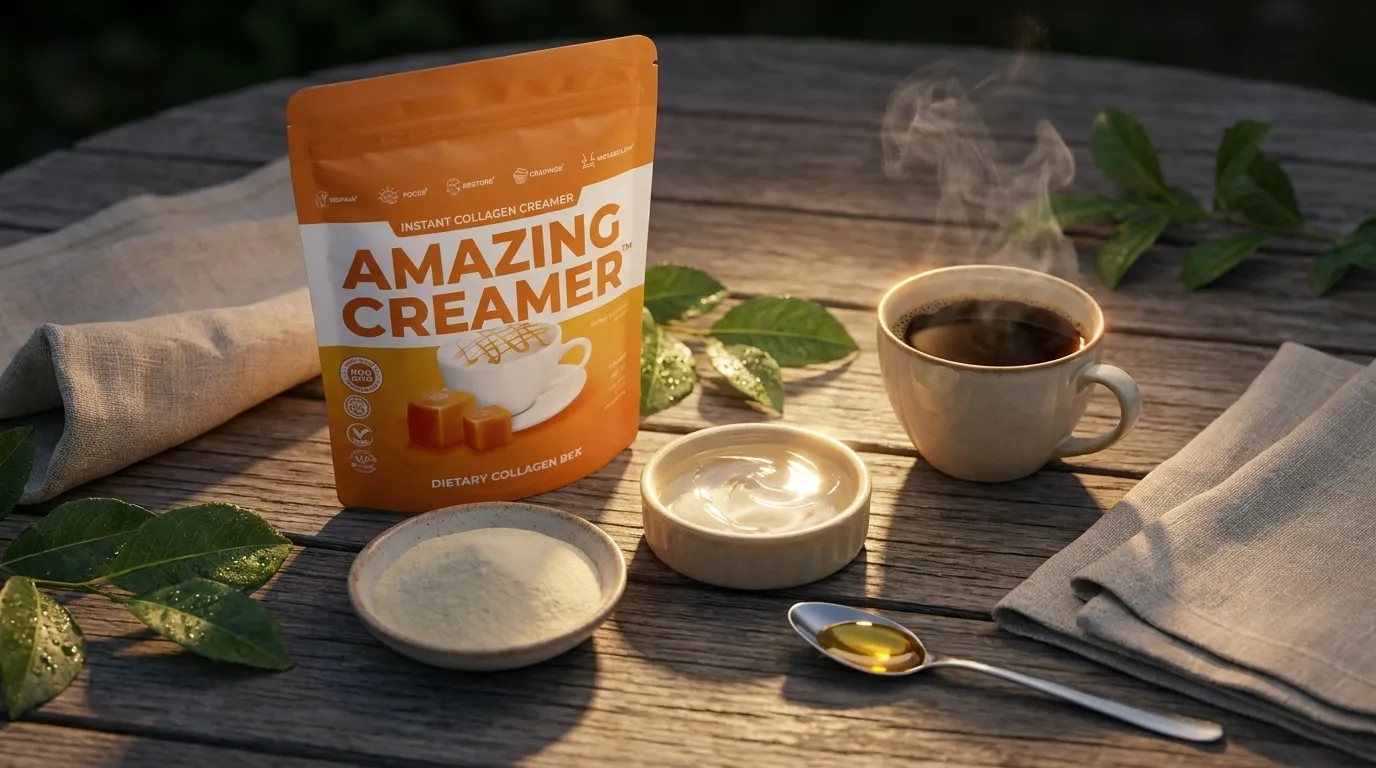
The first time a customer asked me — over email, at 6:40 in the morning, apparently mid-coffee — "Priya, is the collagen in this creamer actually surviving my hot coffee, or am I just drinking expensive foam?" I laughed, because I'd wondered the exact same thing before I ever joined this brand. It's the most honest question in the whole category. So let me answer it the way I'd answer a friend: with the studies open, and without the marketing gloss.
Here's my short version. A collagen creamer for skin is not a magic wand, but the ingredient research is more legitimate than skeptics assume — and the "your coffee destroys it" thing is mostly a myth. Now the long version, because the details are where people either get real results or waste their money.
What collagen actually does for skin (per the trials, not the ads)
Collagen is the structural protein that keeps skin firm and springy, and we make less of it as we age. The theory behind oral collagen peptides is that hydrolyzed collagen — collagen broken into small, absorbable fragments — supplies amino acid building blocks and may signal your fibroblasts to make more of their own. That's the mechanism our ingredient files lean on, citing the study "Oral supplementation of specific collagen peptides has beneficial effects on human skin physiology."
The newer human data is what makes me comfortable saying this out loud. In a 2024 randomized, double-blind, placebo-controlled trial, after 12 weeks vs. placebo, skin hydration was increased by 13.8%, the R2 elasticity index was increased by 22.7%, and the Rz profilometry index (a wrinkle/roughness measure) was decreased by 19.6% . That same study did something most don't — it looked under the surface. Using confocal microscopy, the researchers observed a significant 44.6% decrease in collagen fragmentation vs. placebo, and an ultrasound measure suggested the improvements occurred more in the upper dermal compartment.
That's not a lone result, either. A separate 2023 trial found that an intake of 1650 mg per day of collagen peptide for 12 weeks had beneficial effects on skin health in women aged 30 to 60, with skin desquamation, hydration, wrinkling, and elasticity all significantly improved versus placebo. And a mechanistic study clarified how the hydration piece works: oral collagen peptides increased water content in the stratum corneum and epidermis and decreased water loss, an effect attributed to a rise in the skin's natural moisturizing factor — though in that particular study, skin elasticity and thickness didn't change.
I include that last caveat on purpose. Not every trial lights up every metric, and I'd rather you trust me than oversell you.

The heat myth — does hot coffee "kill" collagen?
This is the objection I hear most, and it comes from mixing up two different things: gelatin (the stuff that sets your grandmother's Jell-O) and hydrolyzed collagen peptides (what's in a good creamer). Gelatin loses its gelling structure with heat. But peptides are already broken down — there's no delicate 3D structure left to "denature" in a way that matters for absorption.
The framing in current write-ups matches the chemistry. One industry science review notes that hydrolyzed collagen peptides retain their amino acid composition and molecular weight distribution after exposure to temperatures typical of hot beverages. Others point out the thresholds are far above your mug: hydrolyzed collagen peptides are described as heat-stable up to roughly 300 degrees in dry heat, well beyond the temperature of any hot drink. Your coffee tops out around 195°F. Your peptides are fine.
So stir it in, let it dissolve, drink it hot. I do this every single morning and I lose zero sleep over it.
Why we didn't stop at collagen: the hyaluronic acid decision
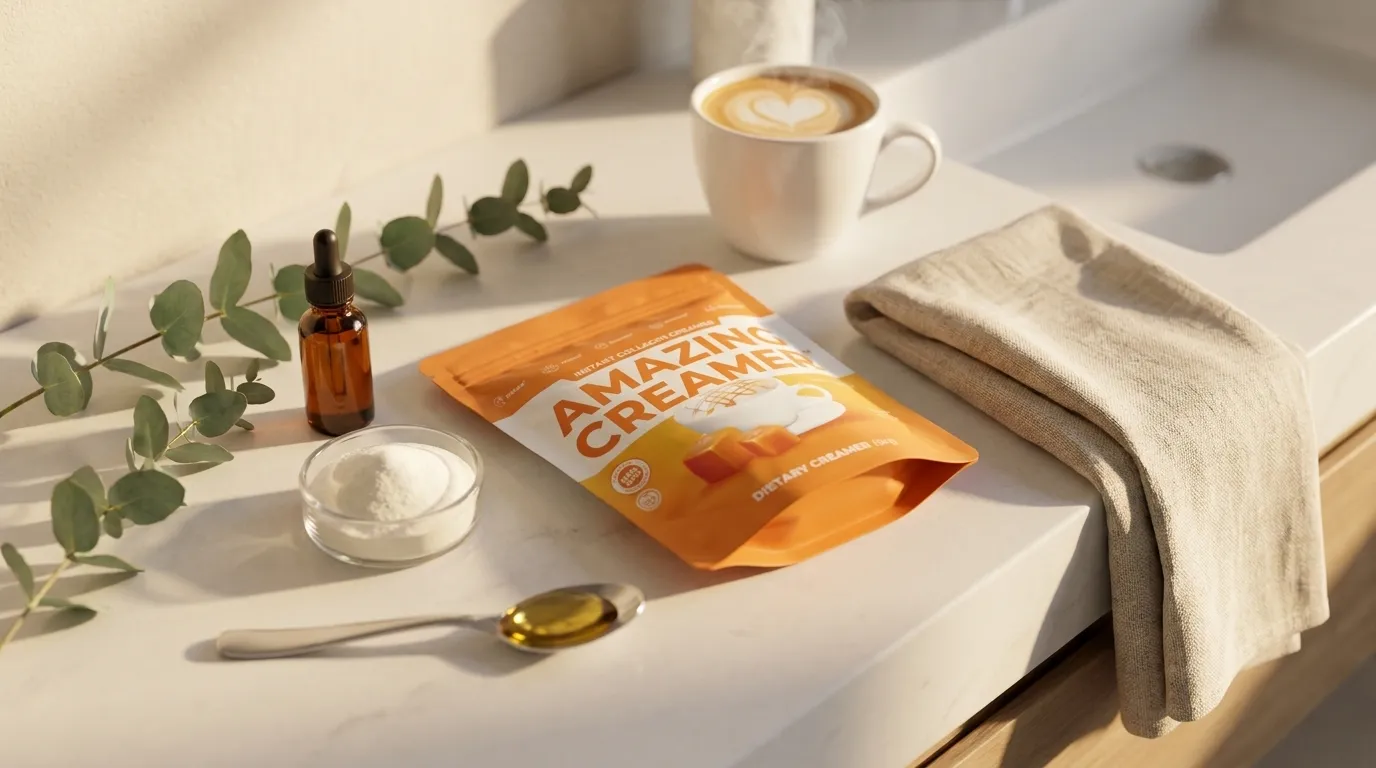
Here's where I get to talk about what makes Amazing Creamer a little different from a plain scoop of peptides. We built it with three actives: collagen, MCT oil, and hyaluronic acid. That third one is the skin over-achiever.
Hyaluronic acid is a water-binding molecule your body already makes — most people know it from serums, but the oral version has its own evidence base. Our ingredient research notes it can hold up to 1000 times its weight in water, and that it supports skin barrier function alongside collagen synthesis. The dosing literature is encouraging: reviews of randomized trials suggest that 120 to 200 mg per day of hyaluronic acid is the most clinically supported daily range for skin, with results that can begin around 4 weeks but are more visible at 12. One larger trial reinforced the direction, testing oral sodium hyaluronate for skin hydration, barrier function, and signs of aging in 150 healthy adults.
My logic as the person who signs off on the formula: collagen supplies the building blocks and the signal, hyaluronic acid helps the skin hold onto water, and they're studied together for good reason. Putting both in one morning cup means you're not juggling three separate supplements you'll forget by Thursday.
And the MCT oil — a quick word
MCT isn't a skin ingredient per se; it's why the creamer keeps you full and even-energied instead of crashing. Our files tie it to satiety and steady fuel, citing "Medium-chain triglycerides increase energy expenditure and decrease adiposity in overweight men." That's the part customers get almost addicted to — and I mean that literally. As one wrote, "I don't ever want to go back to regular coffee," and another, bluntly, "I am 100 percent addicted to this product!"
How to actually get skin results (a dietitian's realistic checklist)
- Take it daily — consistency beats dose. Nearly every positive trial ran 8 to 12 weeks of continuous use. Two great weeks and then the jar in the back of the cabinet won't cut it.
- Set a 12-week mental checkpoint. Hydration can show up earlier; elasticity and wrinkle measures reliably showed at week 12 in the trials above. Take an honest, same-lighting phone selfie at day 1.
- Don't sabotage it. Sunscreen, sleep, and not smoking do more for your dermis than any supplement. Collagen works with good habits, not instead of them.
- Pair, don't stack blindly. Vitamin C supports collagen synthesis — many of the strongest studies used collagen + C together, so a citrus-rich breakfast isn't a bad companion.
The honest bottom line
Will a collagen creamer transform your face in a week? No — and anyone promising that is selling, not explaining. Will consistent daily use of collagen plus hyaluronic acid, backed by 12-week placebo-controlled data, give many people measurable improvements in hydration and elasticity? The evidence says that's a reasonable expectation. One customer told us her "only regret is not trying it sooner" — and honestly, given how long the trials run, the sooner-you-start point is the most scientifically defensible thing on that whole reviews page.
If you already own it: drink it hot, drink it daily, give it three months, and judge by your own skin. If you're deciding: the ingredients aren't hype, they're just slow. That's not a flaw. That's how skin works.
These statements have not been evaluated by the Food and Drug Administration. This product is not intended to diagnose, treat, cure, or prevent any disease. The research cited above describes individual ingredients — collagen peptides, hyaluronic acid, and MCT oil — and not the finished Amazing Creamer product. Customer quotes reflect individual experiences and are not typical or guaranteed results. Talk to your healthcare provider before starting any new supplement, especially if you are pregnant, nursing, or managing a medical condition.
Priya is a registered dietitian who reviews the science behind every ingredient we use. She spends her days turning clinical research into plain English.
Ready to try it for yourself?
Shop Superfoods Company