Why a "Digestive Superfood Drink" Actually Helps Your Gut (and What to Look For)

The first time a "digestive" drink actually did something for me, I almost didn't notice. No dramatic before-and-after. I just got to about 3 p.m. on a Tuesday and realized my waistband wasn't digging in the way it usually did by mid-afternoon. That's the thing about digestion — when it's working, it's quiet. You feel lighter, not louder.
I'm a dietitian, so people send me a lot of "gut health" drinks to look at, and most of them are either a sugar bomb in a pretty can or a wall of buzzwords with one token herb. So when I talk about why a digestive superfood drink can genuinely help — and where the honest limits are — I want to do it the boring way: ingredient by ingredient, mechanism by mechanism. Let's get into it.
What "digestion" even means when we talk about a drink
People say "digestion" and mean four different things at once. Worth separating them, because a drink helps each one differently:
- Motility — how fast food moves through you (this is the regularity piece).
- Bloat — gas and water retention that make your middle feel tight.
- Nausea / upset — that queasy, heavy feeling after a big or weird meal.
- Comfort over the long haul — inflammation and the day-to-day baseline of how your gut feels.
A good superfood blend touches several of these at once, which is why the experience is usually subtle rather than a single fireworks moment. Here's where the science actually holds up.
The ingredient that earns its spot: ginger
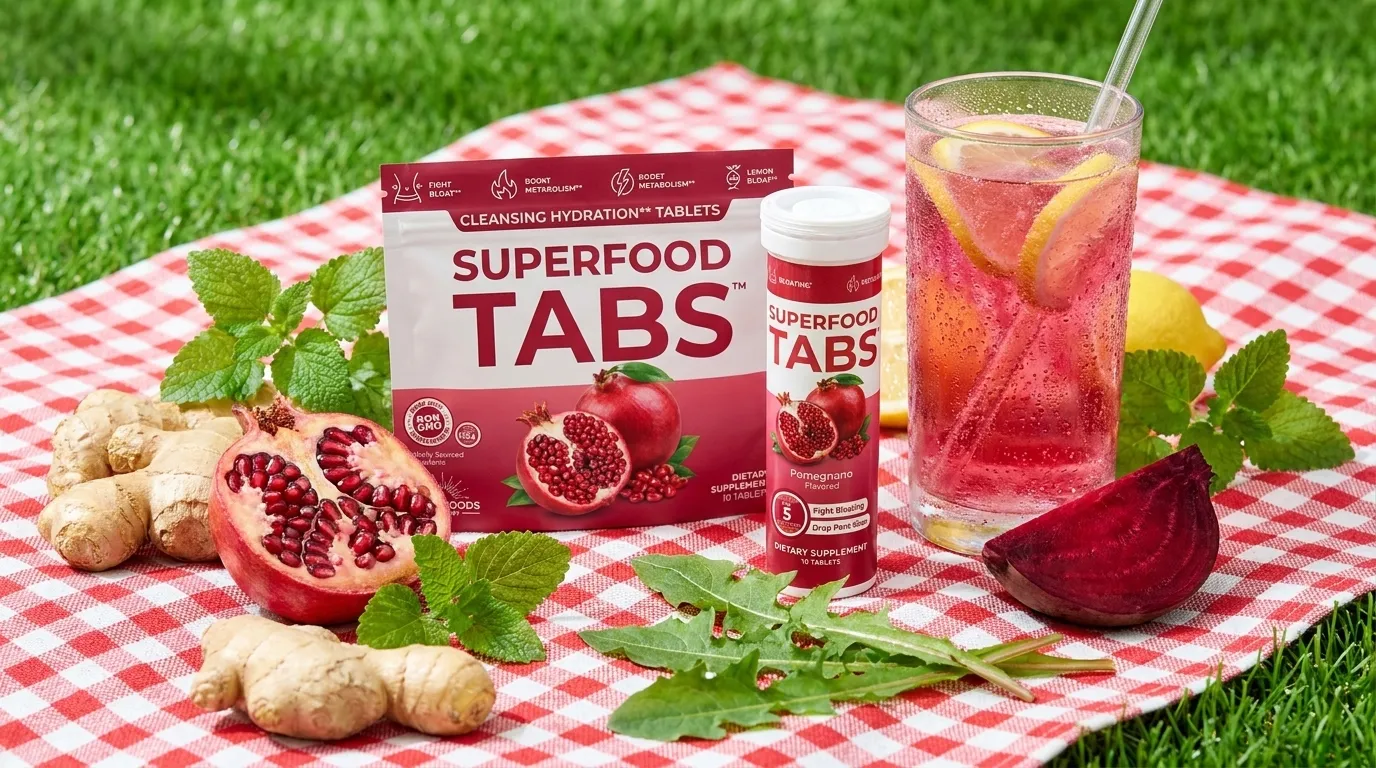
If I had to pick one ingredient in Superfood Tabs that's doing real digestive work, it's ginger — and the research is unusually deep here. Ginger's active compounds, gingerols and shogaols, behave as 5-HT3 receptor antagonists (a mild antiserotonergic effect) and they actually speed up gastric emptying — meaning food sits in your stomach for less time. Clinical trials, including a comprehensive systematic review of 109 randomized controlled trials, consistently show ginger relieves nausea, including the stubborn pregnancy-related kind.
That "moves food along faster" effect is the mechanistic heart of why ginger feels settling. Less time parked in your stomach often means less of that heavy, queasy, over-full sensation. And ginger doesn't stop there — the same body of trials links it to lower inflammatory markers like C-reactive protein and TNF-α, plus a GRADE-assessed meta-analysis of 27 randomized trials found ginger reduced body weight, BMI, waist circumference, and percent body fat. So the herb that calms your stomach is quietly pulling double duty.
The unglamorous reason most "bloat" improves: hydration
Here's the part nobody wants to hear because it's not exciting. A huge amount of "I feel bloated and backed up" is, at least partly, mild dehydration. Your colon pulls water out of stool; not enough water in the system means slower, harder-to-pass stool — which then feels like bloat and heaviness.
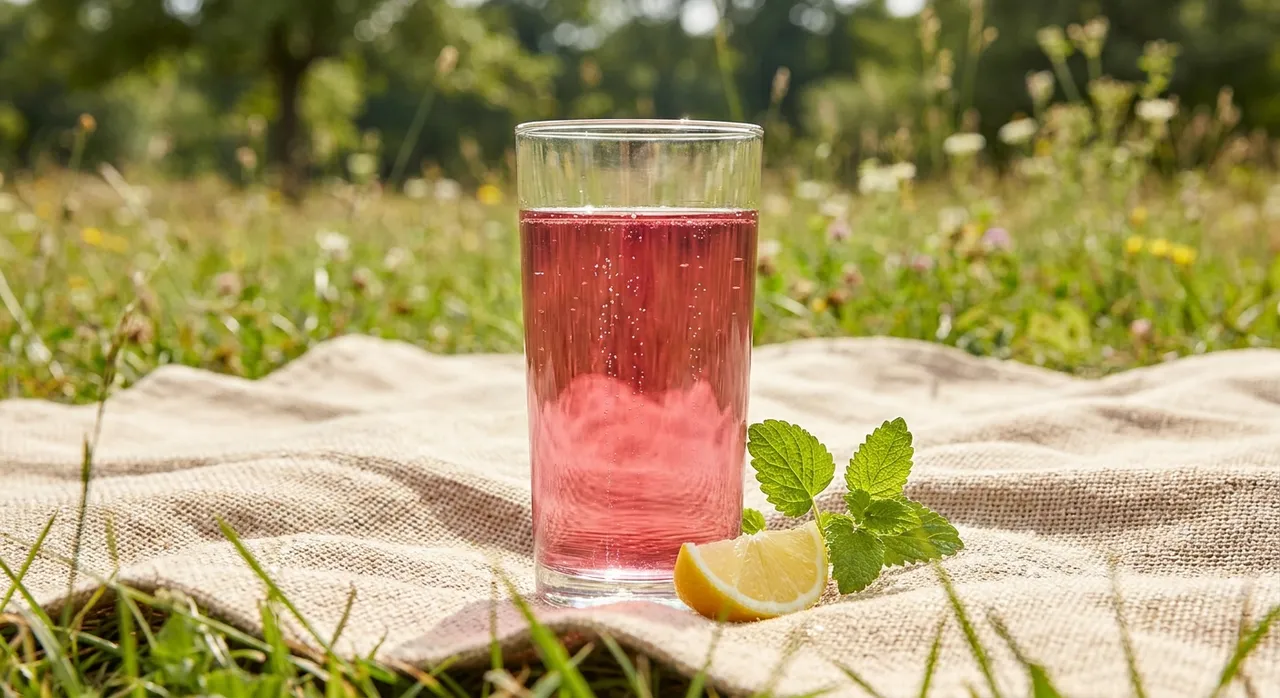
This is the unsexy mechanism behind one of the most common things our customers report — gentle digestive regularity. A fizzy tab that you actually look forward to dropping in a glass gets you drinking 12–16 extra ounces of water you weren't going to drink otherwise. I'm not being cute about this. The "superfood" part matters, but the "you finally hit your water target because it tastes good" part might matter just as much. One reviewer put it simply:
"I love these. I had to stop my subscription for a period of time but realized I enjoyed them so much, it became a non negotiable."That "non-negotiable daily habit" is, mechanistically, just consistent hydration plus the herbs. Don't underrate it.
The supporting cast — bitters, greens, and polyphenols
Traditional "digestive" formulas have always leaned on bitter roots, and ours is no exception. Burdock root and dandelion are classic digestive bitters used for generations to support a feeling of lightness after meals. Milk thistle shows up for liver support. And then there's the green crew — matcha, green tea, wheat grass, and chlorella — which bring chlorophyll and polyphenols.
Green tea's catechins, especially EGCG, are worth a specific mention. EGCG is the most abundant green tea flavonoid and it regulates cell-signaling pathways tied to metabolic and cardiovascular health, with antioxidant activity that helps neutralize free radicals throughout the body. On the body-composition side, a dose-response meta-analysis of RCTs found green tea extract lowered body mass, BMI, and body-fat percentage while raising adiponectin. That's not strictly "digestion," but a lighter middle is what most people are actually chasing when they search for a digestive drink — so I'd rather be honest about why it overlaps.
The pomegranate, beet root, goji berry, and elderberry bring the deep-color polyphenols. Pomegranate in particular has one of the highest antioxidant capacities among fruits — driven by tannins, anthocyanins, and ellagic acid derivatives — and its ellagitannins and punicalagins get converted by your gut bacteria into compounds called urolithins. I find that detail genuinely cool: it's a direct example of your microbiome turning food into something more useful. Clinical reviews have even tied pomegranate to reductions in body weight and waist measures alongside better metabolic markers.
The stress–gut link people forget
Your gut and your stress system are wired together, which is why a nervous stomach is a real, physical thing. Lemon balm is in the blend for this reason. Its rosmarinic acid inhibits GABA transaminase, raising calming GABA tone in the brain — and a randomized placebo-controlled trial found 1.5 g/day of lemon balm reduced anxiety by roughly 49% in surgical patients, with about a 54% improvement in sleep quality versus placebo.
Why does that belong in a digestion article? Because elevated cortisol drives both abdominal fat storage and cravings for calorie-dense comfort foods. Calm the stress response and, for a lot of people, the late-night snacking eases off on its own. Several reviewers describe exactly that —
"no more sugar craving or want to eat snacks."I won't oversell it (lemon balm isn't a weight-loss drug), but the stress-eating loop is real and worth addressing.
So what should you actually expect?
Honest version, because hype helps no one:
- Week 1: Mostly the hydration effect — feeling a little lighter, fewer afternoon energy dips (helped along by the 100mg of caffeine from green tea leaf extract, which is clean energy without the jittery crash).
- Weeks 2–4: More consistent regularity if you're drinking it daily and your fiber and water are decent. The ginger's anti-nausea, settled-stomach effect tends to show up around big meals.
- Longer term: This is where the body-composition reviews live. Real people report serious results —
"They have helped me lose over 60 pounds and I have kept it off for over 2 years."
Those are individual experiences, not guarantees, and they come paired with the daily habit, not instead of one.
A simple way to use it for digestion
- Fill a 16 oz (about 500 ml) glass with cold water.
- Drop in one tab and let it fully dissolve — usually 60–90 seconds of fizzing.
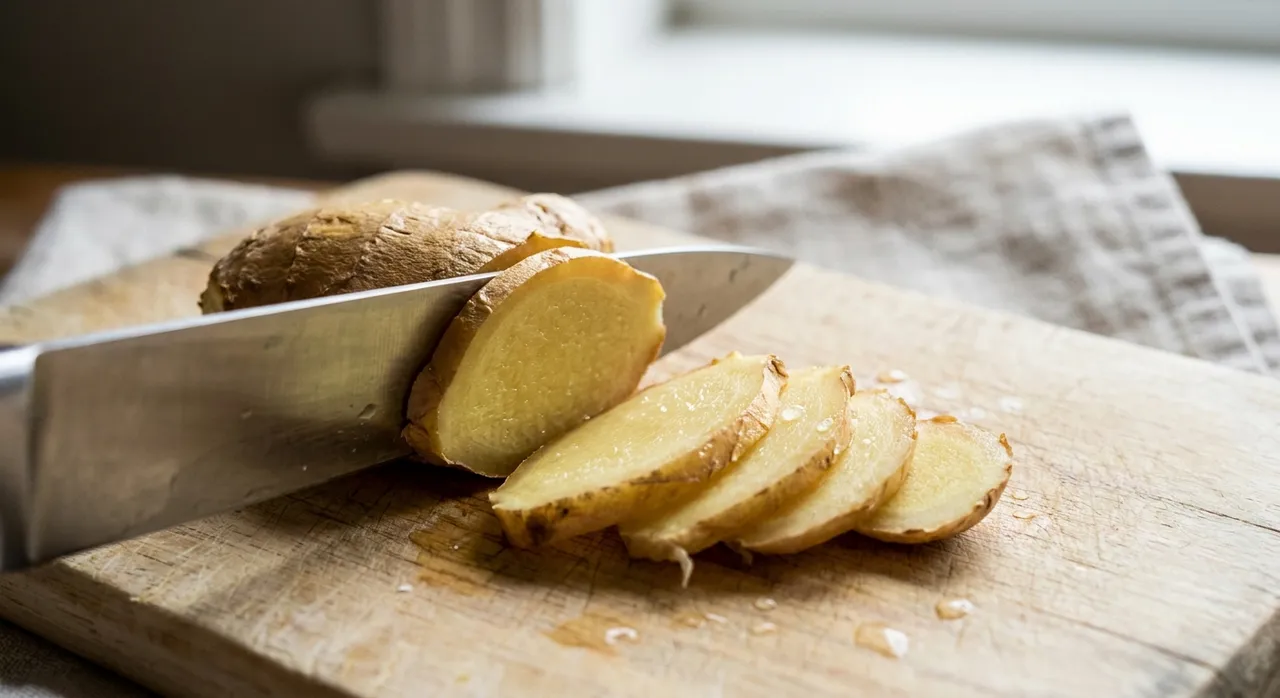
- Optional: add 2–3 thin slices of fresh ginger and a squeeze of lemon for an extra digestive kick after a heavy meal.
- Drink it mid-morning or about 30 minutes before your largest meal of the day.
- Follow with a second plain glass of water within the hour — the goal is total daily fluid, not just the tab.
That's it. No ritual, no 12-step protocol. The best digestive routine is the one you'll actually repeat, which is the whole reason taste matters so much here.
The bottom line from a dietitian
A digestive superfood drink isn't magic, and anyone who tells you it is should make you suspicious. What it does well is stack several small, evidence-backed levers — ginger's effect on gastric emptying and nausea, polyphenols from pomegranate and green tea, calming herbs that ease stress-driven snacking, and the genuinely underrated power of just drinking more water because it finally tastes good. Pile those small wins on top of each other, every day, and the result is what our reviews keep describing: a lighter middle, less bloat, steady energy, and a gut that's quietly doing its job.
These statements have not been evaluated by the Food and Drug Administration. This product is not intended to diagnose, treat, cure, or prevent any disease. The research cited above describes individual ingredients studied on their own, not the finished Superfood Tabs product, and individual results vary. The customer comments reflect personal experiences and are not typical or guaranteed. If you are pregnant, nursing, taking medication, or have a medical condition, talk with your healthcare provider before adding any new supplement.
Priya is a registered dietitian who reviews the science behind every ingredient we use. She spends her days turning clinical research into plain English.
Ready to try it for yourself?
Shop Superfoods Company