Why I Drink a Gut-Health Fizzy Tablet Instead of Swallowing a Capsule

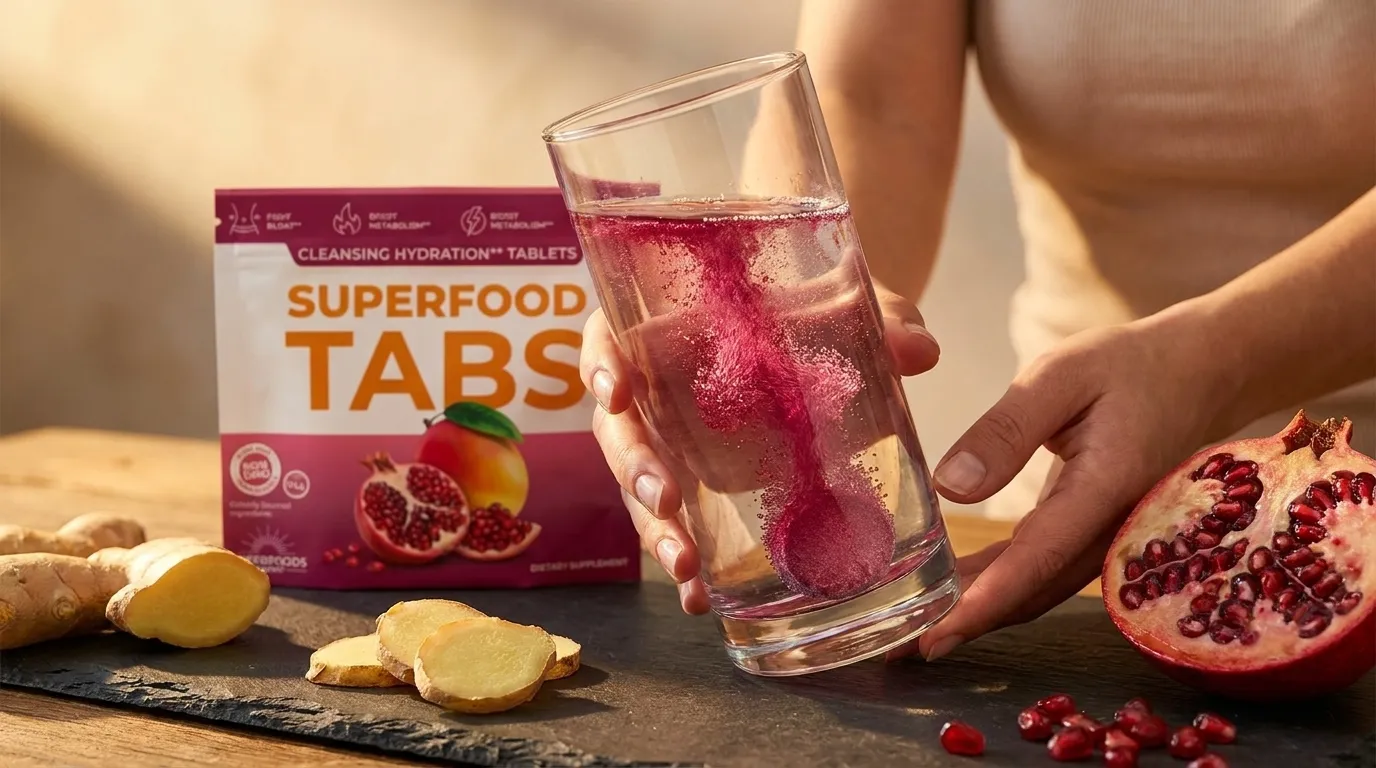
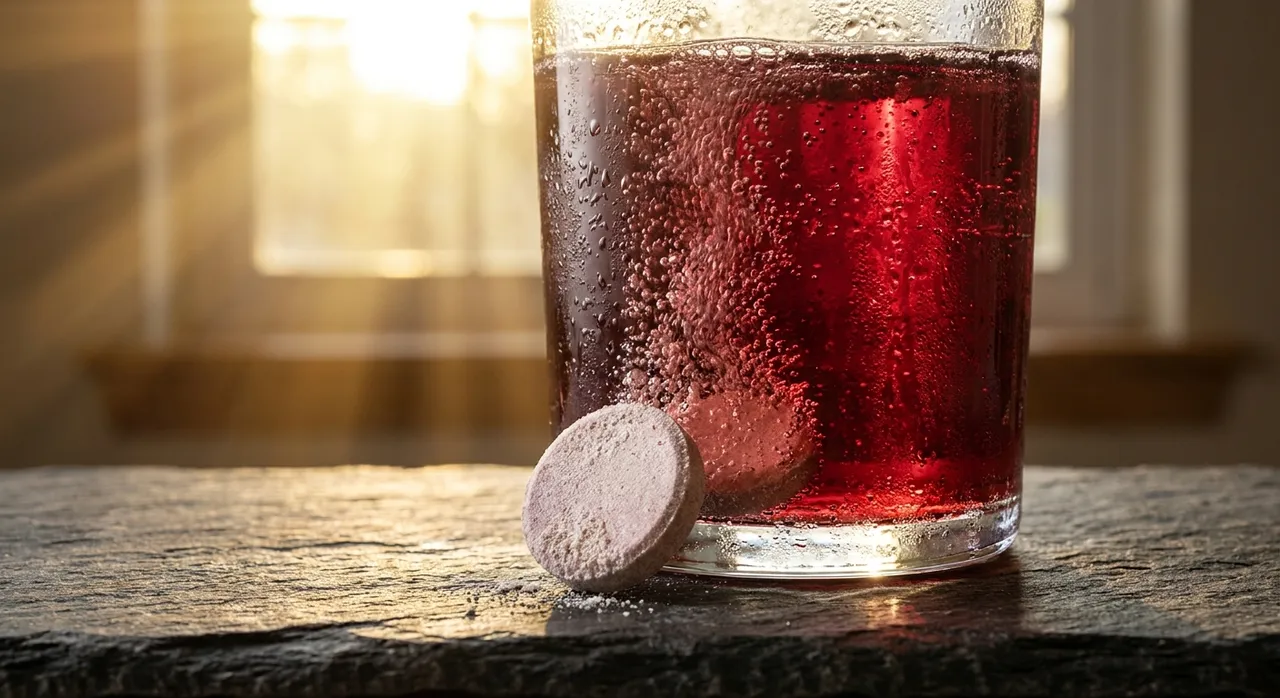
The first time I dropped one of these tablets into a glass, I watched it for a good ten seconds like a kid with a bath bomb. It hissed, the water went a deep beet-magenta, and by the time I'd walked back to my desk it was clear enough to drink. I'm a dietitian — I'm supposed to be unimpressed by fizz. But the fizz is actually the interesting part, and it tells you something real about how these tablets get to work.
People search "gut health fizzy tablets" wanting to know one thing: does the fizzy format actually do anything, or is it just a nicer way to take a supplement? Fair question. Here's the honest, mechanism-by-mechanism answer.
Step 1: The fizz is a chemistry reaction, not a gimmick
An effervescent tablet is built on what's called an effervescent couple. The reaction comes from a compound containing bicarbonate, such as sodium bicarbonate, reacting with an acid such as citric acid or tartaric acid. Both sit in the tablet as dry powder and do nothing until they hit water. Both compounds are present in the tablet in powder form and start reacting as soon as they dissolve in water.
That reaction is what you're watching. When placed in a glass of water, the bicarbonate reacts with the acid to release bubbles of carbon dioxide, creating the characteristic fizzing effect and promoting rapid disintegration. So the bubbles aren't decorative — they're the tablet breaking itself apart so every ingredient ends up dissolved and evenly spread through the water instead of packed into a pill.
Why does that matter for a superfood blend? Because a capsule has to survive your stomach and then break down on its own. A fizzy tablet arrives already dissolved. That's a head start.
Step 2: Dissolved first means it can be absorbed sooner
Here's the part I find genuinely useful. When a supplement is already in solution, your body doesn't have to spend time and stomach acid disintegrating it. The pharmacology literature on effervescent formulations makes this point directly: this in turn promotes drug absorption from the upper small intestine, which is the primary site for drug absorption. And the practical upshot: in doing so, higher drug bioavailability and a faster onset of action can usually be achieved.
That research is about pharmaceuticals, not superfoods, and I want to be clear about that. But the mechanism is format-based, not drug-specific — effervescent tablets are defined as compressed granules containing an organic acid, such as citric acid, and sodium bicarbonate, which produce carbon dioxide gas bubbles when dissolved in water, facilitating quick disintegration and absorption. Deliver water-soluble plant compounds already dissolved, and you've cleared the same first hurdle.
Step 3: Not everything gets absorbed — and that's the point for your gut
This is where "gut health" stops being a buzzword. A lot of the polyphenols in plants — the pomegranate ellagitannins, the green tea catechins, the pigments in beet root and goji — are only partly absorbed in the small intestine. The rest travels onward to your colon. And that's not a loss. That's where your microbiome lives.
Researchers used to think only fiber fed the gut. Not anymore. Increasing evidence strongly suggests that besides these dietary fibers, other food bioactive compounds like polyphenols are also considered as an excellent source of prebiotics. The mechanism is elegant: the unabsorbed phenolics and their derivatives in the colon have been found to have "prebiotic-like" effects. And the well-established payoff of feeding your gut bugs is short-chain fatty acids — the prebiotic role of dietary fibers was well established through the formation of short-chain fatty acids (SCFA). Polyphenols now look like they help drive that same process.
So the two "wasteful"-looking things — the fizz and the fraction that isn't absorbed — are actually doing the two jobs you want. Fast delivery of the soluble stuff. And a steady supply of polyphenols reaching the bacteria downstream.
What's in the glass, and why each one earns its spot
The Superfood Tabs blend is 16 plants plus 100mg of caffeine from green tea leaf extract. I won't pretend every ingredient has a landmark trial — some are there for flavor and tradition. But several are backed by real human data, and these are the ones I'd point to:
- Ginger root — the digestion workhorse. Gingerols and shogaols act on serotonin receptors and speed gastric emptying, and a comprehensive systematic review of 109 randomized controlled trials found ginger consistently relieves nausea and settles the gut. The same body of work links it to lower inflammatory markers like C-reactive protein.
- Pomegranate — the polyphenol star for gut and heart. Its ellagitannins and punicalagins are converted by gut bacteria into urolithins, and clinical reviews (including Pomegranate and Metabolic Syndrome Risk Factors: A Systematic Review of Clinical Studies) report improvements in weight and waist measures alongside better metabolic markers.
- Green tea — where your caffeine and much of the catechin content comes from. A GRADE-assessed dose-response meta-analysis of RCTs found green tea extract lowered body mass, BMI, and body-fat percentage.
- Ginger + lemon balm for the stress-gut link — lemon balm's rosmarinic acid raises calming GABA tone; one placebo-controlled trial reported it cut anxiety by roughly half. Less stress can mean fewer stress-driven cravings, which matters more for your middle than people expect.
How I actually drink mine
A few practical notes, dietitian to reader:
- Use cold or room-temperature water, about 10–12 oz. Cold water slows the fizz slightly and tastes better; hot water can flatten it.
- Let it fully dissolve — usually 60–90 seconds — before the first sip. You want it dispersed, not gritty.
- Because there's 100mg of caffeine (about a cup of coffee), I keep it to the morning or early afternoon. It's clean energy, but it's still caffeine.
- It counts toward hydration, which is honestly half of why it stuck for me. A flavor you look forward to is a glass of water you'll actually drink.
That "habit" piece is the quiet reason this format works. Our reviews are full of it. One customer wrote,
"I love these. I had to stop my subscription for a period of time but realized I enjoyed them so much, it became a non negotiable."Another put the daily-ritual thing plainly:
"I love superfood tabs! They have helped me lose over 60 pounds and I have kept it off for over 2 years."The best-absorbed supplement on paper does nothing if it's sitting in your cabinet. A fizzy one you crave gets taken.
The honest caveats
I'd rather under-promise. Effervescent delivery gives water-soluble ingredients a real head start on absorption, and the polyphenols that aren't absorbed appear to feed your gut bacteria — both are supported by the research above. But "gut health" is not a single switch, and the human trials I cited studied specific isolated ingredients, not this exact finished blend. Individual results vary, and if you're pregnant, nursing, on medication, or managing a health condition, talk to your own clinician first.
What I can say confidently: the fizz is doing more than looking pretty, and there's a coherent, evidence-based story for why a well-formulated gut-health fizzy tablet is a smart way to get plant polyphenols into your day.
These statements have not been evaluated by the Food and Drug Administration. This product is not intended to diagnose, treat, cure, or prevent any disease. The research described here refers to individual ingredients studied in isolation and does not represent clinical testing of the finished product. Individual results vary.
Priya is a registered dietitian who reviews the science behind every ingredient we use. She spends her days turning clinical research into plain English.
Ready to try it for yourself?
Shop Superfoods Company