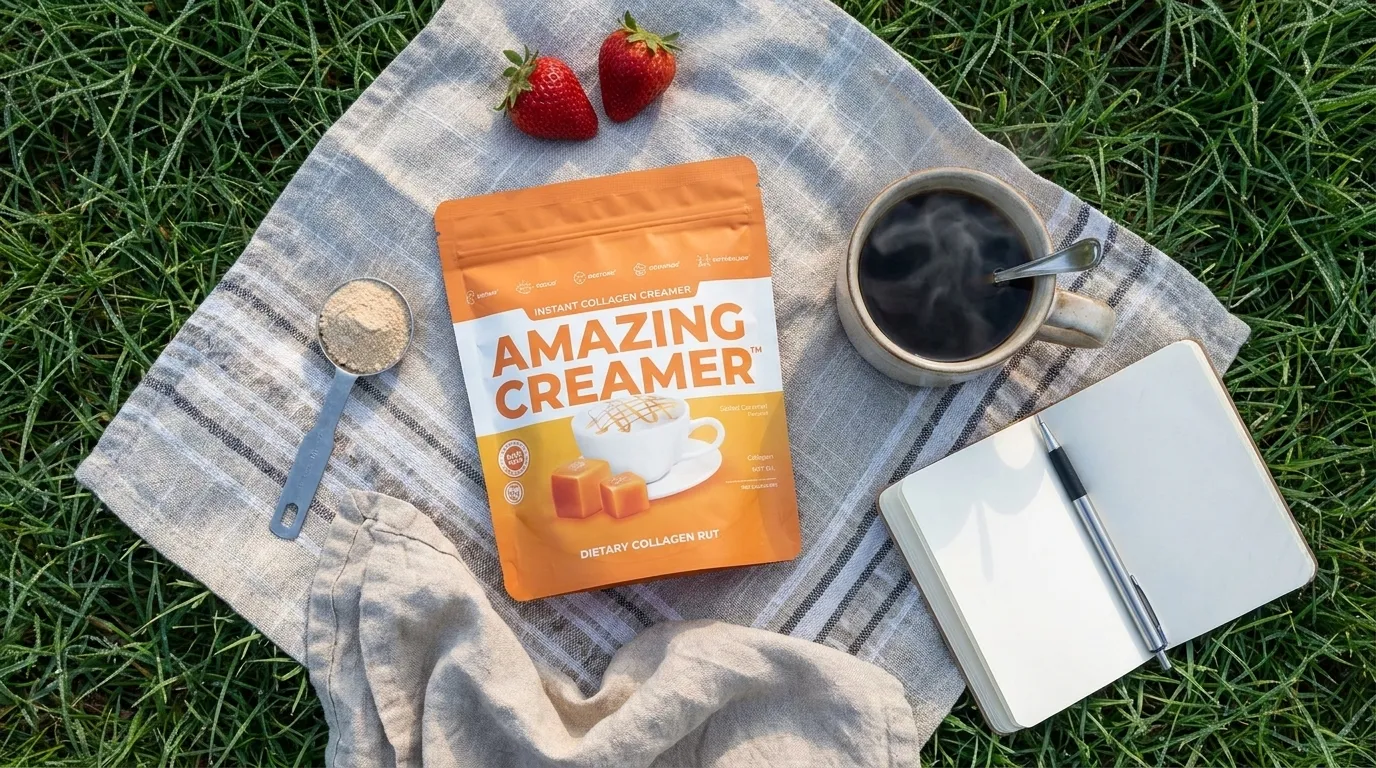
How to Actually Use an MCT Oil Creamer (From Someone Who's Tested It at 6 a.m.)

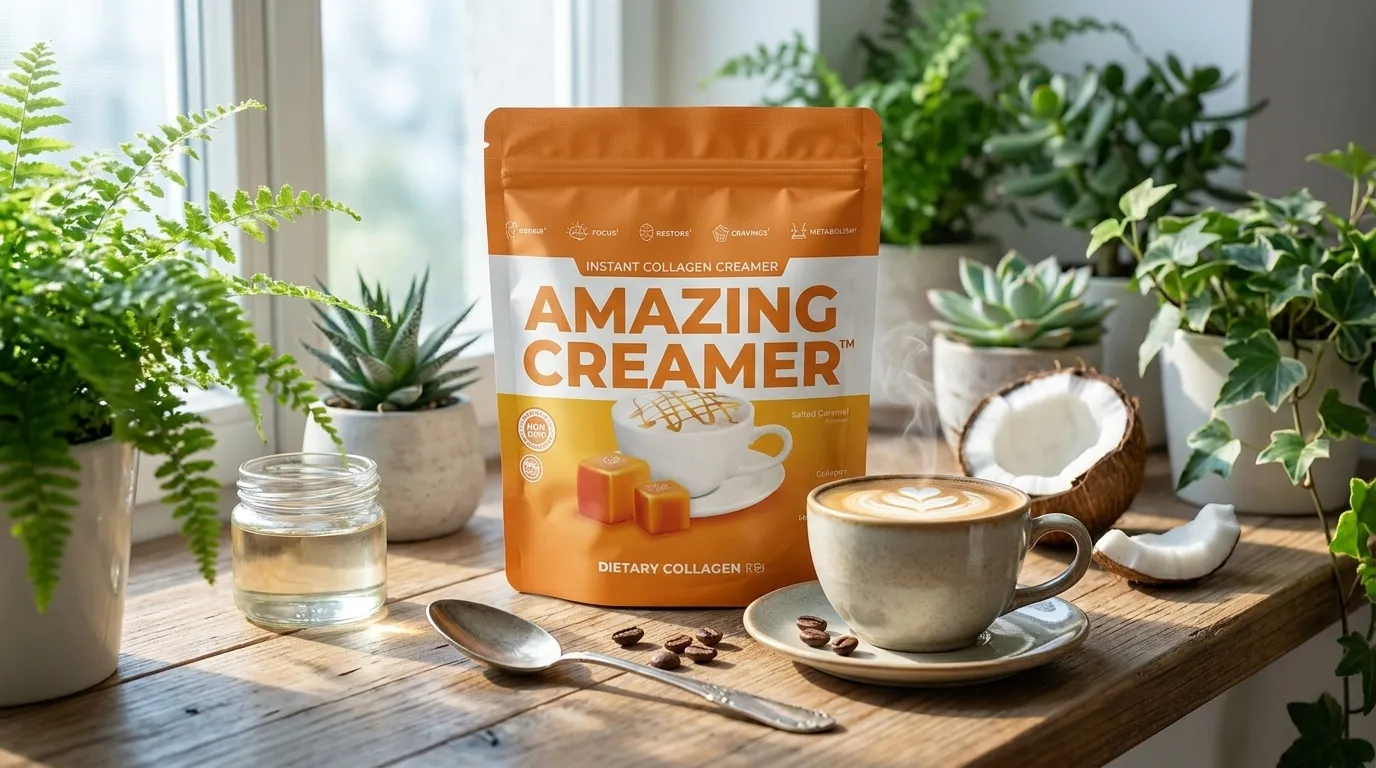
I have made coffee at 6 a.m. in a dark kitchen more times than I can count — twenty years of two cups before noon will do that. So when I tell you the first time I dumped a heaping scoop of MCT oil creamer into my mug and stirred it with a spoon, I got a thin slick of oil floating on top and a slightly sad cup of coffee… believe me. I learned the hard way so you don't have to.
If you just bought an Amazing Creamer pouch and you're standing there wondering "okay, now what," this is the guide I wish someone had handed me. And if you're still on the fence, stick around — I'll be honest about the part nobody mentions (your stomach has opinions the first week).
First, what's actually in this stuff
Most creamers are oil, sugar, and a list of things you can't pronounce. Ours is shorter: MCT oil, collagen, and hyaluronic acid. That trio is the whole point, so here's the quick why before we get to the how.
- MCT oil is the energy engine. The medium-chain fatty acids are rapidly absorbed and metabolized by the liver, converting to ketones that the brain can use as fuel — which is why people describe a clean, jitter-free lift rather than a coffee spike-and-crash.
- Collagen is the build-it-back ingredient — amino acids like glycine, proline, and hydroxyproline that your skin, hair, nails, and joints draw on.
- Hyaluronic acid is the hydration piece. It can hold remarkable amounts of water, which is part of why it shows up in skin and joint research.
I'll get into the science further down, with the caveat at the very end. For now: the how.
The basic cup (start here)
General guidance across the MCT world is to start small. Most sources recommend adding 1–2 teaspoons of an MCT creamer to hot or cold coffee, then blending or stirring until smooth and skipping the sugar-bomb syrups. For our creamer, follow the scoop on the label, but the principle holds: more is not better on day one.
- Brew 8–12 oz of coffee, hot or iced.
- Add your scoop of Amazing Creamer (start at the lower end of the label range).
- Stir well — or better, see the frothy method below.
- Taste before you reach for sweetener. You may not need it.
One real note from our reviews that made me laugh because it's so accurate:
"I don't ever want to go back to regular coffee."That's the texture talking. A good MCT creamer makes black coffee feel like a treat.
The 15-second blender method (this is the upgrade)
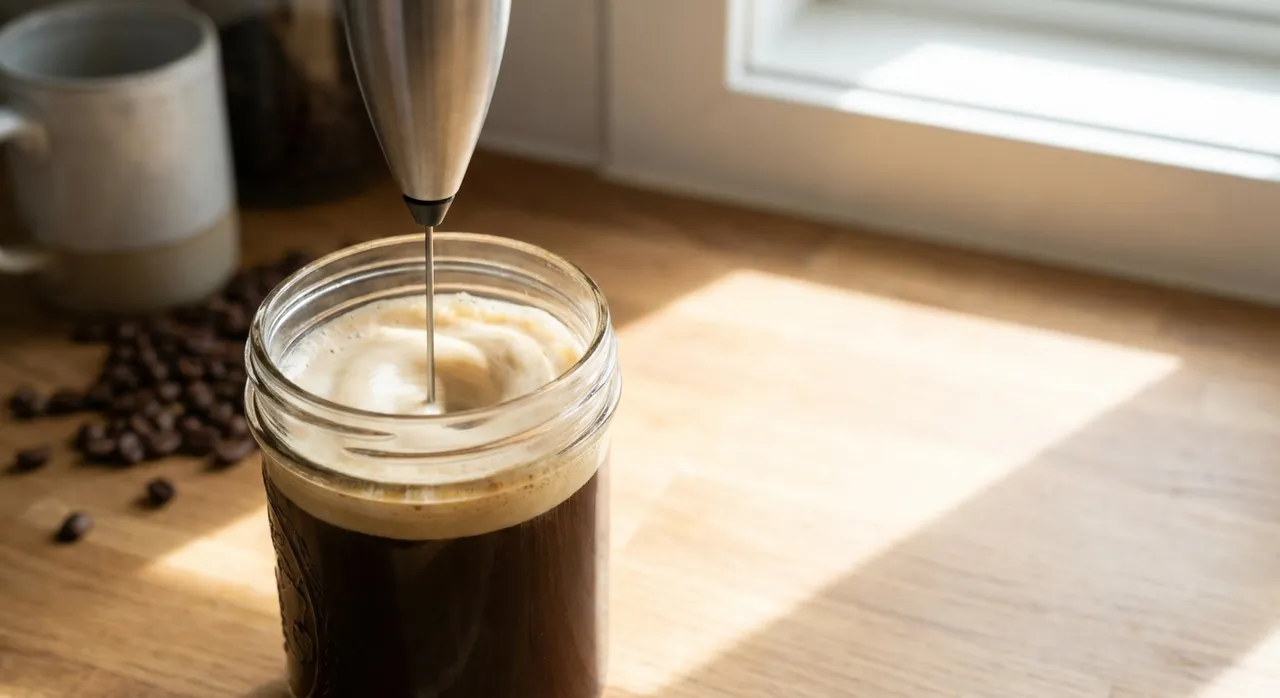
Here's the single biggest fix for that floating-oil problem: emulsify it. The way you get that frothy, latte-like head is to blend rather than mix by hand — a blender or even a milk frother emulsifies the fat into the coffee so it goes creamy and smooth instead of oily.
Frothy Morning Coffee
- 10–12 oz hot brewed coffee
- 1 scoop Amazing Creamer (per label)
- Optional: a pinch of cinnamon, a few drops of vanilla, or a small splash of milk of choice
- Add everything to a blender. Leave room — hot liquid expands.
- Blend 10–15 seconds, until frothy and smooth.
- Pour into your favorite mug. You'll see a creamy cap on top.
No blender? A handheld frother in a tall jar does the job. I keep one in a drawer for travel and it has saved many hotel-room coffees.
Three ways to use it beyond coffee
This is the part recipe developers get excited about, because an MCT creamer is far more versatile than people assume. You're not limited to your morning cup — it works stirred into nut butter, mixed into dairy-free whipped cream, or blended into other drinks. A few I actually make:
1. Iced Matcha Latte
- 1 tsp matcha whisked with 2 oz hot water
- 1 scoop Amazing Creamer
- 8 oz cold milk of choice + ice
Whisk the matcha, blend or frother the creamer into a splash of warm water first (so it emulsifies), then pour over iced milk. Grassy, creamy, no afternoon crash.
2. Overnight-style smoothie
- 1 frozen banana
- 1 cup milk of choice
- 1 scoop Amazing Creamer
- 2 Tbsp peanut butter, pinch of cinnamon
Blend until thick. This is my "I skipped breakfast and now I'm starving at 10 a.m." rescue. The MCT plus the fat keeps me full to lunch.
3. Stirred into oatmeal
Cook your oats, then stir a scoop into the warm bowl off the heat with a splash of milk. It melts into a custardy, slightly sweet finish. Don't boil it in — stir at the end.
The honest part: start slow
Nobody likes this section, but skipping it is how people decide MCT "doesn't agree with them" when really they just went too hard too fast. When you first start, MCTs are absorbed so quickly that a big dose can overwhelm your system, and mild, temporary digestive symptoms — cramping, bloating, loose stools — are common. The fix is simple: begin with a small dose, such as a teaspoon, and gradually increase as your body adjusts.
My rule: half a scoop for the first three or four days, ideally with food, then build to a full scoop. Within a week most people level out completely. Patience here pays off.
And don't take MCT on a totally empty stomach the very first time — that's the recipe for a grumbly morning.
What people actually notice
I read our reviews constantly (occupational habit), and a few themes come up again and again. The energy is the headliner — sustained, not jittery. Appetite is the sleeper hit; people keep telling us versions of
"helps with appetite"and "I don't get that much hungry." That tracks with the research: MCTs convert to ketones that can increase energy expenditure and promote satiety, which is part of why they show up in weight-management studies.
Then there's the long-game stuff — skin, hair, nails, joints — that comes from the collagen and hyaluronic acid. One reviewer put it bluntly:
"When I stop using it, my joint pain returns almost immediately."Another, an 80-year-old, mentioned losing 12 pounds. I always say results vary wildly person to person, but the consistency of the comments is what won me over. My favorite, because it's every honest customer ever:
"My only regret is not trying it sooner!"
A quick word on the science
I like ingredients that have actual research behind them, even if the research is on the ingredient and not a finished creamer. For MCTs, studies like "Medium-chain triglycerides increase energy expenditure and decrease adiposity in overweight men" and work on ketones and cognition point toward the energy, satiety, and mental-clarity benefits. For collagen, "Oral supplementation of specific collagen peptides has beneficial effects on human skin physiology" and joint research like "24-Week study on the use of collagen hydrolysate as a dietary supplement in athletes with activity-related joint pain" speak to the skin and joint side. And for hyaluronic acid, reviews on oral HA for skin hydration and knee osteoarthritis cover the hydration and joint angles.
Read those for what they are: encouraging context for why these ingredients are in the pouch, not promises about your individual results.
These statements have not been evaluated by the Food and Drug Administration. This product is not intended to diagnose, treat, cure, or prevent any disease. The studies referenced describe the individual ingredients (MCT oil, collagen, and hyaluronic acid), not the finished product, and individual results will vary. If you are pregnant, nursing, taking medication, or managing a health condition, talk with your healthcare provider before adding any new supplement.
Renee develops recipes at Superfoods Company and has been a two-cups-before-noon coffee drinker for twenty years. Every recipe here gets tested in her own kitchen first.
Ready to try it for yourself?
Shop Superfoods Company