Is Instant Coffee Actually Healthy? A Dietitian Reads the Research

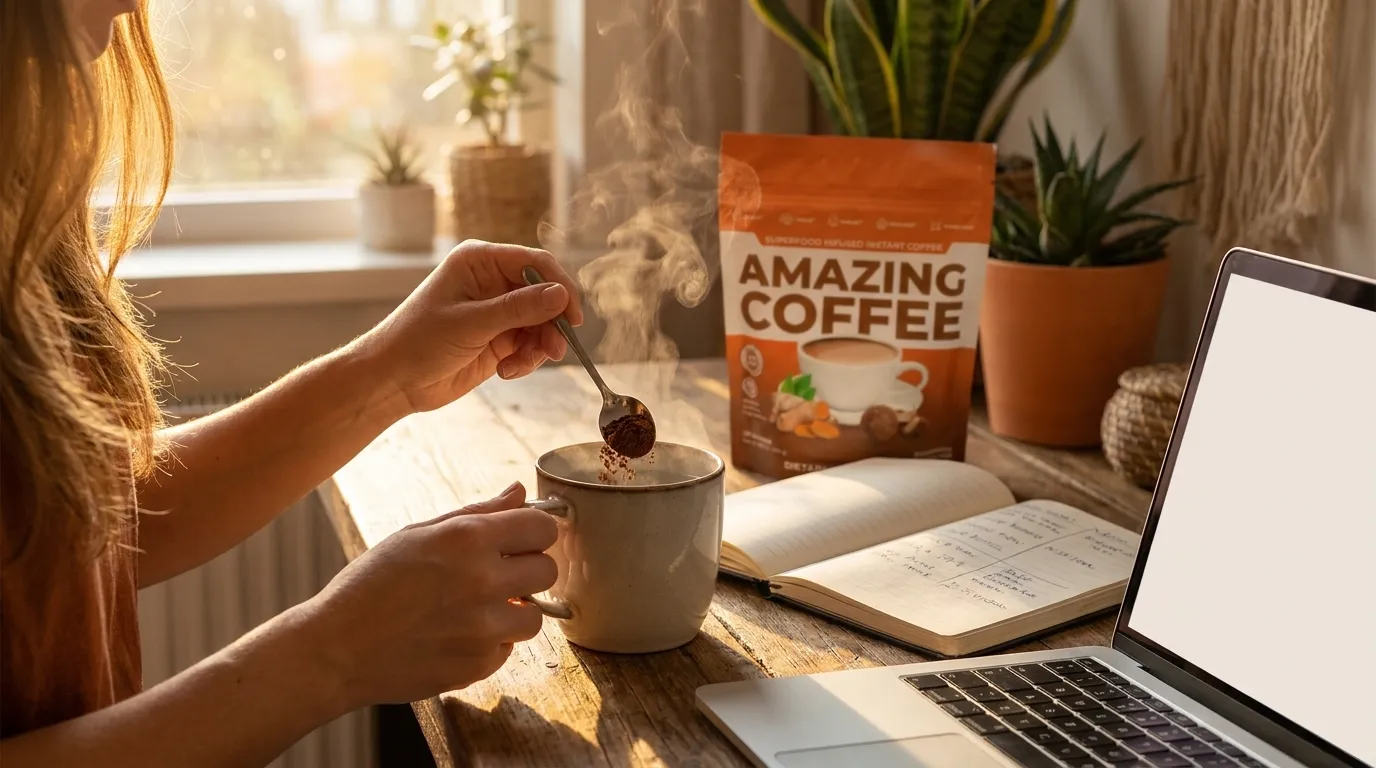
I used to be a coffee snob. Burr grinder, gooseneck kettle, a little scale I'd bought specifically to weigh out 18 grams of beans at 6 a.m. like some kind of caffeinated chemist. So when a client asked me a few years ago whether instant coffee was "basically fake coffee that was bad for you," I gave her the answer I assumed was true — and then, because it's my job, I went and read the studies. I was wrong. Not a little wrong. Wrong enough that I owe instant coffee an apology.
If you searched "healthy instant coffee" hoping someone would tell you it's fine, I'll get to the reassuring part. But I want to do it the honest way — with the actual evidence, including the caveats.
The reputation problem
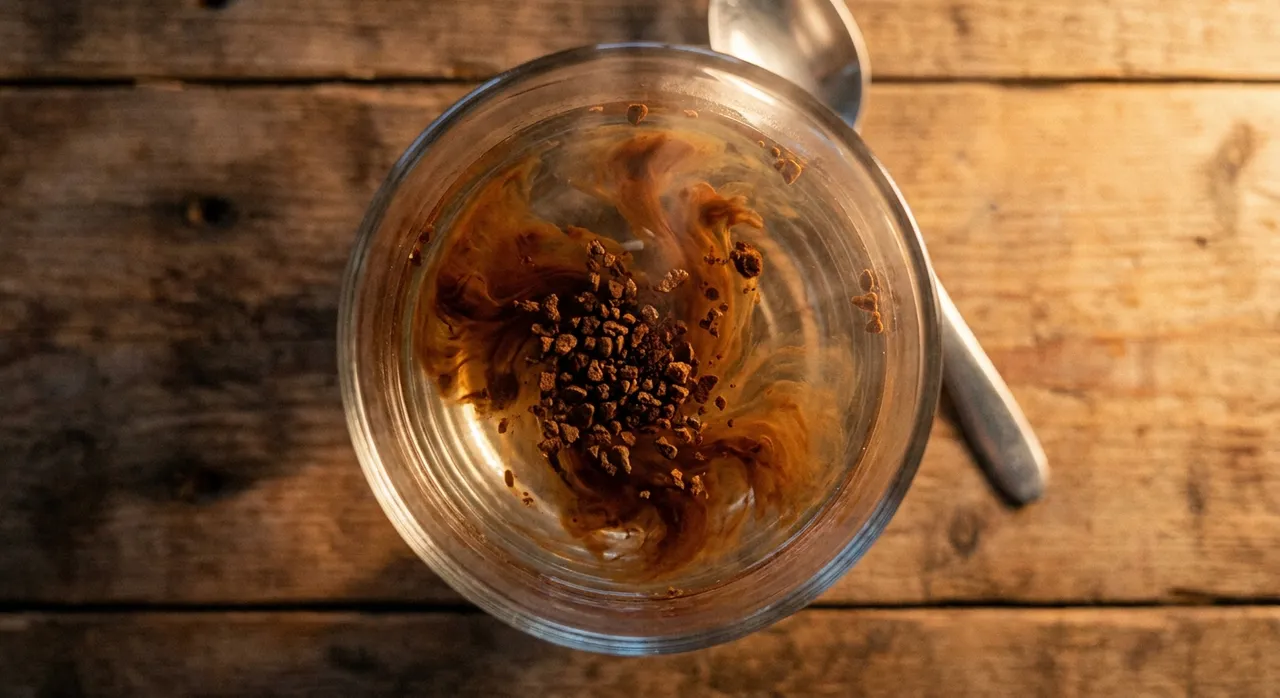
Instant coffee's bad name mostly comes from taste memories of the 1970s and a vague sense that "processed" equals "worse." The processing itself is simple: brewed coffee gets the water removed, usually by spray-drying or freeze-drying, leaving granules that dissolve when you add water back. Amazing Coffee is made this way too. Nothing is fried, bleached, or chemically stripped of nutrition in that step.
Here's the part that surprised me. When researchers actually measure the compounds we care about, instant coffee holds its own. Studies have found that instant coffee has more of the most important antioxidants, chlorogenic acid and polyphenols, than are found in brewed coffee. A 2025 profiling study using liquid chromatography backed this up: a total of 25 chlorogenic acids were identified, and the black instant coffees yielded higher levels of major chlorogenic acids than the coffee bean extracts.
Now, it's not a clean sweep in instant's favor, and I'd be misleading you if I pretended otherwise. Some experts point the other direction. One Tufts scientist notes that instant coffee, made by removing the water from liquid coffee, contains less caffeine, fewer antioxidant chlorogenic acids, and smaller amounts of N-methylpyridinium. The takeaway I've landed on: the two forms are close cousins, and which "wins" on a given compound depends on the beans and the process. Neither is the junk food version.
What chlorogenic acid actually does
Chlorogenic acid (CGA) is the compound I keep coming back to, because it's where "coffee is a health drink" stops being a vibe and starts being biochemistry. It's a polyphenol — a plant antioxidant — and green (unroasted) coffee is especially rich in it.
Two things it appears to do in the body are worth your attention:
- Antioxidant defense. In a controlled human trial, a group consuming instant coffee co-extracted from green and roasted beans versus a water control saw a urinary marker of oxidative stress (8-isoprostaglandin F2a) decline by 15.3% and 3-nitrotyrosine decrease by 16.1%. In plain English: measurable markers of cellular "wear and tear" went down.
- Glucose and fat metabolism. Chlorogenic acids are absorbed in the small intestine and demonstrate biological activities including antioxidant effects, increased fatty acid oxidation, improved insulin sensitivity, and modulation of glucose metabolism.
This matters for the "healthy instant coffee" question because it's not just about caffeine. It's about the phenolic package that comes along for the ride. And it's the exact reason we put Green Coffee in the blend — unroasted beans keep more CGA than fully roasted ones do.
Where a superfood blend changes the math
Plain instant coffee is a fine drink. But the reason I put my name on this one is that it isn't only coffee. The formula stacks green coffee with a set of ingredients that each have their own research behind them. A few I get asked about most:
Green tea and matcha — the "calm alert" part
This is the ingredient story I find most compelling for anyone who gets the coffee shakes. Green tea and matcha contribute L-theanine, an amino acid that pairs with caffeine. A systematic review and meta-analysis in Nutrition Reviews examined the effects of L-theanine, and L-theanine plus caffeine, on cognition, sleep, and mood in healthy people — the combination is the one people describe as focused-but-not-wired. Our own reviewers put it more bluntly than any journal would:
"Never a crash feeling like coffee."
Turmeric (curcumin)
Curcumin is one of the most-studied plant compounds on the planet. Per the ingredient research we work from, curcumin inhibits inflammatory pathways including NF-κB and COX-2, which is why it's associated with reduced joint stiffness — one trial (Efficacy and safety of Curcuma domestica extracts compared with ibuprofen in patients with knee osteoarthritis) even compared it head to head with ibuprofen. It also crosses the blood-brain barrier, which is the mechanism behind the cognitive work in trials like Memory and Brain Amyloid and Tau Effects of a Bioavailable Form of Curcumin in Non-Demented Adults.
Chaga, Cordyceps, and Shiitake — the mushroom trio
These get lumped together as "adaptogenic mushrooms," but they earn their spots differently. Chaga is rich in beta-glucans and antioxidant compounds like melanin and superoxide dismutase, studied for immune modulation (Immunomodulating activity of the water extract from medicinal mushroom Inonotus obliquus). Cordyceps shows up in exercise research — in Cordyceps sinensis improves exercise performance in healthy older subjects, the interest was in ATP synthesis and oxygen utilization. Shiitake contributes lentinan and eritadenine, the latter studied for its effect on cholesterol synthesis in the liver.
I want to be careful here: these are ingredient-level findings, often at doses higher than any single cup delivers. I'm not going to tell you a mug of coffee equals a clinical trial. What I will say is that the profile of what's in the cup is genuinely different from a spoon of ordinary instant — and that difference is the whole point.

The honest caveats
Two things the internet tends to skip. First, instant coffee contains slightly more oxalates than brewed coffee, so if you drink a lot of it and are prone to kidney stones it may make sense to choose brewed — though neither drink is unhealthy as long as you stay well hydrated. Second, if you take milk with it: adding milk significantly decreases the antioxidant capacity of the brew, likely due to binding interactions between milk proteins and polyphenolic compounds. Not a reason to drink it black if you hate it black — just a small trade-off worth knowing.
How I actually drink it
Simple. One rounded scoop into 8–10 oz of hot (not boiling) water, stir 15–20 seconds until fully dissolved, and — this is the tip our reviewers keep repeating — give it a minute before you decide you want more. One customer explained the appetite effect better than I could:
"It really does curb your appetite. You need to allow it to work, after you drink your cup just relax and feel the fullness!!"
Another wrote, "My only regret is that I did not do this sooner." I hear that a lot. And for what it's worth, the weight-related comments — the "I lost 15 pounds without starving" kind — line up mechanistically with the chlorogenic-acid glucose research above, even if individual results are exactly that: individual.
So, is instant coffee healthy? Based on what I've read: yes, meaningfully so, and closer to brewed than its reputation suggests. Is a superfood instant blend the same as plain instant? No — it's carrying a lot more in the granule. That's the version I keep on my own desk.
These statements have not been evaluated by the Food and Drug Administration. This product is not intended to diagnose, treat, cure, or prevent any disease. The studies referenced above describe individual ingredients and their compounds, not the finished Amazing Coffee product, and are not a claim about what any single serving will do. Individual results vary. If you are pregnant, nursing, taking medication (including stimulants or blood-sugar medication), or managing a health condition, talk with your healthcare provider before making changes to your routine.
Priya is a registered dietitian who reviews the science behind every ingredient we use. She spends her days turning clinical research into plain English.
Ready to try it for yourself?
Shop Superfoods Company