A Morning Matcha Ritual That Replaced My Second Coffee

I used to drink my second coffee standing up at 10:47 a.m., already regretting it. By noon my hands had that faint buzz, my chest felt tight, and I'd read the same paragraph four times. Twenty years of being a two-cups-before-noon person, and I never once questioned that the jitters were just the price of getting things done.
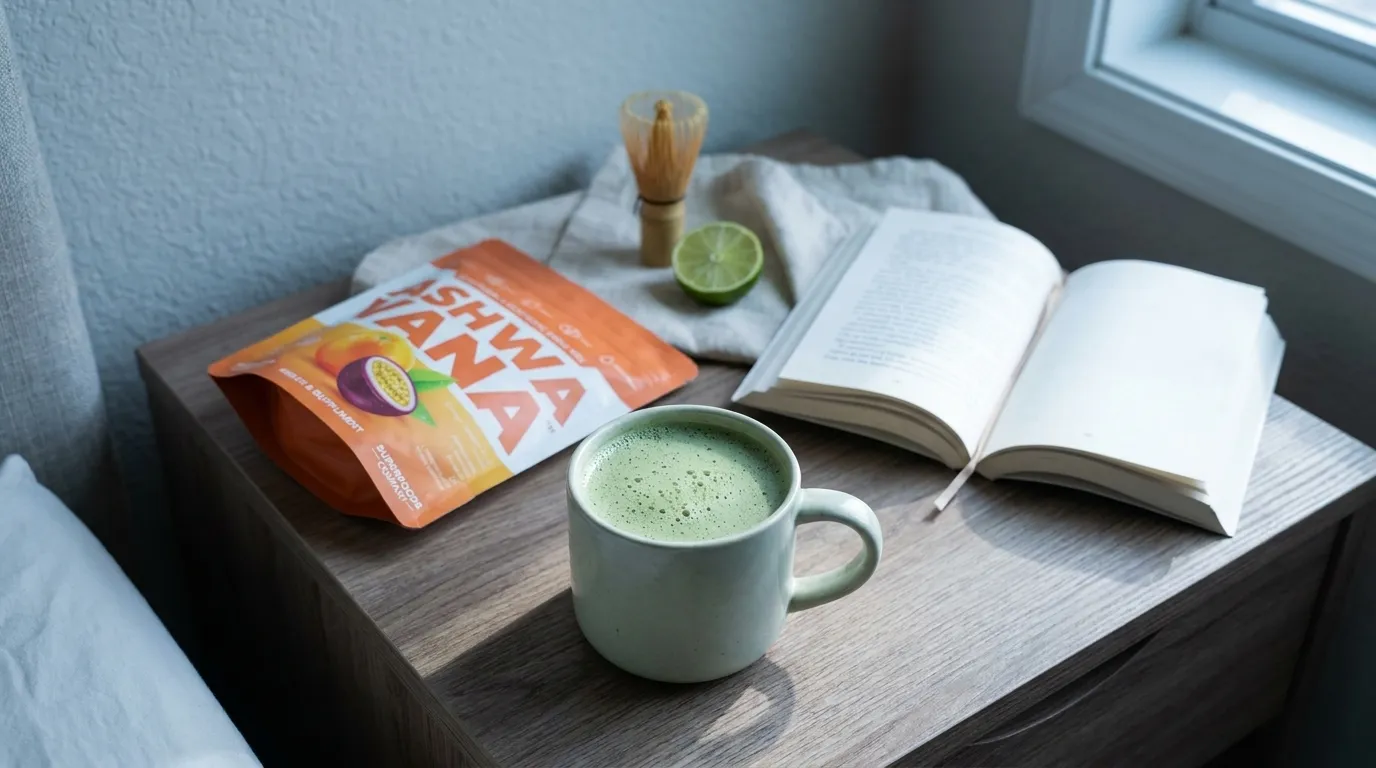
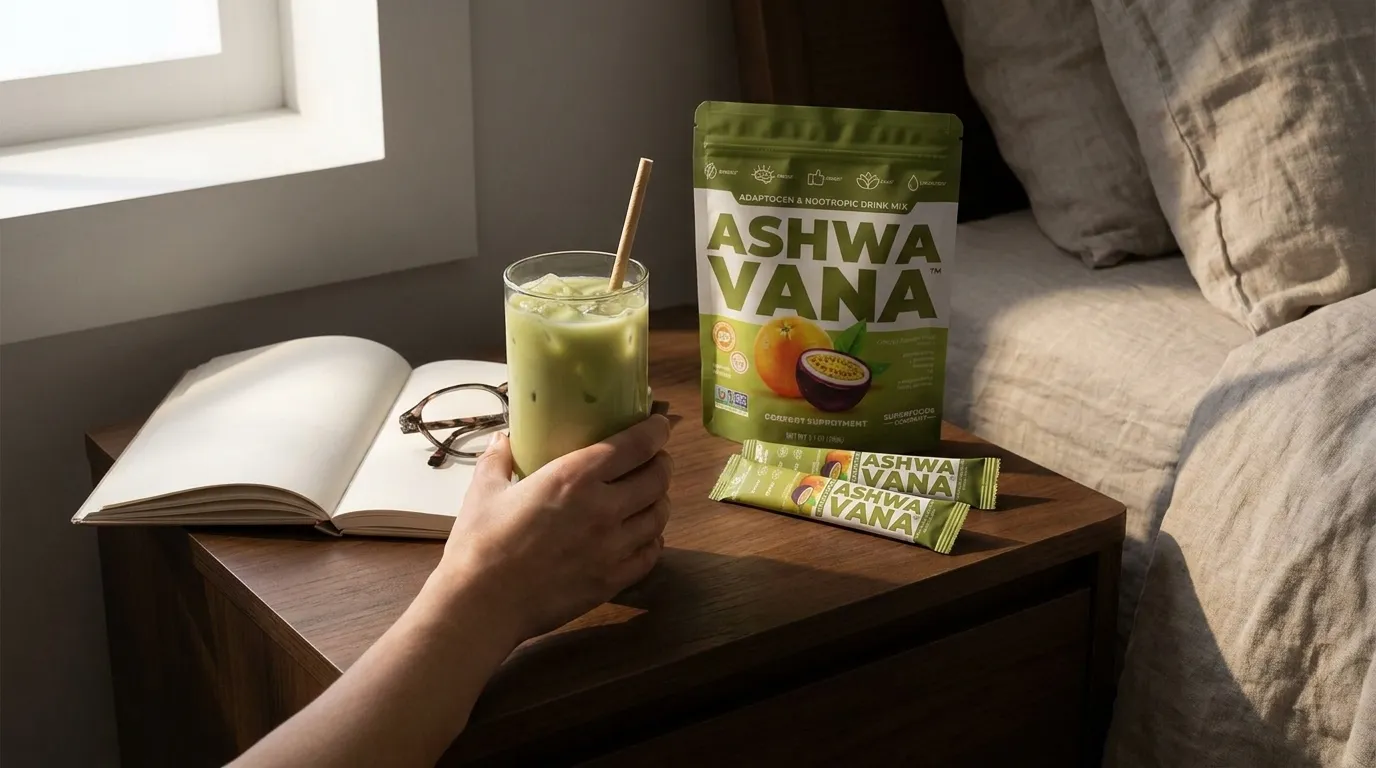
Then I started making this iced matcha instead of cup number two. Not as a health-influencer plot twist — I develop recipes for a living, so I tested it the way I test everything, badly at first, then dialed in over a couple of weeks in my own kitchen. This is the version I actually drink. It's built around Ashwavana Guru Focus, and I'll be honest about what it does and what it doesn't.
Why matcha and this blend get along so well
Here's the thing that sold me. Matcha isn't just green coffee. Matcha naturally pairs L-theanine, caffeine, and EGCG catechins — and that specific combination is what supports calm, focused attention and mood without the spike-and-crash you get from caffeine alone. So the base ingredient is already working with you, not against you.
L-theanine is the quiet hero. It's an amino acid from tea that increases alpha brain-wave activity and acts as a mild neural relaxant. Paired with caffeine, it smooths the stimulant's edge — improving sustained and selective attention while reducing jitters. Research on higher-dose L-theanine-and-caffeine combinations (there's a good double-blind crossover study in acutely sleep-deprived adults) points at exactly the effect I feel: awake, but not wired.
Then the blend stacks a few adaptogens on top. Ashwagandha is the one people know — it modulates the HPA axis and blunts the cortisol response to chronic stress, which is why the KSM-66 stress-and-anxiety trials keep showing lower perceived stress. Rhodiola rosea helps with stress-induced mental fatigue (the classic study on physicians during night duty is a favorite of mine). And lemon balm's rosmarinic acid nudges GABA pathways toward calm. That's a lot of "settle down" working underneath the "wake up."
One customer review summed up my experience better than I could: it "leaves me feeling awake but BALANCED with a happy energy." Another said simply, "I love the energy and focus without the jitters." Same. That's the whole reason this drink exists in my fridge.
The recipe: Iced Calm-Focus Matcha
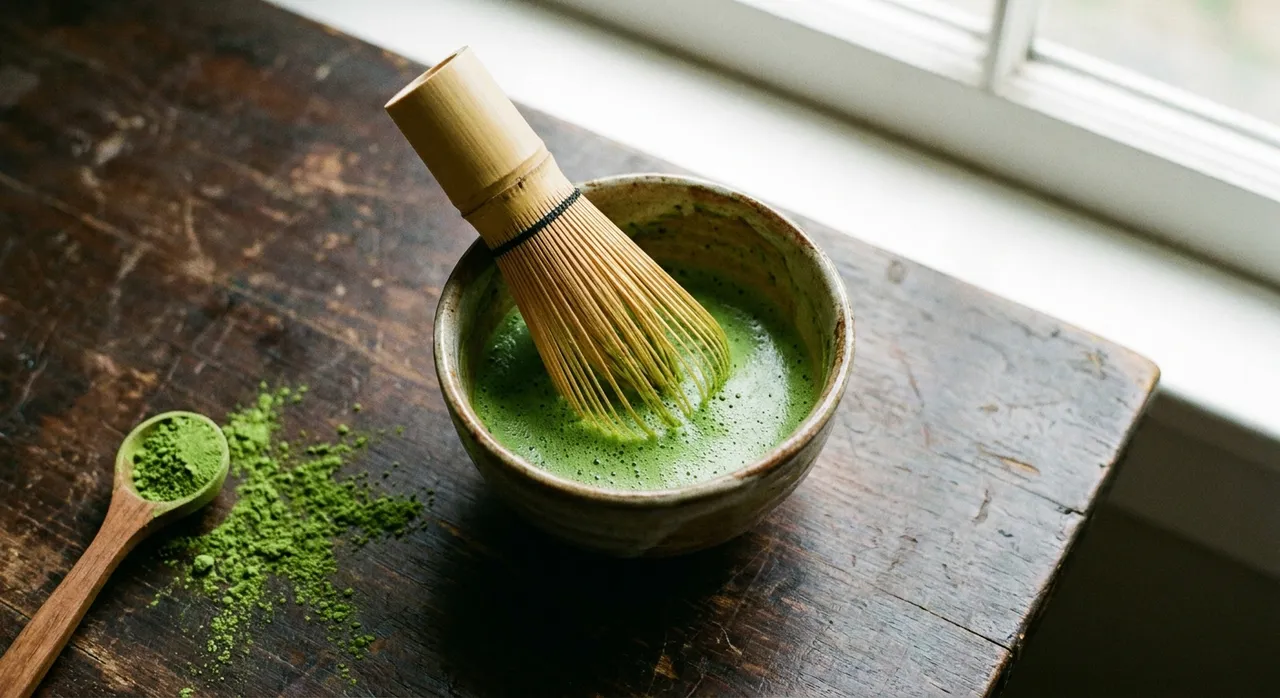
This makes one tall glass (about 14–16 oz). It takes maybe four minutes. The only non-negotiable step is whisking the matcha into a paste before you add cold liquid — cold water clumps matcha into little green pebbles, and no one wants to chew their drink.
What you need
- 1 tsp culinary-grade matcha powder (a slightly heaping teaspoon is about 2 g)
- 1 serving Ashwavana Guru Focus, mixed per the label into 2 oz warm (not hot) water
- 2 Tbsp hot water, around 175°F — not boiling, or the matcha turns bitter
- 3/4 cup cold milk of choice (I use oat milk for the froth)
- 1/2 cup cold water
- 1 cup ice
- Optional: 1/2 tsp maple syrup or honey; a pinch of cinnamon on top
Steps
- Make the matcha paste. In a small bowl, add the matcha and the 2 Tbsp of 175°F water. Whisk in a brisk zigzag (a bamboo whisk is ideal, a small metal whisk works) for about 20 seconds until it's smooth and frothy with no lumps.
- Mix your blend. Stir one serving of Ashwavana Guru Focus into 2 oz warm water until fully dissolved. Let it cool for a minute so you don't melt all your ice.
- Sweeten, if you like. Stir the maple syrup into the matcha paste while it's still warm — it dissolves better now than over ice.
- Build the glass. Fill your glass with ice. Pour in the cold milk and 1/2 cup cold water.
- Layer and combine. Pour the matcha paste over the ice, then the dissolved blend. It'll look like a moody green sunrise for a second. Stir well.
- Finish. Dust a pinch of cinnamon on top. Sip. The blend already carries cinnamon and ginger, so that little dusting just echoes what's inside.
Tester's note: If you're sensitive to caffeine, this is naturally lower-octane than a real espresso drink — the matcha's caffeine sits under coffee's, and the L-theanine takes the sharp corners off what's there. That's the point.
What the rest of the blend is quietly doing
You don't taste most of it, but I like knowing it's there. A few of the ingredients I find most interesting:
- Beet root is rich in dietary nitrate, which your body converts to nitric oxide — widening blood vessels and increasing regional brain perfusion. Good circulation is quietly part of good focus.
- Turmeric's curcumin lowers pro-inflammatory cytokines like IL-6 and oxidative stress, which may support mood and a clear head.
- Cinnamon and ginger both help blunt post-meal blood-sugar swings — cinnamon polyphenols improve insulin sensitivity, and ginger's gingerols can reduce glucose spikes. Those swings are what drive a lot of the 3 p.m. crash-and-crave cycle.
- Vitamin D3 acts on receptors throughout the brain, and correcting low D status is linked to improved mood and less fatigue — with Vitamin K2 alongside to route calcium into bone and away from arteries. They work synergistically, which is why they belong together.
- Pomegranate and grape seed bring polyphenol antioxidants; grape seed proanthocyanidins in particular support endothelial function and healthy circulation.
Is one iced matcha going to rewire your afternoon by itself? No. But over a few weeks of swapping it in for that second coffee, the pattern I kept noticing was fewer jitters, a mood that held steadier, and — this is the honest headline — I stopped white-knuckling the middle of my day. One reviewer put it as feeling "focused, calm, and productive all day," and while everyone's body is different, that tracks with mine.

A few honest caveats
Ashwagandha isn't for everyone — if you're pregnant, on thyroid medication, or managing a health condition, check with your doctor first. Start with the recommended serving and see how you feel before you decide it's your new ritual. And matcha does have caffeine, so keep it to the morning if you're sleep-sensitive; I don't make this after about 2 p.m.
Beyond that? It's become the drink I look forward to. My whisk lives on the counter now instead of the back of a drawer, which tells you something.
These statements have not been evaluated by the Food and Drug Administration. This product is not intended to diagnose, treat, cure, or prevent any disease. The research cited above describes individual ingredients studied on their own, not the finished Ashwavana Guru Focus product or this recipe, and individual results will vary. Consult a healthcare professional before starting any new supplement, especially if you are pregnant, nursing, taking medication, or managing a medical condition.
Renee develops recipes at Superfoods Company and has been a two-cups-before-noon coffee drinker for twenty years. Every recipe here gets tested in her own kitchen first.
Ready to try it for yourself?
Shop Superfoods Company