The Right Way to Drink Ashwavana Guru Focus (So You Actually Feel the Benefits)

The first week I had Ashwavana Guru Focus on my desk, I did everything wrong. I stirred a scoop into cold tap water at 4:15 p.m. — the exact hour my brain usually files for early retirement — chugged it like a shot, and then wondered why the effect felt polite instead of noticeable. It took me a few days of actual kitchen testing (and I test everything; it's the job) to realize the benefits were all there. I was just using them like someone who hadn't read the instructions. Which, to be fair, I hadn't.
So this is the guide I wish I'd had. Not a hype sheet. A how-to. Because the difference between "eh, it's fine" and "oh, this is why people rebuy it" mostly comes down to when you drink it, how you mix it, and what you pair it with. Let's get into it.
First, what you're actually working with
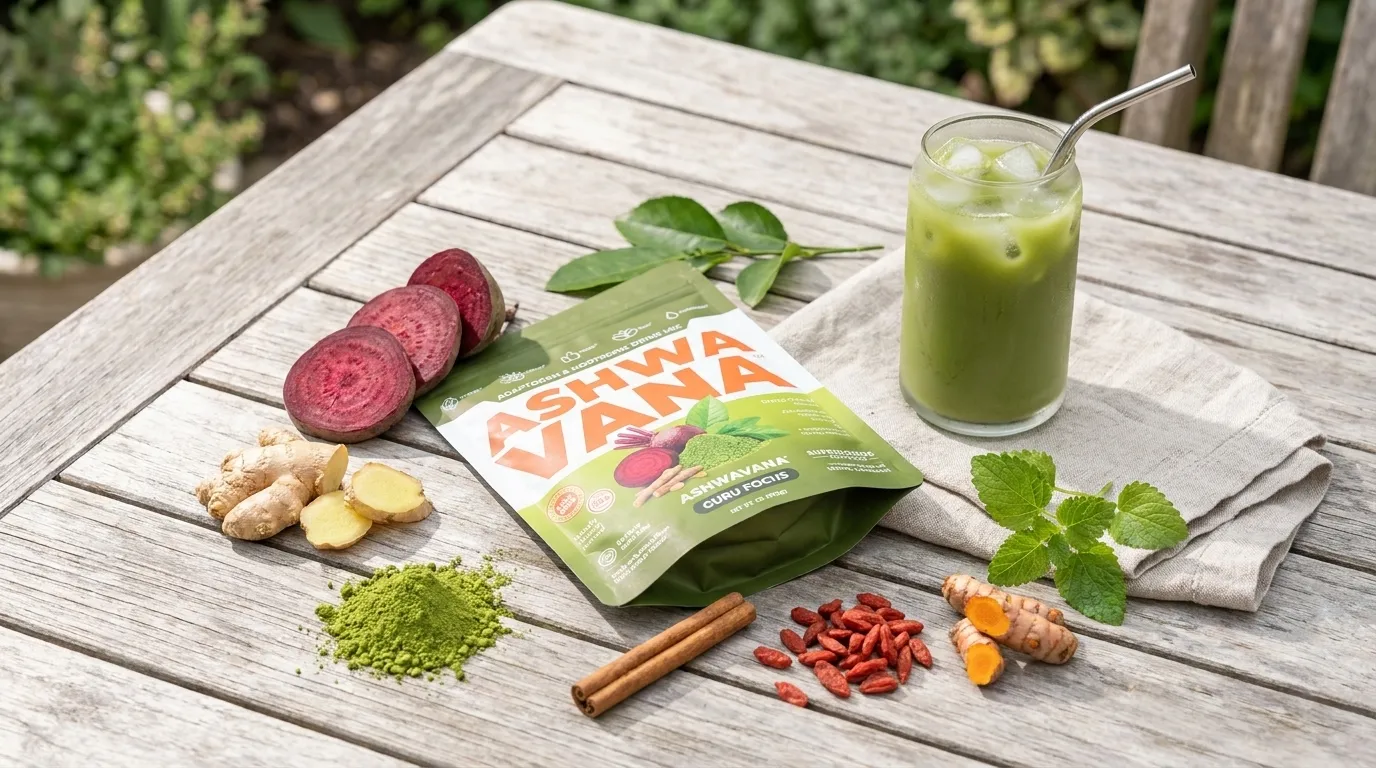
Before timing, it helps to know why this isn't just green powder. Ashwavana Guru Focus is built around fifteen ingredients that pull in the same direction — calm, steady, clear. The two doing the heavy lifting on that "focused but not wired" feeling are ashwagandha and L-theanine.
Ashwagandha is an adaptogen that helps modulate the HPA axis — your body's stress-response system — blunting the cortisol spike that comes with chronic stress. Lower morning cortisol tends to read as calmer, steadier energy and less white-knuckle reactivity. And this pairing isn't just our idea: many people find these supplements work well together, with L-theanine used in a morning routine for calm, focused energy and ashwagandha for stress recovery.
L-theanine is the other half of the magic. It's an amino acid from tea that nudges your brain toward alpha-wave activity — the same relaxed-but-alert state you might recognize from a good stretch of focused work. L-theanine promotes calm alertness by influencing brain waves, while ashwagandha helps the body adapt to stress by supporting cortisol balance. Paired with a little caffeine (hello, matcha), it smooths the stimulant's jagged edge. That's the whole ballgame, chemically speaking.
Then there's the supporting cast: matcha for clean caffeine, beet root nitrates for blood flow, rhodiola for mental fatigue, plus turmeric, cinnamon, ginger, lemon balm, goji, pomegranate, chlorella, grape seed extract, and vitamins D3 and K2. More on how those show up in a minute. First — timing, because it matters more than anything else.
The single biggest thing: drink it in the morning
Here's what I got wrong. This is a morning-to-early-afternoon drink, full stop. The energizing pieces — matcha's caffeine, rhodiola, beet root — belong in the front half of your day. The timing of adaptogens matters, and taking the right adaptogen at the wrong time reduces its benefits.
The logic is simple and it's backed by how these ingredients behave. Morning is when most people need mental clarity, and focus adaptogens work well then because they support attention and productivity, while later in the day fatigue becomes more physical. And because matcha brings real caffeine, you want a cutoff. Energizing adaptogens should generally be taken no later than early afternoon to avoid potential sleep interference, and they work best with consistent, regular use.
My tested sweet spots:
- Best: Mid-morning, around 9:30–10:30 a.m., once breakfast has settled. This is where the "steady energy, sharper focus" window lands hardest for me.
- Also great: Right before a 1–2 p.m. meeting block, as a coffee swap that won't wreck my sleep.
- Skip: After about 2 p.m. if you're caffeine-sensitive. I love this stuff, but I also love falling asleep.
One of our reviewers put the payoff better than I can:
"It makes me feel so focused, calm, and productive all day."That "all day" part? It starts with a morning cup, not a 4 p.m. rescue mission.

How to actually mix it (the part I overthought)
Matcha is famously stubborn about clumping, so a quick stir in a glass will leave you with green freckles floating on top and grit at the bottom. Don't do what I did. Do this instead:
- Start cold or cool, not hot. 10–12 oz of cold water or your milk of choice. Hot water can make delicate ingredients taste bitter and dulls the bright, grassy note.
- Add the scoop, then agitate hard. A handheld frother for 15–20 seconds is the move. No frother? A lidded shaker jar or a bottle you can shake for a solid 20 seconds works nearly as well.
- Pour over ice. Fill a tall glass with ice and pour. The dilution as the ice melts is a feature, not a bug — it keeps the sip smooth.
- Optional finish: a squeeze of lemon, a splash of oat or coconut milk, or a couple of frozen berries. I'm partial to a thin round of fresh ginger dropped in for a little heat.
On the empty-stomach question people always ask me: I get the smoothest ride when I have it after a small breakfast, not on a completely empty stomach. The cinnamon and ginger in the blend are there partly to help steady blood sugar and ease digestion — cinnamon polyphenols support insulin sensitivity and blunt the swings that drive crashes and cravings, and ginger's gingerols help with motility and post-meal glucose. But a little food underneath it still makes the whole experience gentler. Your mileage may vary; test it both ways.
Stack it with your day, not against it
The benefits multiply when you line the cup up with the right task. A few pairings I keep coming back to:
For deep-focus work
Drink it 20–30 minutes before you sit down for anything that needs sustained attention. That's the L-theanine-plus-caffeine window doing its thing. L-theanine encourages the production of alpha brain waves — the same state your mind enters during meditation — promoting calm focus without drowsiness, and the real magic happens when it meets caffeine. A reviewer summed up the feel exactly:
"I love the energy and focus without the jitters."
As a coffee replacement
If you're trying to cut back on coffee (I still keep my two morning cups, but I've genuinely stopped needing a third), this is the swap. Matcha delivers its caffeine differently than a straight espresso. The energy is still there, but it arrives more gently, lasts longer, and doesn't come with the spike-and-crash pattern of coffee. One customer described it as being
"awake but BALANCED with a happy energy"— which is exactly the phrase I'd steal if I were being honest.
Before a workout or a long afternoon on your feet
This is where the beet root earns its place. Beet root is rich in dietary nitrate, which your body converts to nitric oxide to widen blood vessels and support circulation — including regional blood flow to the brain. Rhodiola backs it up on the mental-fatigue side, helping you concentrate when you're running on fumes.
What each benefit actually feels like (and what's behind it)
People searching for Ashwavana Guru Focus benefits usually want the honest version, so here it is, benefit by benefit:
- Calm, steady energy — no jitters, no crash. This is the L-theanine + matcha caffeine combination, softened by ashwagandha's effect on cortisol. It's the most-mentioned thing in our reviews, described plainly as energy "without any sort of crash."
- Sharper focus and mental clarity. Alpha waves from L-theanine, plus circulation support from beet root, grape seed proanthocyanidins, and pomegranate polyphenols. A reviewer: "noticeably better focus and attention span."
- Calmer, less anxious. Ashwagandha and lemon balm — the latter's rosmarinic acid interacts with GABA pathways to support a balanced mood. Several customers mention it "keeps my anxiety at bay" and helps them "tackle the day without anxiety."
- Brighter mood. Vitamin D3 acts on receptors throughout the brain; correcting low D status is linked with improved mood and less fatigue. Curcumin from turmeric supports it by dialing down inflammatory markers.
- Fewer cravings. Cinnamon and ginger help steady blood sugar, which is often the real puppet-master behind the 3 p.m. snack raid.
A caveat, because I'd want one: these ingredients tend to reveal themselves over a couple of consistent weeks, not in a single dramatic first cup. The calm is quiet by design. If you're expecting a pre-workout slam, you'll miss it. If you're paying attention, you'll notice your afternoon just… didn't fall apart.
The short version
Drink it mid-morning, mix it cold with a frother, have a little food under it, and line it up 20–30 minutes before the work that matters. Keep it before early afternoon so your sleep stays intact, and give it a couple of weeks of consistency before you judge. That's it. That's the whole method — and it's the difference between a scoop that's "fine" and one you actually look forward to.
These statements have not been evaluated by the Food and Drug Administration. This product is not intended to diagnose, treat, cure, or prevent any disease. The studies referenced above describe the properties of individual ingredients and are not studies of the finished product. Individual results vary. If you are pregnant, nursing, taking medication, or have a medical condition, talk with your healthcare provider before using this or any supplement.
Renee develops recipes at Superfoods Company and has been a two-cups-before-noon coffee drinker for twenty years. Every recipe here gets tested in her own kitchen first.
Ready to try it for yourself?
Shop Superfoods Company