What Fifteen Ingredients Are Actually Doing in Your Cup: The Science of Ashwavana Guru Focus

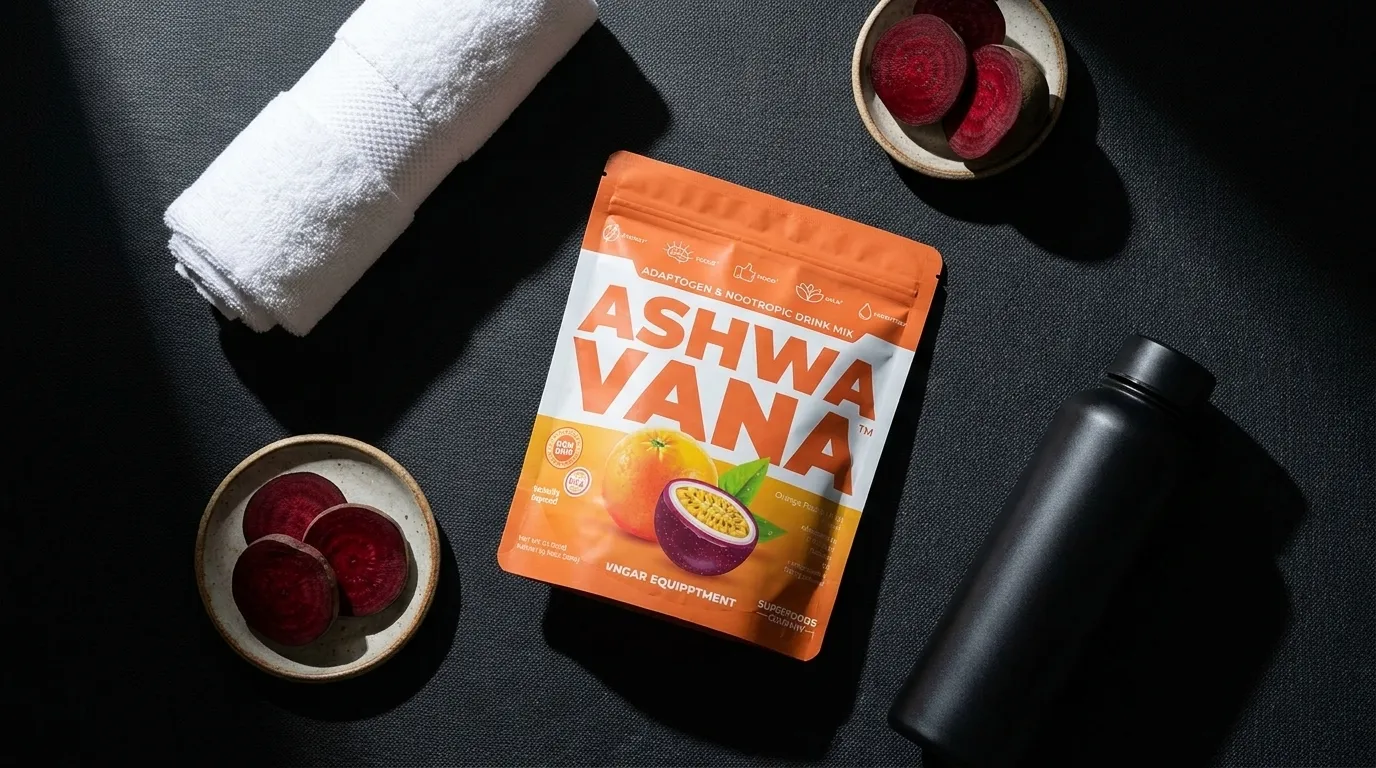
The first thing a customer said to me that stuck was, "It makes me feel so focused, calm, and productive all day." I'd read that phrase in a dozen variations by the time I sat down to actually map out why. I'm a dietitian, so my instinct isn't to nod along — it's to pull the papers and check whether the ingredient list backs up the feeling. So I did. Fifteen ingredients, one at a time, with the studies open on my second monitor.
Here's what I found, and where I think the honest limits are.
The core pairing: why "calm" and "focused" show up together
Most people describe two things happening at once — they feel switched on, but not wired. That's not marketing; it's the pharmacology of a specific pairing. L-theanine, an amino acid from tea, increases alpha brain-wave activity and acts as a mild neural relaxant. On its own it takes the edge off. Paired with caffeine, it does something more interesting: it smooths the stimulant's jagged parts while keeping the alertness.
The research on this is fairly clean. In a double-blind, placebo-controlled crossover study of sleep-deprived young adults, a high-dose L-theanine–caffeine combination improved measures of selective attention. And in a separate randomized controlled trial, L-theanine on its own eased stress-related symptoms and supported cognitive function in healthy adults. Independent sources describe the same mechanism plainly — that Ashwavana Guru Focus leans on this exact partnership.
"I love the energy and focus without the jitters." — that's the L-theanine talking, mostly.
Matcha green tea is the elegant part here, because it delivers that pairing pre-assembled by nature. It naturally contains L-theanine, caffeine, and EGCG catechins together, and the studies I looked at describe this trio supporting calm, focused attention and mood without the spike-and-crash of caffeine alone. In one randomized study, taking matcha with caffeine improved aspects of attention and work performance under mild psychological stress compared with caffeine by itself. That's the "awake but balanced" feeling in a nutshell.
The adaptogens: dialing down the stress response
Ashwagandha is the ingredient people ask me about most, and it earns the attention. It's an adaptogen that modulates the hypothalamic-pituitary-adrenal (HPA) axis — the loop that governs your cortisol response to chronic stress. In practical terms, it blunts how sharply cortisol spikes when life piles on.
Two randomized, double-blind, placebo-controlled studies anchor this for me: one titled "An investigation into the stress-relieving and pharmacological actions of an ashwagandha extract," and a multi-centric trial evaluating KSM-66 ashwagandha in adults experiencing high stress and anxiety. Lower morning cortisol tends to track with calmer, steadier energy and less stress reactivity. I want to be careful here — I'm describing what the ingredient does in trials, not promising a mood transplant. But when a customer writes "keeps my anxiety at bay" or "helps me tackle the day without anxiety," this is the most likely engine.
Rhodiola rosea is the second adaptogen, and it plays a different position. It influences stress-response and monoamine signaling, and the research points to reduced stress-induced mental fatigue. My favorite study on it is refreshingly specific: a double-blind crossover trial (standardized extract SHR-5) tested physicians on night duty and found it supported mental performance during those demanding, fatiguing stretches. If ashwagandha lowers the background hum of stress, rhodiola helps you keep concentrating while you're tired.
Lemon balm rounds out the calm trio. Its rosmarinic acid modulates GABA pathways, and in clinical work it has attenuated laboratory-induced stress and supported a balanced mood. Small role, real one.

The blood-flow story: focus needs fuel
This is the part I think gets underrated. Your brain is a demanding organ, and attention is metabolically expensive. Several ingredients here are, functionally, about circulation.
- Beet root is rich in dietary nitrate, which your body converts to nitric oxide. That widens blood vessels, lowers blood pressure, reduces the oxygen cost of exercise, and increases regional brain perfusion. A double-blind, placebo-controlled crossover study found dietary nitrate modulated cerebral blood flow parameters and cognitive performance in healthy adults after roughly 450 ml of beetroot juice (~5.5 mmol nitrate).
- Grape seed extract supplies proanthocyanidins — potent antioxidants that improve endothelial (blood-vessel lining) function and promote vasodilation. A meta-analysis of 16 randomized controlled trials examined their impact on blood pressure.
- Pomegranate brings ellagitannins like punicalagin and ellagic acid, which raise plasma antioxidant capacity and, in some trials, increased task-related cerebral blood flow. One study paired pomegranate juice with fMRI and reported effects on memory-related brain activity in middle-aged and older adults with mild memory complaints.
The logic is consistent: better circulation, better-fueled focus and stamina. One reviewer summed up their experience as "calm, steady energy, better focus, and great hydration" — the hydration and the circulation aren't unrelated.
The blood-sugar and mood supporting cast
Energy crashes are often just blood-sugar swings wearing a costume. A few ingredients target that directly. Cinnamon polyphenols improve insulin sensitivity and slow gastric emptying, helping blunt the glucose swings that drive crashes and cravings — a meta-analysis found cinnamon intake lowered fasting blood glucose. Ginger root's gingerols support digestion and can reduce post-meal glucose spikes, per a randomized controlled trial on postprandial glycemia in nondiabetic adults. That mechanism lines up neatly with the reviews mentioning curbed cravings.
On mood and inflammation, curcumin (turmeric's active polyphenol) lowers pro-inflammatory cytokines like IL-6 and oxidative stress and nudges neurotransmitter pathways; a randomized, double-blind, placebo-controlled trial reported improvements in serum inflammatory markers and mental health. Vitamin D3 acts on receptors throughout the brain and endocrine system — a systematic review and dose-response meta-analysis linked correcting low vitamin D to improved mood — and Vitamin K2 partners with it, activating matrix Gla protein and osteocalcin to route calcium into bone and away from arterial walls. That D3–K2 synergy is well described in a narrative review, and it's a thoughtful detail: if you're adding D3, K2 belongs alongside it.
Chlorella and goji berry add nutrient density and antioxidant support to the mix — supporting players, not headliners, and I'd rather be straight about that than oversell them.
So what does the combination actually add up to?
Here's my honest read as a dietitian. No single ingredient is a miracle. What's smart about this formula is the architecture: adaptogens turning down the stress dial, the L-theanine–caffeine–matcha trio delivering calm alertness, nitrate and polyphenols keeping circulation flowing, and cinnamon and ginger steadying the blood sugar that so often sabotages an afternoon. Individually, each has a modest, real evidence base. Stacked, they explain why someone says it "leaves me feeling awake but BALANCED with a happy energy."
If you already drink it, the takeaway is to give it a steady daily runway — adaptogens especially tend to show their effects with consistent use, not a single dose. If you're still deciding, know that the claims here trace back to actual ingredient research, and the effect people describe — steady energy, no crash, sharper attention — is exactly what this combination is designed to produce.
These statements have not been evaluated by the Food and Drug Administration. This product is not intended to diagnose, treat, cure, or prevent any disease. The studies referenced above describe research on individual ingredients, not on the finished product, and individual results will vary. If you are pregnant, nursing, taking medication, or managing a health condition, talk with your healthcare provider before adding any supplement.
Priya is a registered dietitian who reviews the science behind every ingredient we use. She spends her days turning clinical research into plain English.
Ready to try it for yourself?
Shop Superfoods Company