What Actually Happens When You Drink a Superfood Fizzy Tab

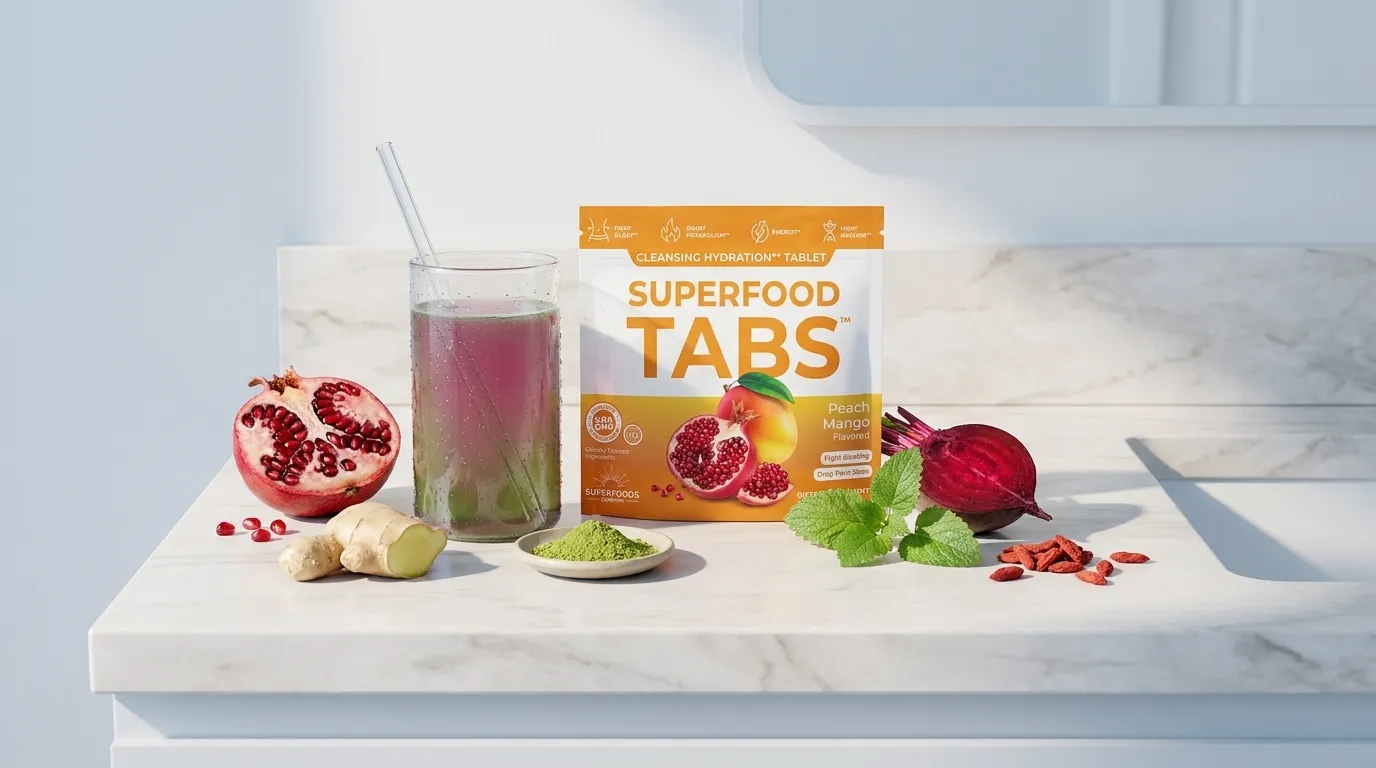
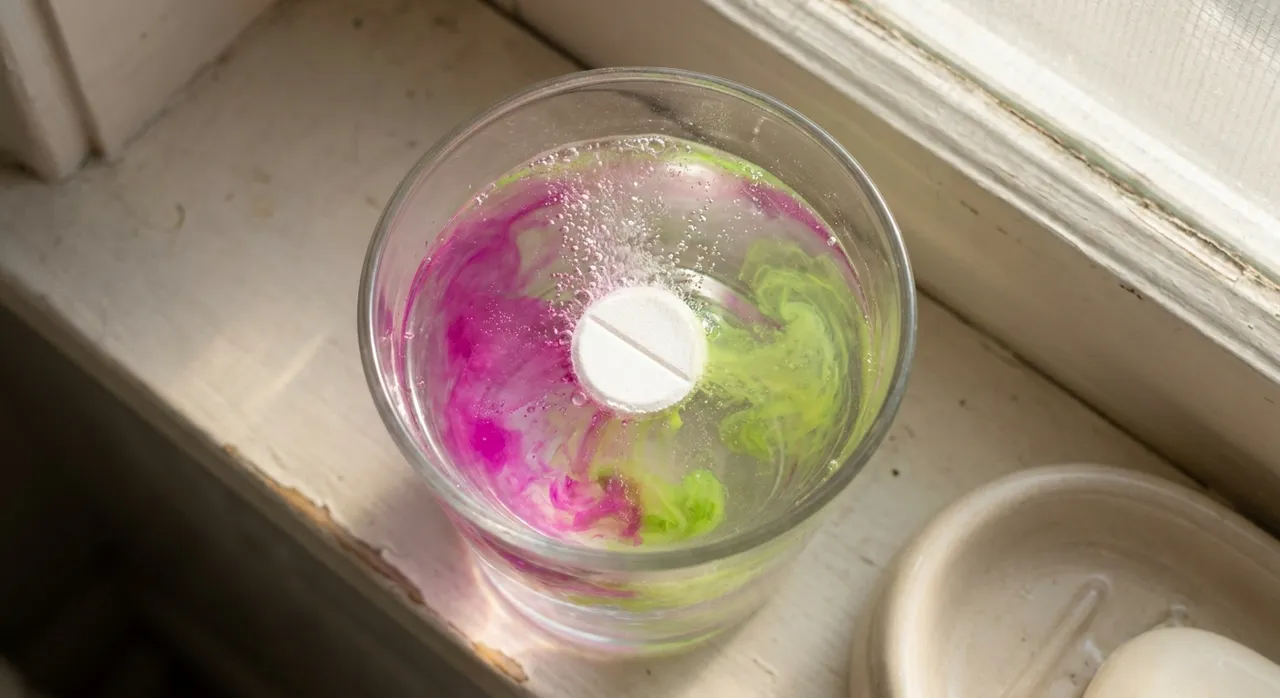
The first time someone asked me, "But what is the fizz actually doing?" I was standing in my kitchen at 6:40 a.m., watching a tab spin and dissolve in a glass of water like a tiny pink storm. Fair question. The fizz itself isn't the point — it's a delivery system, and a clever one. What I care about, as the dietitian who reads the studies behind every ingredient we put in, is what's riding in on that fizz once it hits your glass.
So let me do the thing I do all day: take a refreshing Superfood Tabs drink apart, ingredient by ingredient, and tell you what the research genuinely supports — and where it stops.
Why "fizzy" is more than a gimmick
A superfood fizzy drink solves a boring problem elegantly: people don't take things that taste like a lawn. Greens powders have a reputation, and it's mostly earned. The category is built on ingredients like wheat grass and chlorella, which are genuinely nutrient-dense but famously hard to love. Our own formula leans on that same green pedigree — matcha, green tea, wheat grass, chlorella, dandelion — but wraps it in something you'll actually reach for.
That matters more than it sounds. The single biggest predictor of whether a supplement works is whether you keep taking it. When customers tell us things like "I cannot drink my water without them" and "I actually crave this now," they're describing the real mechanism: a habit that sticks. Effervescence also means the active compounds arrive already dissolved in roughly 12–16 oz of water, so you're hydrating and supplementing in the same motion. Two birds.
The energy question: caffeine, but make it steady
Each serving carries 100 mg of caffeine from green tea leaf extract — roughly a strong cup of coffee, give or take. But the reason reviewers describe it as "clean, steady energy without jitters" isn't marketing; it's chemistry. Caffeine from green tea travels with other tea compounds, and the result tends to be a gentler curve than a fast espresso spike.
Then there's the ginseng, which is where the energy story gets interesting. Ginsenosides modulate the hypothalamic-pituitary-adrenal axis and support cellular energy production. In a randomized, double-blind, placebo-controlled trial (Antifatigue Effects of Panax ginseng C.A. Meyer), Panax ginseng significantly reduced both mental and physical fatigue in people with chronic fatigue. And in a separate double-blind randomized trial, a single 200 mg dose improved mental arithmetic performance and reduced mental fatigue, with measurable gains in attention and memory.
My honest read: this is about fewer crashes, not a rocket. If you're using a superfood fizzy drink to replace a third coffee, that's a sensible swap. If you're using it to outrun four hours of sleep, the ginseng can't save you. Sleep can.
The weight and waistline conversation — carefully
This is the benefit people most want to hear about, and the one I'm most careful with. So here's what the studies actually say about specific ingredients, followed by a reality check.
Green tea catechins
EGCG, the most abundant green tea catechin, inhibits catechol-O-methyltransferase, which prolongs norepinephrine signaling and nudges up thermogenesis and fat oxidation. A GRADE-assessed, dose-response meta-analysis of randomized trials found green tea extract lowered body mass, BMI, and body-fat percentage while raising adiponectin. The effects are real but modest — think a helpful tailwind, not a tow truck.
Ginger
Gingerols and shogaols increase thermogenesis and fat oxidation and improve insulin sensitivity. A GRADE-assessed meta-analysis of 27 randomized controlled trials found ginger reduced body weight, BMI, waist circumference, and percent body fat. Ginger is one of the more quietly impressive ingredients in the blend.
Pomegranate
Pomegranate is rich in ellagitannins and punicalagins that your gut converts into urolithins, which support fat metabolism and reduce oxidative stress. Clinical reviews (including Pomegranate and Metabolic Syndrome Risk Factors: A Systematic Review of Clinical Studies) report reductions in body weight and waist measures alongside improved metabolic markers.
Ginseng and aloe vera
In a clinical study of obese middle-aged women, 8 weeks of Panax ginseng produced significant reductions in body weight and BMI — with effects that varied by each woman's baseline gut bacteria, which is a fascinating detail and a reminder that individual results genuinely differ. And in an 8-week randomized trial in obese adults with impaired glucose control, aloe vera produced significantly greater body weight and body-fat loss than placebo, likely via improved insulin sensitivity.
Now the reality check. Reviews from our own customers are striking — "I lost 84 lbs since I started using it," "With their help I lost 63lbs," "I have lost 129 pounds." I love reading those. I also have to be straight with you: a fizzy drink is not why someone lost 129 pounds on its own. What it can do, and what the gentler reviews describe — "It really helps curb my appetite," "no more sugar craving or want to eat snacks," "my clothes are a little looser in the waist" — is make the daily habits easier. Less snacking, more water, fewer 3 p.m. cravings. Those small things compound.
The drink doesn't do the work. It removes friction from the work you're already doing. That distinction is the whole ballgame.
The cravings-and-stress link most people miss
Here's a mechanism I wish more people understood. Lemon balm's rosmarinic acid inhibits GABA transaminase, raising calming GABA tone in the brain. In a randomized placebo-controlled trial of patients undergoing coronary artery bypass surgery, 1.5 g/day of lemon balm reduced anxiety by roughly 49% and improved sleep quality by about 54% versus placebo.
Why does that belong in a weight conversation? Because chronically elevated cortisol drives abdominal fat storage and pushes us toward calorie-dense comfort foods. Calm the stress response, and you often blunt the stress-eating. It's indirect — lemon balm is not a fat-burner — but it's a real, underrated lever, and it's part of why people report the snacking just... quieting down.
Digestion, bloating, and "a lighter middle"
Ginger earns its place again here. Gingerols and shogaols act as 5-HT3 receptor antagonists and accelerate gastric emptying, and clinical trials consistently show ginger relieves nausea — including pregnancy-related nausea (from a comprehensive systematic review of 109 randomized controlled trials). Ginger also calms inflammation, with meta-analyses reporting significant reductions in C-reactive protein and TNF-α.
Pair that with dandelion, burdock root, milk thistle, and aloe vera for gentle digestive and liver support, plus the simple act of drinking a full glass of water, and you get the "less bloating" and "gentle digestive regularity" people describe. Honestly, sometimes the most underrated benefit here is just the water.
The heart-and-antioxidant layer
A few ingredients quietly look after your cardiovascular system. Pomegranate polyphenols inhibit serum angiotensin-converting enzyme (ACE) activity, and meta-analyses of randomized trials show meaningful reductions in both systolic and diastolic blood pressure. Pomegranate also carries one of the highest antioxidant capacities of any fruit, thanks to tannins, anthocyanins, and ellagic acid derivatives.
Meanwhile green tea catechins induce antioxidant enzymes and scavenge free radicals, and meta-analyses show they lower triglycerides and raise HDL cholesterol in overweight and obese people. Add elderberry, goji berry, and beet root — beets being a well-known source of nitrates — and the antioxidant load in a single glass is genuinely high.
How I'd actually use it
- Pick a consistent time. Mine is morning, because of the 100 mg caffeine. If you're sensitive, don't drink it after about 2 p.m.
- Use enough water — 12 to 16 oz. The dilution helps the taste and the hydration both.
- Let it fully dissolve before drinking; the actives are doing their best work in solution, not stuck to the bottom of the glass.
- Pair, don't replace. It complements protein, fiber, and sleep. It doesn't substitute for them.
If you're considering it and you're skeptical — good. Skepticism is the right starting posture for any supplement. My pitch isn't that a Superfood Tabs drink is magic. It's that the ingredient list is backed by real randomized trials, the caffeine is honest and reasonable, and the format makes the one thing that actually matters — consistency — effortless. That's a sturdier promise than "magic," and it's one I can stand behind as a dietitian.
These statements have not been evaluated by the Food and Drug Administration. This product is not intended to diagnose, treat, cure, or prevent any disease. The research described here refers to individual ingredients studied on their own, often at specific doses, and not to the finished product. Individual results vary, and customer testimonials reflect personal experiences, not typical or guaranteed outcomes. Talk to your healthcare provider before starting any supplement, especially if you are pregnant, nursing, taking medication, or sensitive to caffeine.
Priya is a registered dietitian who reviews the science behind every ingredient we use. She spends her days turning clinical research into plain English.
Ready to try it for yourself?
Shop Superfoods Company