The Ashwavana Zen Relax Benefits I Actually Feel (and How I Fold Them Into My Day)


The first time I really noticed it, I was standing at my kitchen counter at 8 a.m. with a deadline breathing down my neck, stirring a scoop into warm water because I'd run out of my usual coffee ritual patience. Twenty minutes later I realized my shoulders had dropped from somewhere up around my ears. Nothing dramatic. No fog, no floaty feeling. Just… quieter. I've tested a lot of things in my own kitchen over the years, and that specific "the noise turned down but I'm still sharp" sensation is the whole reason I keep Ashwavana Zen Relax within arm's reach.
So let's talk about what it actually does — and, because I get asked this constantly, exactly how I use it to get each benefit. This isn't a supplement-facts recitation. It's the routine I've landed on after drinking it daily.
What "benefits" actually means here (the short version)
When I read through our own reviews, the same handful of words keep coming up: calm, zen, focus, no crash, better sleep, better mood. One customer put it about as plainly as you can: "I feel SO zen, I'm in a better mood, and it's helping me sleep better too." Another wrote something I still think about: "Anxiety is completely gone which I can't believe."
Here's the honest framing. These aren't separate magic buttons — they're what happens when a stack of well-studied calming and adaptogenic ingredients nudge your stress response in the same direction. Ashwagandha and L-theanine, the two headliners in Zen Relax, are frequently paired precisely because they work on different timelines and complement each other. As one recent comparison put it, L-theanine tends to produce a "gentle, fairly quick sense of calm focus," while ashwagandha is studied mostly for its effect on the body's stress response over weeks of consistent use. So some of what you feel is same-day. Some of it builds.
My rule of thumb: theanine and the herbs handle "right now." Ashwagandha and magnesium handle "over the next few weeks." Drink it consistently and you get both.
Benefit 1: The calm, zen feeling — and how I chase it
This is the flagship. The Sensoril ashwagandha in our blend is a standardized Withania somnifera extract that acts on the stress axis and helps lower circulating cortisol — the body's main stress hormone — which is a big part of why the edge comes off. It's supported by work like A Clinical Trial to Study the Effects of Sensoril for Patients With Generalized Anxiety Disorder and a broader meta-analysis, Effects of Ashwagandha Supplements on Cortisol, Stress, and Anxiety Levels in Adults.
The L-theanine does the fast part. It's the amino acid from tea that increases alpha brain-wave activity — the pattern linked to wakeful relaxation — within roughly 30 to 60 minutes, which is why the calm arrives without knocking you out. Lemon balm rounds it out; its rosmarinic acid supports GABA activity, and clinical trials show it eases anxiety and improves sleep quality.
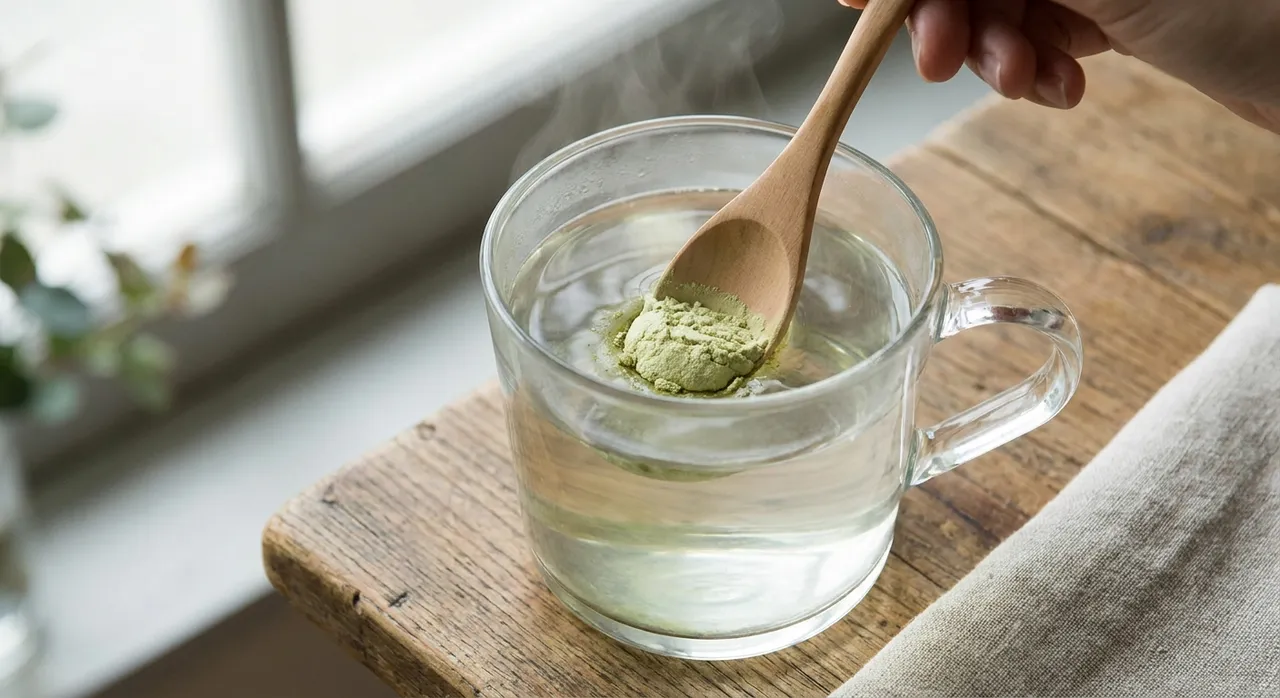
How I use it for calm: mid-afternoon, right around the 3 p.m. dip when everything feels louder than it should. One scoop in 8–10 oz of warm (not boiling) water, stirred, sipped slowly over ten minutes. The slow sipping matters more than people think — it turns it into a two-minute pause, which is half the benefit. One reviewer described the result better than I can: "Super chill and zen. I feel relaxed and in a good mood no matter how stressful the day gets."
Benefit 2: Focus and clean energy without the jitters
This is the one that surprises people who expect "calm" to mean "sleepy." It doesn't. The Matcha in the blend is whole-leaf green tea rich in L-theanine and EGCG; the theanine balances the small amount of caffeine so you get steady, jitter-free attention rather than a spike. Rhodiola (our concentrated RhodioPrime 6X) is an adaptogen that helps the body resist mental fatigue and can sharpen attention during demanding stretches — see The Effects of Rhodiola rosea L. Extract on Anxiety, Stress, Cognition and Other Mood Symptoms. Grape seed extract's proanthocyanidins support cerebral blood flow, which trials tie to better processing speed and attention in healthy older adults.
How I use it for focus: morning, in place of my second coffee. I'm a two-cups-before-noon person from way back, so I'll keep cup one, then swap cup two for Zen Relax around 10 a.m. The difference by early afternoon is no crash. As one customer put it, "Keeps me calm and energized no jittery feelings and no crashes." Another mentioned "amazing focus and drive throughout the day" — and that tracks with what I feel.
Benefit 3: Better sleep and mood (the slow-build stuff)
Magnesium is the quiet hero here. It's an essential mineral involved in nervous-system regulation and the stress response, and a lot of adults simply fall short of what they need — restoring it is associated with reduced stress, better mood, and better sleep. It's most useful a couple of hours before bed rather than right at bedtime, which is exactly how I treat it. Add Vitamin D3, which modestly supports mood (clearest benefit if you're low or already run down), plus lemon balm's sleep-quality track record, and you've got a gentle wind-down.
How I use it for sleep: about 90 minutes to two hours before bed, warm, no screens for the last stretch. It's not a sedative and I want to be clear about that — it won't knock you out. It just seems to make it easier for the mind to stop racing. Several reviewers specifically mention "keeping my stress levels down" and drinking it as a healthier alternative to a glass of wine to unwind, which I'll admit is how I use it most Friday nights now.

A quick warm recipe I actually make: the No-Crash Zen Matcha
When I want the focus benefit to feel like a treat instead of a chore, this is it. Takes three minutes.
- 1 scoop Ashwavana Zen Relax
- 4 oz hot water (about 175°F — just under boiling, so you don't scorch the greens)
- 6 oz milk of choice, warmed and frothed (oat is my default)
- 1/4 tsp ground cinnamon
- Optional: 1/2 tsp honey or maple
- Add the scoop to a mug with the 4 oz of hot water. Whisk hard with a small frother or matcha whisk for 15–20 seconds until fully dissolved and slightly foamy.
- Warm and froth your 6 oz of milk, then pour it in.
- Stir in the cinnamon (and sweetener if using). Dust a little extra cinnamon on top.
- Sip within ten minutes, while the theanine-and-caffeine balance is at its best.
The cinnamon isn't just for flavor, though it earns its place there — it's one of our sixteen ingredients, alongside turmeric and ginger, whose gingerols and curcumin bring the anti-inflammatory, antioxidant backbone to the blend. Beet root and pomegranate round it out on the blood-flow side. It's a genuinely loaded pour.
My honest take on getting the most out of it
Two things. First, consistency beats intensity — the ashwagandha-and-magnesium side of the benefits shows up over two to four weeks, so don't judge it on day one. Second, match the timing to the benefit you want: afternoon for the reset, morning for focus, evening for wind-down. You don't have to overthink it beyond that.
And if you're on the fence about buying it — the thing I'd tell you is that the "zen without drowsiness" claim is the part that's held up best in my own kitchen, day after day. It doesn't sedate. It doesn't jangle. It just turns the volume down a notch while you keep doing your day. You can grab it here: Ashwavana Zen Relax.
These statements have not been evaluated by the Food and Drug Administration. This product is not intended to diagnose, treat, cure, or prevent any disease. The research cited above describes individual ingredients, not the finished product, and individual results vary. If you're pregnant, nursing, taking medication, or managing a health condition, talk to your healthcare provider before adding a new supplement.
Renee develops recipes at Superfoods Company and has been a two-cups-before-noon coffee drinker for twenty years. Every recipe here gets tested in her own kitchen first.
Ready to try it for yourself?
Shop Superfoods Company