The Ingredient-by-Ingredient Case for Ashwavana Zen Relax

My job title says "Nutrition Lead," but most days it means reading the same clinical trial four times and asking: does this actually do what the label implies? So when people ask me why Ashwavana Zen Relax makes them feel the way it does, I don't reach for adjectives. I reach for the ingredient deck and the studies behind each line on it.
The reviews that come in tend to sound the same, and that pattern is honestly what made me curious. One person wrote, "Anxiety is completely gone which I can't believe." Another: "Super chill and zen. I feel relaxed and in a good mood no matter how stressful the day gets." I can't promise you those exact outcomes — nobody honest can. But I can tell you which specific compounds are doing which specific jobs, and where the evidence is genuinely solid versus where it's promising-but-modest.
Here's the thing about "calm": it isn't one lever. Stress lives in your hormones, your neurotransmitters, your minerals, and your blood flow all at once. Zen Relax stacks ingredients that each pull on a different one. Let me walk you through the ones that matter most.
The stress-axis workhorse: Sensoril ashwagandha
This is the ingredient most people are really asking about. Zen Relax uses Sensoril, a standardized Withania somnifera extract drawn from both root and leaf, which is what makes it more concentrated than the plain-root powders you'll find in cheaper blends.
Mechanically, ashwagandha acts on the stress axis with GABAergic and serotonergic activity, and it lowers circulating cortisol — the hormone your body pumps out when it perceives pressure. That's not a vibe; it's measurable in blood. A systematic review and meta-analysis, Effects of Ashwagandha Supplements on Cortisol, Stress, and Anxiety Levels in Adults, pulled together the trials showing reduced cortisol and lower anxiety scores, and a dedicated clinical trial in people with generalized anxiety disorder found meaningful improvement on Sensoril specifically.
So when a customer says it keeps their "stress levels down," there's a plausible hormonal reason underneath it. This is the ingredient I'd point a skeptic to first.
The "focused, not fried" pair: Rhodiola and L-theanine
A lot of stress supplements sedate you into feeling better. That's a low bar, and it's not what most people want at 2 p.m. on a Tuesday. Two ingredients here are specifically about staying sharp while the edge comes off.
Rhodiola rosea — here as the concentrated RhodioPrime 6X extract — is a classic adaptogen for resisting mental and physical fatigue. The research (see The Effects of Rhodiola rosea L. Extract on Anxiety, Stress, Cognition and Other Mood Symptoms, and a randomized controlled trial in nursing students working brutal shifts) points to better attention and steadier mood during demanding stretches, not a knockout.
L-theanine, the amino acid from tea, is my favorite ingredient to explain because the mechanism is so clean. It increases alpha brain-wave activity — the pattern associated with wakeful relaxation, the mental state you're in when you're calm but alert. Trials like the 28-day AlphaWave L-Theanine study in moderately stressed adults show lower perceived stress and reduced salivary cortisol while attention holds steady. Calm without the fog. This is why reviews mention things like "more focus and calmness to get rid of being overwhelmed."
"Keeps me calm and energized, no jittery feelings and no crashes." — the balance between theanine and the small dose of caffeine from matcha is exactly what that describes.
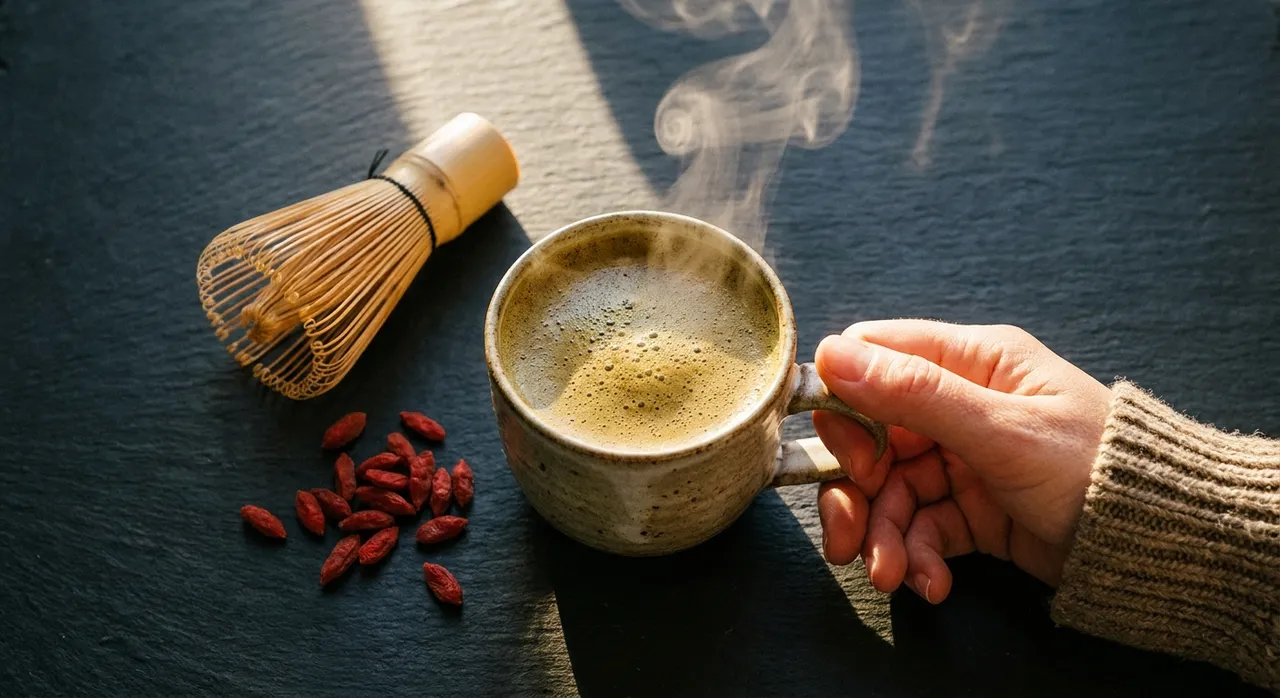
Speaking of which: matcha is whole-leaf green tea naturally rich in both L-theanine and EGCG. In clinical work (Stress-Reducing Function of Matcha Green Tea) it modestly lifts attention and memory, and the theanine buffers the caffeine so you get steady, jitter-free energy rather than a spike-and-crash.
The minerals and mood support you probably don't think about
Magnesium is unglamorous and quietly important. It's an essential mineral involved in regulating your nervous system and stress response, and a lot of adults simply don't get enough. Restoring it is linked with reduced stress, better mood, and improved sleep — and it helps your body absorb other nutrients too. A randomized trial (Superiority of magnesium and vitamin B6 over magnesium alone on severe stress) found the effect strongest in people who were running low to begin with.
Vitamin D3 (cholecalciferol, the form that actually raises your blood levels) belongs in the mood conversation, with an honest caveat: a dose-response meta-analysis shows supplementation modestly reduces depressive symptoms, but the clearest benefit shows up in people who are deficient or already feeling low. If your levels are fine, don't expect fireworks. That's the honest read.
Lemon balm (Melissa officinalis) is a traditional calming herb whose rosmarinic acid supports GABA activity. Clinical trials — including one in patients recovering from heart surgery — show it eases anxiety and improves sleep quality. It's part of why "it's helping me sleep better too" shows up so often in feedback.
The anti-inflammatory and blood-flow layer
This is the part people skim, and I get it — it feels less immediate than "I feel zen." But stress and inflammation feed each other, and steady blood flow is part of clear thinking.
- Turmeric: its curcumin lowers inflammatory and oxidative-stress pathways and nudges neurotransmitters; meta-analyses tie it to reduced anxiety and depressive symptoms.
- Ginger root: gingerols scavenge free radicals; RCT meta-analyses show it raises antioxidant capacity and lowers inflammatory markers like CRP, IL-6 and TNF-alpha.
- Beet root: rich in dietary nitrate the body turns into nitric oxide to relax blood vessels, with trials showing lower blood pressure and better microvascular flow.
- Grape seed extract: proanthocyanidins that improve cerebral blood flow, with trials in healthy older adults showing better processing speed and attention.
- Shiitake mushroom: beta-glucans that prime immune cells — a randomized dietary trial found daily shiitake improved immune markers and lowered inflammation.
Add goji berry, pomegranate, chlorella, and cinnamon and you've got a genuine polyphenol-and-antioxidant base rather than a single hero ingredient carrying the whole formula on marketing.
So which benefits are the "real" ones?
If I'm ranking by strength of evidence and how consistently our own reviews echo it, here's my honest tiering:
- Lower stress and a calmer response to it. Strongest case — ashwagandha's cortisol effect plus theanine's alpha-wave calm are both well-supported.
- Calm-but-focused energy, no crash. The theanine-plus-modest-caffeine combination is one of the better-studied pairings in this whole category.
- Better sleep and mood. Solid support from lemon balm, magnesium, and (when you're low) vitamin D.
- A healthier evening ritual than a drink. Not a "clinical benefit," but a real one — a warm mug that winds you down without the next-morning cost is worth a lot.
One reviewer summed up the whole point better than I can: "I feel SO zen, I'm in a better mood, and it's helping me sleep better too." Whether that lands for you depends on your body, your baseline stress, and consistency — adaptogens work best taken daily, not as a one-off rescue. Give it a couple of weeks before you judge it.
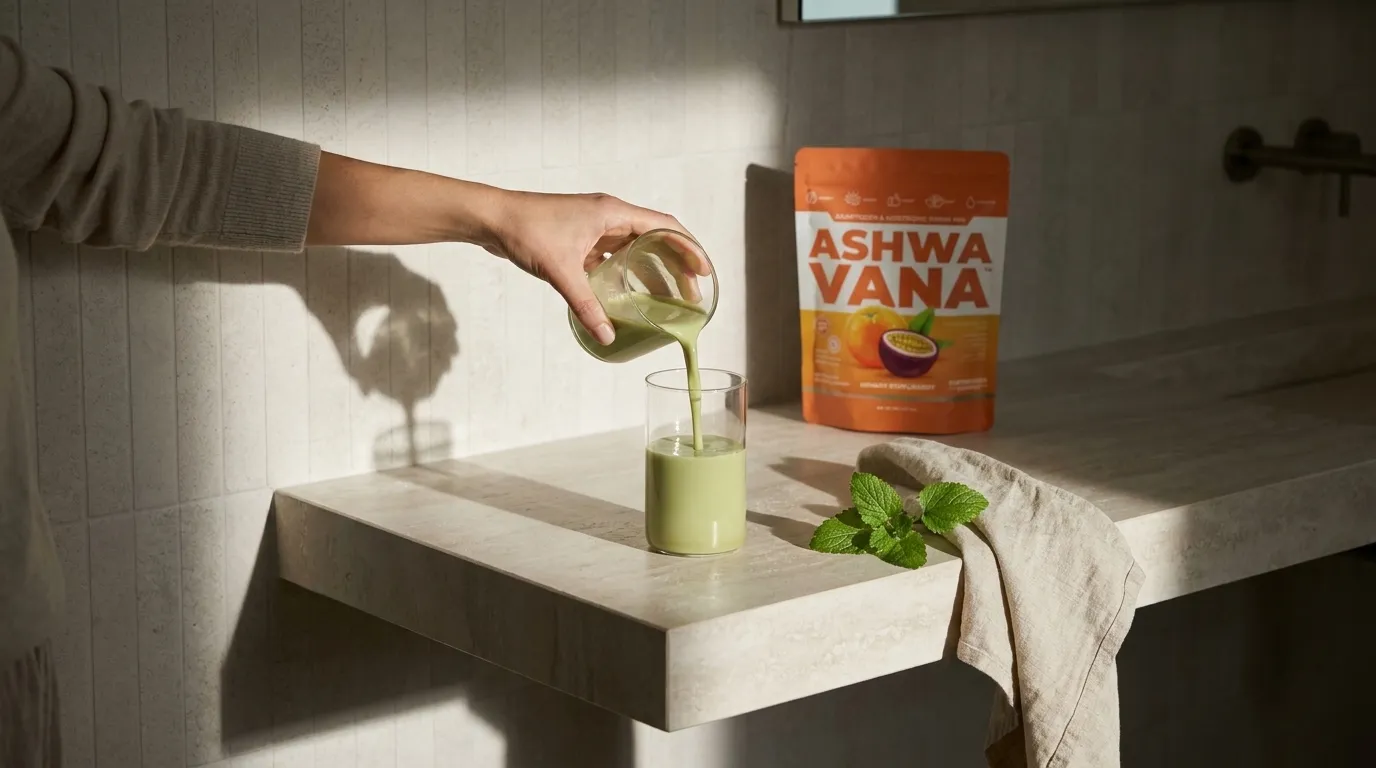
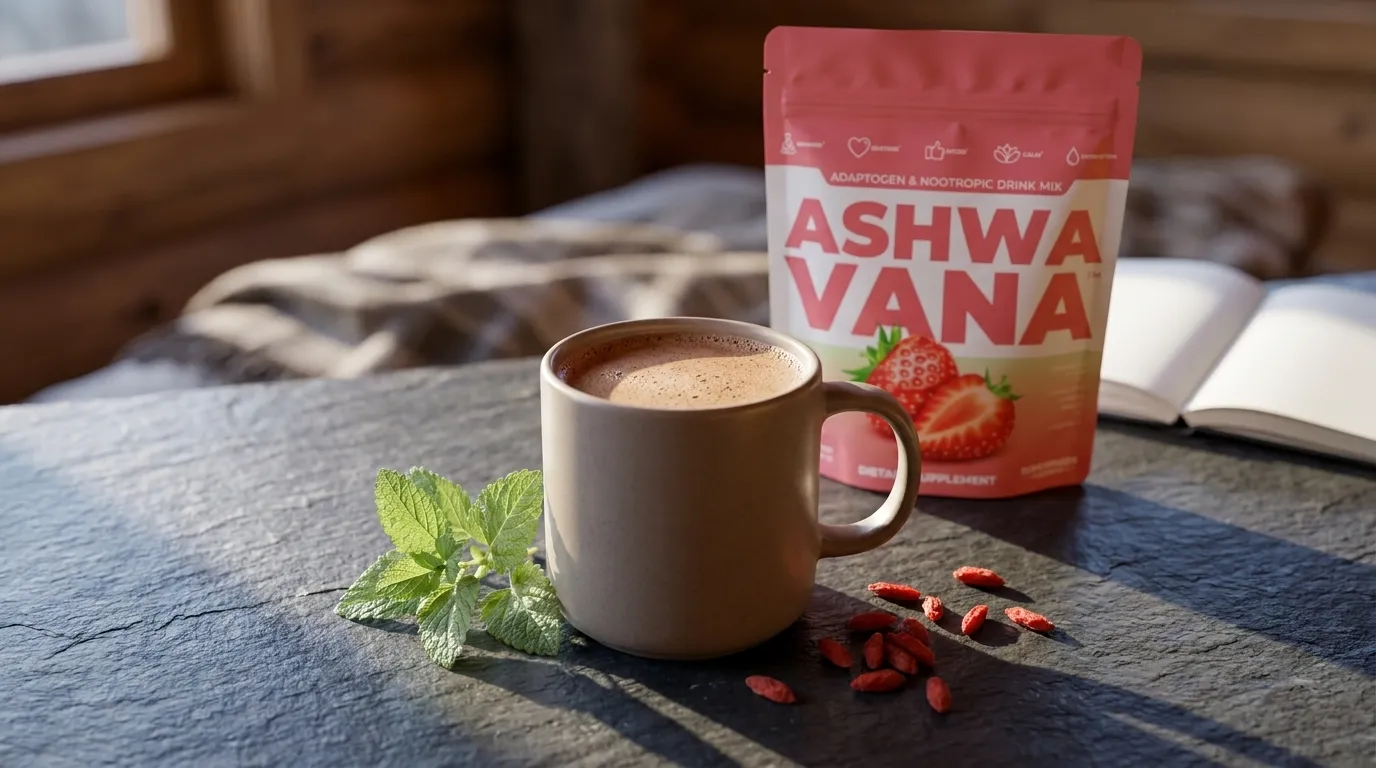
If you want to try it for yourself, that's Ashwavana Zen Relax — and if you're already using it, hopefully you now understand a bit more about why it does what it does.
These statements have not been evaluated by the Food and Drug Administration. This product is not intended to diagnose, treat, cure, or prevent any disease. The research described here investigated individual ingredients, not the finished product, and individual results will vary. If you are pregnant, nursing, taking medication, or managing a health condition, talk with your healthcare provider before adding a new supplement.
Priya is a registered dietitian who reviews the science behind every ingredient we use. She spends her days turning clinical research into plain English.
Ready to try it for yourself?
Shop Superfoods Company