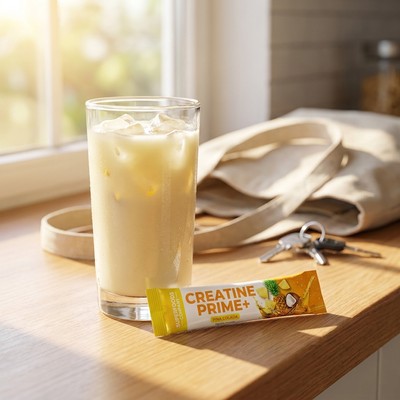
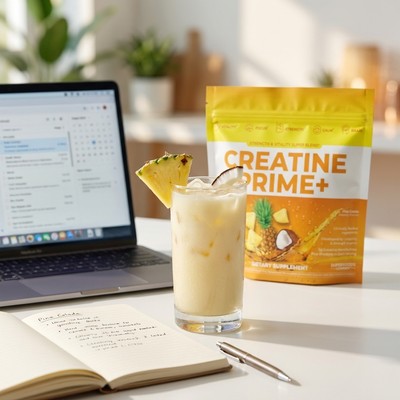
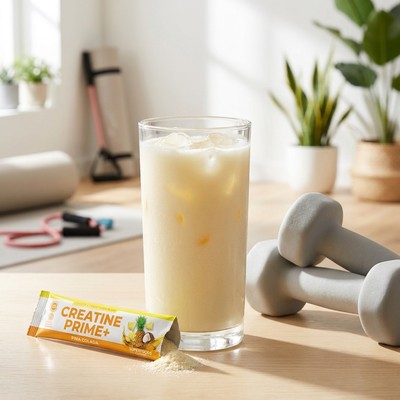
Fuels steady cellular energy without stimulants
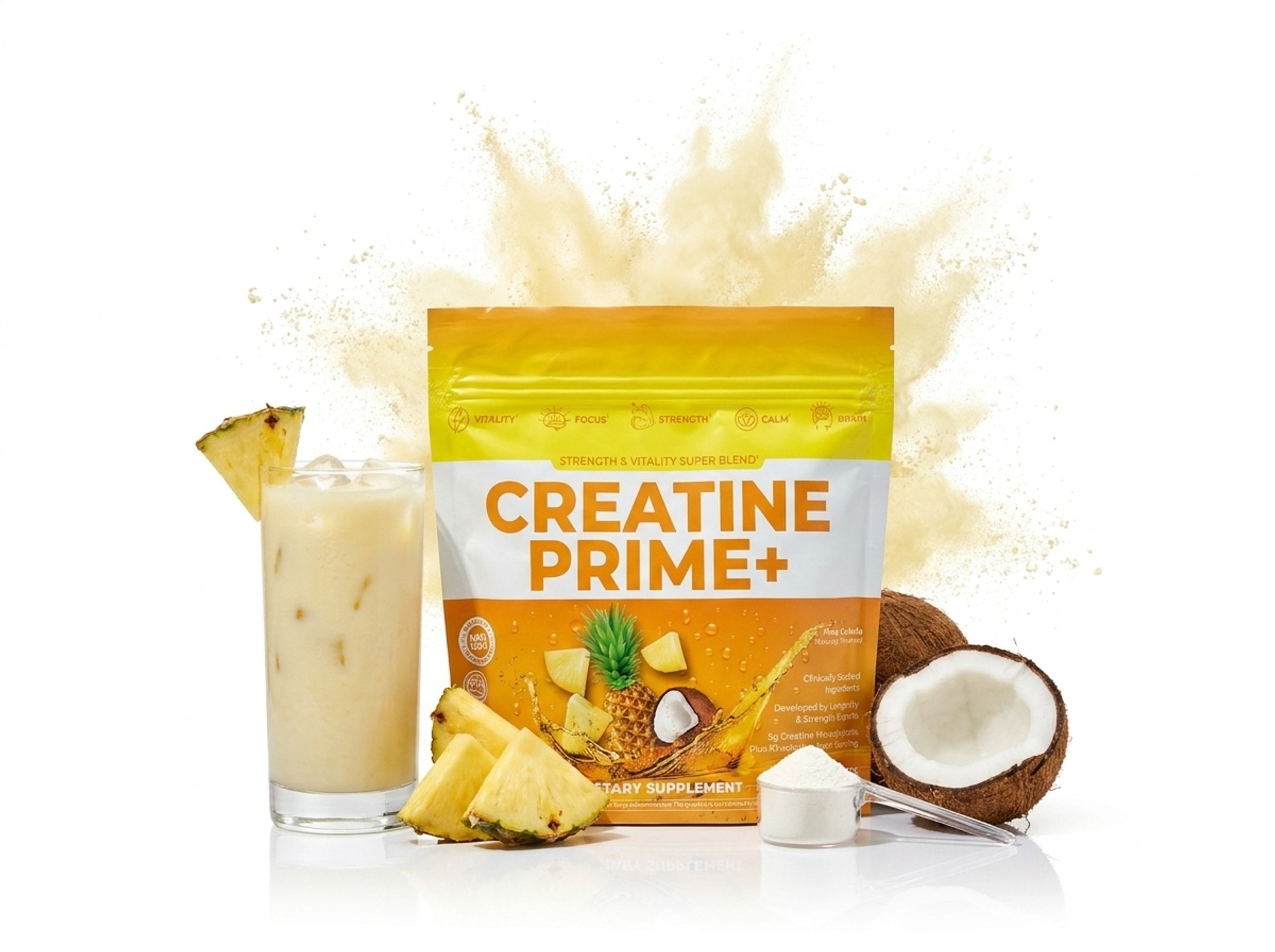
Creatine is the body's rapid ATP recharge system. By keeping phosphocreatine topped up, it provides a steady energy buffer for muscles and brain — no caffeine, no jitters, no crash. It is the most extensively studied form and is well tolerated long-term.
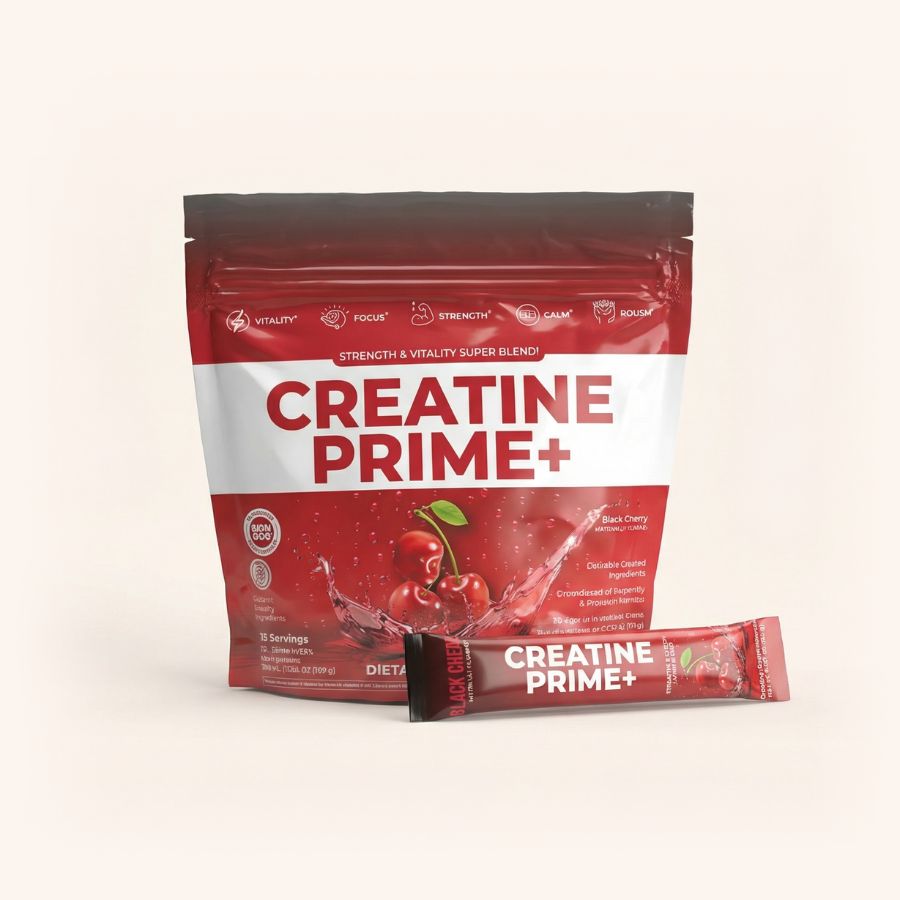
Dosage: A daily maintenance dose of 3–5 g/day saturates tissue stores; Creatine Prime+ delivers 5 g — the upper, fully-effective end of that range.
Supported by 1 study
Builds and preserves muscle strength in older women
Creatine increases the muscle's phosphocreatine pool, letting muscle cells regenerate ATP faster during effort. Combined with everyday activity or resistance training, this translates to greater gains in strength and lean tissue — helping offset the muscle and strength loss that accelerates for women after midlife.
Dosage: Meta-analyses of older women used ~5 g/day creatine; Creatine Prime+ provides the same 5 g daily dose.
Supported by 2 studies
Supports memory and attention as you age
Creatine replenishes ATP, the cell's rapid energy currency. The brain is metabolically demanding, so raising brain creatine stores gives neurons a larger energy buffer for tasks like memory and attention — a benefit that becomes more relevant as natural creatine levels and brain energy decline with age.
Dosage: Reviewed trials used a maintenance dose of 5 g/day (often after a brief 20 g/day load) — exactly the 5 g dose in Creatine Prime+.
Supported by 2 studies
Supports mental clarity and steadier mood through menopause
Hormonal shifts in peri- and post-menopause are linked to lower brain energy and 'brain fog.' Supplemental creatine raises frontal-lobe creatine, supporting faster reaction time and steadier mood during this transition.
Dosage: The menopause RCT used lower-dose creatine HCl (a different salt); Creatine Prime+ uses 5 g of the most-studied form, creatine monohydrate, well above the doses shown to raise brain creatine.
Supported by 2 studies