The Quiet Chemistry Behind Calm, Focused Energy

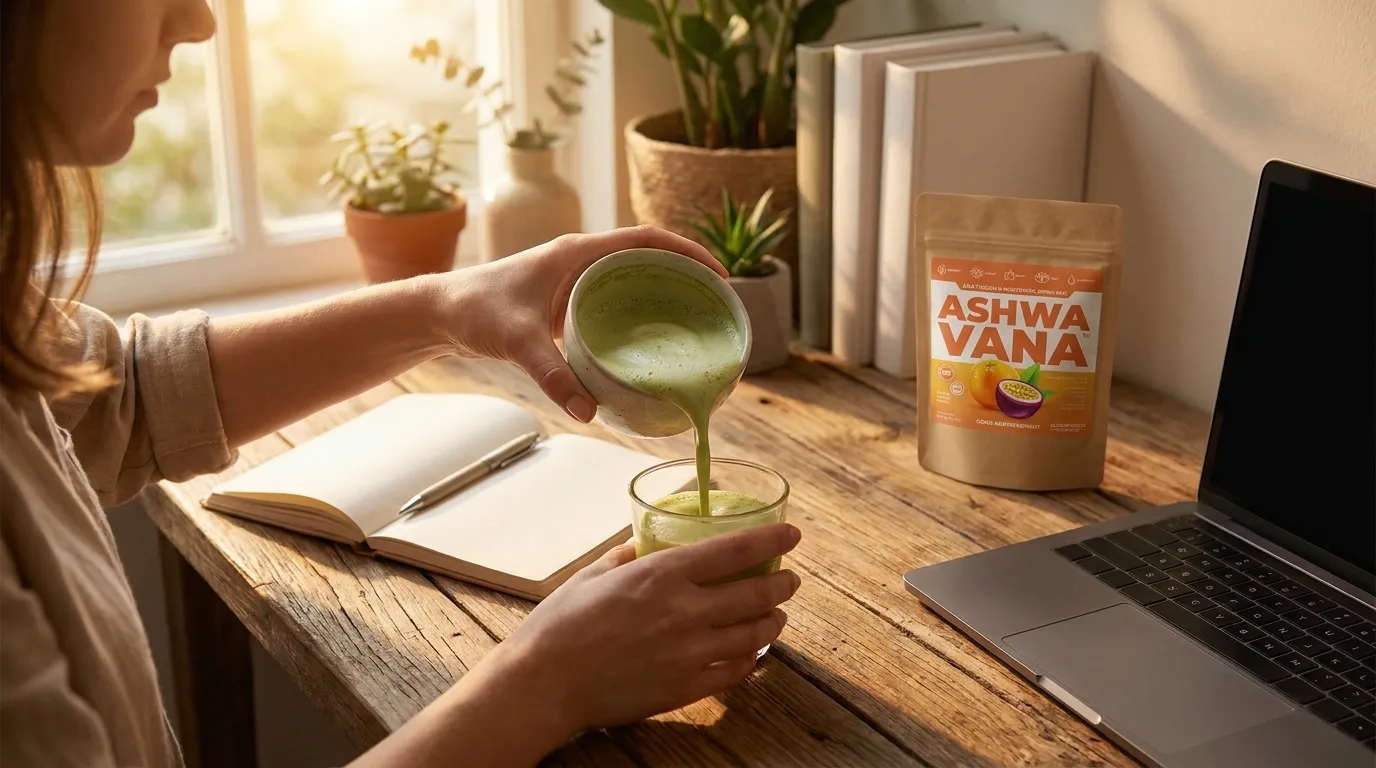
The first time I really noticed it was a Tuesday around 2:30 in the afternoon — the hour I usually start rereading the same sentence four times. I'd swapped my second coffee for a cup of Ashwavana Guru Focus a few hours earlier, mostly out of professional curiosity. And the crash just… didn't show up. No 3 p.m. fog, no reaching for a cookie, no low-grade hum of anxiety underneath the to-do list. Just a steady, workable focus that felt almost boring in how uneventful it was. Which, if you've ridden the caffeine rollercoaster, is exactly the point.
I'm a dietitian, so my instinct is to be skeptical of "calm energy" as a marketing phrase. But there's real, if imperfect, science behind why a blend like this behaves differently than a cup of black coffee. Let me walk you through what's actually happening in the cup — and where the evidence is strong versus where it's still emerging.
The core pairing: why it's calm and alert at the same time
Most of what people mean by "focus without the jitters" comes down to two ingredients working as a team: L-theanine and the naturally caffeinated matcha it's paired with.
L-theanine is an amino acid from tea leaves. On its own it's a mild neural relaxant — it nudges up alpha brain-wave activity, the pattern associated with a state of relaxed, wakeful attention. The interesting part is what happens when you combine it with caffeine. In a double-blind crossover study on sleep-deprived young adults, an L-theanine–caffeine combination improved measures of selective attention while smoothing the stimulant's rough edges. L-theanine is known for its calming effect on the mind, promoting alpha brain waves, which are associated with relaxation and mental clarity, and it's often used to promote a sense of smooth alertness, as opposed to the caffeine in coffee and energy drinks that can leave you feeling jittery or jacked up.
Matcha is where that pairing shows up in nature. It contains L-theanine for calm focus, is particularly high in EGCG antioxidants, and is gentler on the stomach than coffee. That combination of caffeine, L-theanine, and EGCG catechins is exactly why matcha tends to give you a lift without the spike-and-crash of caffeine alone. One customer put it better than any study abstract: "I love the energy and focus without the jitters." Another said it "leaves me feeling awake but BALANCED with a happy energy."
The stress layer: adaptogens working underneath
Focus falls apart when your stress response is running hot. So the blend addresses that from a different angle with two adaptogens.
Ashwagandha
Ashwagandha (Withania somnifera) is the ingredient I get asked about most. It's an adaptogen that modulates the HPA axis — your central stress-response system — and helps blunt the cortisol response to chronic stress. Randomized, placebo-controlled trials, including work on the standardized KSM-66 extract in adults with high stress, are the basis for the stress-relief claims. In plainer terms: ashwagandha helps the body adapt to stress by supporting cortisol balance, the hormone that should be high in the morning and low at night. Lower morning cortisol tends to feel like steadier energy and less reactivity to whatever the day throws at you.
I'll be honest about a caveat here: ashwagandha is one I flag for anyone who is pregnant, breastfeeding, on thyroid or sedative medication, or managing an autoimmune condition. Talk to your own clinician before starting it. (More on postpartum below, because I know some of you are wondering.)
Rhodiola
Rhodiola rosea is the second adaptogen, and its niche is mental fatigue under pressure. It influences stress-response and monoamine signaling, and the classic evidence comes from a study on physicians working night duty — the standardized SHR-5 extract helped reduce stress-induced mental fatigue during a genuinely exhausting shift. If ashwagandha is about dialing down the baseline, rhodiola is about holding your concentration together when you're already running on fumes.
Lemon balm
Lemon balm (Melissa officinalis) rounds out the calm side. Its rosmarinic acid modulates GABA pathways, and in trials it's been shown to attenuate lab-induced stress and support a balanced mood. It's a small, quiet contributor — but it's part of why the overall experience reads as "settled" rather than "revved."
The blood-flow crew: fueling the brain you're trying to focus with
Here's a part people skip: focus and stamina depend on circulation. Several ingredients target exactly that.
- Beet root is rich in dietary nitrate, which your body converts to nitric oxide — that widens blood vessels, can lower blood pressure, and increases regional brain perfusion. One double-blind, placebo-controlled crossover study found dietary nitrate modulated cerebral blood flow and cognitive performance in healthy adults. I'll add the honest caveat: not every trial agrees. A 13-week pilot in older adults with overweight found beetroot juice didn't shift cognition or cerebral blood flow, so the effect likely depends on dose, timing, and who's drinking it.
- Grape seed extract delivers proanthocyanidins — potent antioxidants shown in randomized trials to improve endothelial function and support healthy blood pressure in people with prehypertension.
- Pomegranate brings ellagitannins like punicalagin. In studies on middle-aged and older adults with mild memory complaints, pomegranate juice was linked to memory benefits and increased task-related brain activity.
None of these is a magic bullet. But antioxidants that support the blood vessels feeding your brain are a sensible foundation, and they're why a reviewer described "calm, steady energy, better focus, and great hydration" as a package deal rather than one isolated effect.

The steady-blood-sugar team: why the cravings quiet down
A lot of what feels like an "energy crash" is actually a blood-sugar dip. Three ingredients push back on that.
- Cinnamon polyphenols improve insulin sensitivity and slow gastric emptying; a meta-analysis found cinnamon intake lowers fasting blood glucose.
- Ginger root supports digestion and, per a randomized controlled trial in nondiabetic adults, can reduce post-meal glucose spikes.
- Turmeric's curcumin lowers pro-inflammatory markers like IL-6; in a randomized, double-blind trial, a turmeric extract improved inflammatory markers and mental well-being in overweight participants.
Blunt the blood-sugar swings and the cravings tend to follow. It tracks with the reviews — several people mention the blend curbs appetite and, in one person's words, helps them "tackle the day without anxiety."
The support cast: D3, K2, and greens
Two vitamins ride together here for good reason. Vitamin D3 acts on receptors throughout the brain and endocrine system, and correcting low vitamin D status has been linked to improved mood and less fatigue in a dose-response meta-analysis. Vitamin K2 is its partner: it activates matrix Gla protein and osteocalcin, helping route calcium into bone and away from arterial walls. Since D3 raises calcium availability, pairing it with K2 is the smart, synergistic move — a detail I genuinely appreciate in a formula. Chlorella, goji berry, and matcha round things out with polyphenols and micronutrients on the greens side.
So — what does it actually feel like?
If I had to summarize the "how it works" in one breath: matcha and L-theanine give you alert-but-calm; ashwagandha, rhodiola, and lemon balm turn the stress dial down underneath; beet root, grape seed, and pomegranate support the circulation that feeds focus; cinnamon, ginger, and turmeric keep your blood sugar and inflammation from sabotaging the afternoon. No single ingredient is doing the heavy lifting. It's the stack.
A note I take seriously as a dietitian: I saw a review from someone saying their "postpartum anxiety is gone," and I want to be careful here. That's a lovely, real experience for that person — but ashwagandha isn't something I'd recommend while pregnant or breastfeeding without a clinician's sign-off. Please loop in your own provider before starting any adaptogen if that's you.
The most common thread in the feedback is refreshingly modest. Not "life-changing." Just this, from one reviewer: "It makes me feel so focused, calm, and productive all day." That's the bar a good daily ritual should clear.
If you already keep a pouch of Ashwavana Guru Focus on your desk, I hope this makes the label read a little less like a mystery. And if you're still deciding — now you know what each of those fifteen ingredients is quietly trying to do.
These statements have not been evaluated by the Food and Drug Administration. This product is not intended to diagnose, treat, cure, or prevent any disease. The research described above examines individual ingredients, not the finished product, and individual results will vary. If you are pregnant, breastfeeding, taking medication, or managing a health condition, please consult your healthcare provider before use.
Priya is a registered dietitian who reviews the science behind every ingredient we use. She spends her days turning clinical research into plain English.
Ready to try it for yourself?
Shop Superfoods Company