The 6 a.m. Skin Experiment: What Collagen in Your Coffee Actually Does

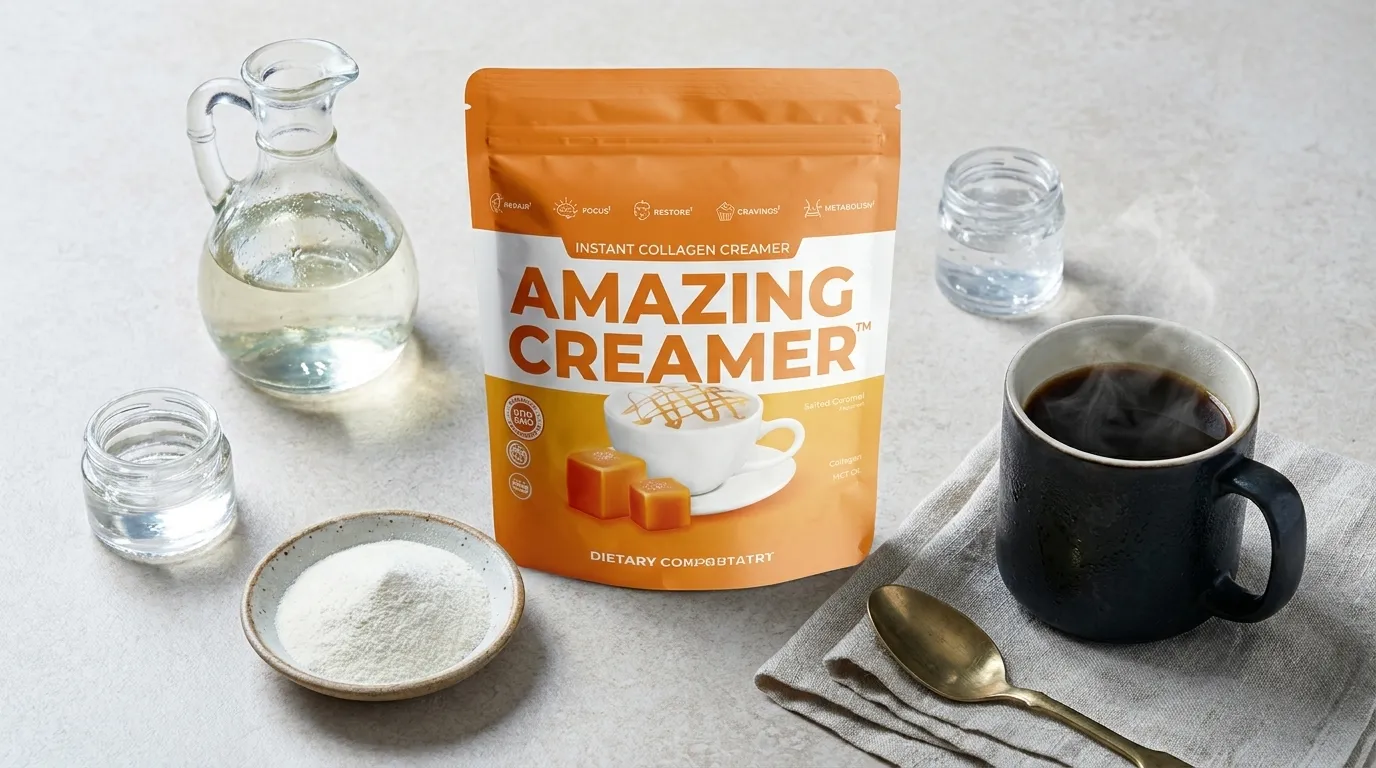
The first time I noticed it, I was standing at my kitchen counter at 6 a.m., still half asleep, watching collagen powder swirl into my coffee and not clump. That was the whole reason I started paying attention. I'm a dietitian — I read the studies before I trust a trend — and "collagen creamer for skin" is exactly the kind of phrase that makes me suspicious. Too tidy. Too marketable. So I went digging, and then I tested it on myself for three months.
Here's the honest version of how it works, what the research actually shows, and where I'd pump the brakes.
What's in the cup, and why those three ingredients
Amazing Creamer is built on three things: MCT oil, collagen, and hyaluronic acid. For skin specifically, two of those are the workhorses — collagen and hyaluronic acid — and the MCT oil is mostly doing energy and texture work. Let me take them one at a time, because the mechanisms are genuinely different.
Collagen: it's not a "topical from the inside"
This is the part most articles get wrong. You don't drink collagen and have it travel, intact, to your face. That's not how digestion works. Hydrolyzed collagen is broken into small peptides and amino acids — glycine, proline, and especially hydroxyproline — which get absorbed through the gut and enter circulation. From there, the leading hypothesis is that these peptides reach skin fibroblasts (the cells that build your dermal matrix) and act as both raw material and a signal to ramp up production.
The "signal" idea matters. In a referenced double-blind, placebo-controlled study, Oral supplementation of specific collagen peptides has beneficial effects on human skin physiology, collagen peptides were associated with improvements in skin elasticity — and a systematic review, Oral collagen supplementation: A systematic review of dermatological applications, has looked across this body of work for hydration and elasticity outcomes. The clinical literature backs this up too. In a randomized, double-blind, placebo-controlled study of low-molecular-weight collagen peptide, parameters of skin hydration, wrinkling, and elasticity were assessed at baseline and after 6 weeks and 12 weeks, and compared with the placebo group, skin-hydration values were significantly higher in the collagen group after 6 weeks and 12 weeks.
One mechanism detail I found reassuring: the hydroxyproline-rich peptides from hydrolyzed collagen are absorbed from the gut, enter circulation, and are taken up by skin fibroblasts where they stimulate new collagen synthesis. That's the actual chain of events — gut, blood, fibroblast — not a magic topical effect.
"But doesn't hot coffee destroy it?"
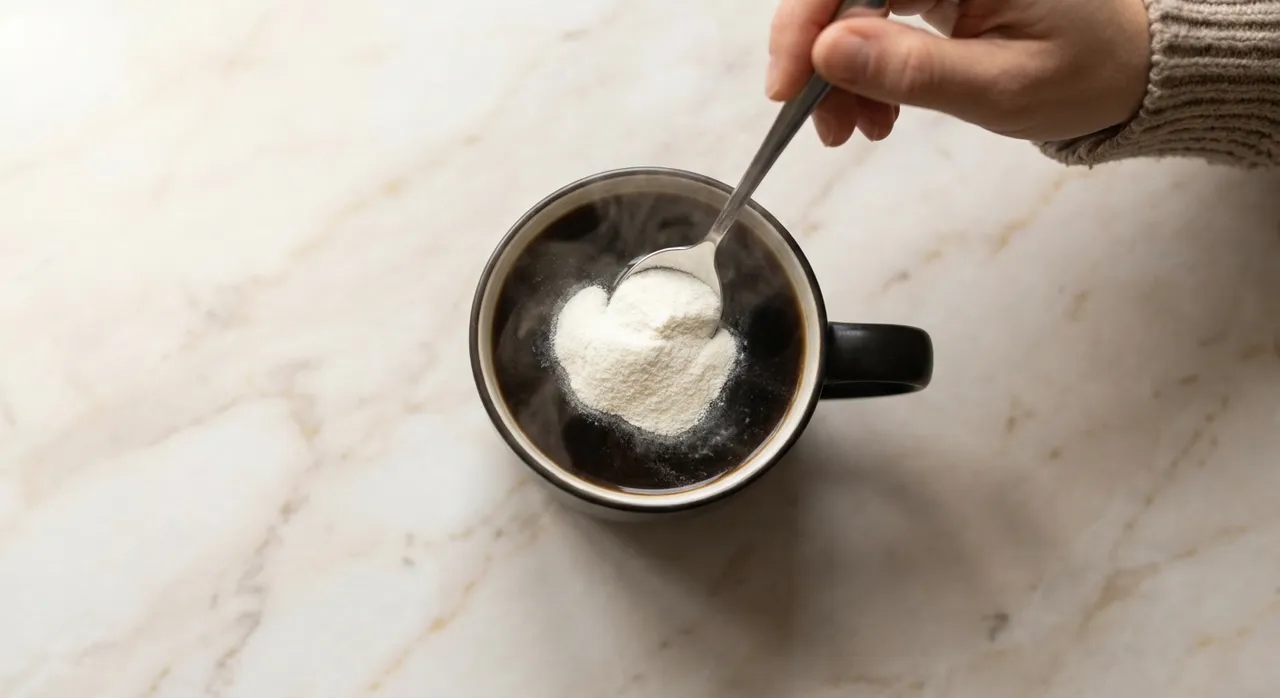
I get this question constantly, and it's a fair one. The thing people are picturing — collagen "denaturing" — applies mostly to native, raw collagen, which starts to unwind at temperatures a little above body heat. Native (raw, unprocessed) collagen does begin to denature at temperatures above about 100°F. But the collagen in a creamer is already hydrolyzed — it's been broken down on purpose. There's no intact triple helix left to "ruin." Your hot coffee isn't undoing anything that digestion wasn't going to do anyway. So yes, you can stir it into a fresh, hot cup. That's the point.
Hyaluronic acid: the water-holding half
Here's where the formula gets a little more interesting than a plain collagen powder. Hyaluronic acid (HA) works on a different lever entirely — water. HA has the capacity to retain water in the skin, improving hydration and overall skin appearance, and in one study, significant increases in skin hydration were noted after 6 and 12 weeks.
And taken orally, it's not just theory anymore. A 12-week, randomized, double-blind, placebo-controlled trial of 60 healthy women aged 35–65 evaluated the impact of oral hyaluronic acid supplementation on skin properties, in the context of skin aging. A separate meta-analysis pooled the data across trials. A total of 7 randomized controlled trials on the use of oral HA as a supplement were identified, and a meta-analysis compared standardized mean differences between the HA and placebo groups, with findings that align with existing literature. The referenced studies — including Oral hyaluronic acid supplementation improves skin hydration and elasticity: A systematic review and meta-analysis — point in the same direction.
So you've got two complementary mechanisms in one cup: collagen as the structural/signaling input for the matrix, HA as the water-retention support. That pairing is the actual reason this isn't just "collagen with extra steps."
Where the MCT oil fits (and why it helps the skin story indirectly)
MCT oil isn't a skin ingredient, exactly. But it earns its spot. It gives the creamer its rich, satisfying mouthfeel, and it's the reason this drinks like a treat instead of a supplement. MCTs are rapidly absorbed and converted to ketones for quick energy — that's the daily-driver benefit our customers mention most. The referenced studies on energy expenditure (Medium-chain triglycerides increase energy expenditure and decrease adiposity in overweight men) and cognition (Effects of beta-hydroxybutyrate on cognition in memory-impaired adults) describe those mechanisms.
The honest connection to skin? Consistency. A creamer you actually look forward to is a creamer you'll use every morning — and with collagen and HA, daily consistency over weeks is the whole game. One customer put it bluntly: "I don't ever want to go back to regular coffee." Another: "Never going back to regular creamers again!!! Highly recommend this creamer." That kind of habit-stickiness is, weirdly, part of the mechanism.
The timeline, honestly
This is where I want to set expectations, because the "before" photos online are doing a lot of heavy lifting. Skin turns over slowly. The studies above didn't measure changes overnight — they measured at 6 and 12 weeks. So that's the window I tell people to commit to before judging.
- Weeks 1–3: Mostly you'll notice the routine — energy, taste, maybe appetite. Skin changes aren't really expected yet.
- Weeks 4–6: This is where the hydration signal tends to show up first in the research.
- Weeks 6–12: Elasticity and the more "glow" type changes are where the longer trials land.
I'll add a real caveat: the science here isn't a slam dunk, and you'll see researchers say so. Some reviewers note that the certainty people hope for around collagen creamer outpaces what the evidence currently delivers. I think that's a fair tension to sit with. The trials are promising and several are well-designed, but skin is influenced by sleep, sun, hydration, and genetics — a creamer is one input, not the whole equation.
How I actually make it (the simple daily version)
No fancy ritual. This is the cup I make most mornings.
Everyday Skin-Support Coffee
Ingredients:
- 8–10 oz hot brewed coffee (or decaf)
- 1 scoop Amazing Creamer (follow the label serving)
- Optional: a splash of unsweetened almond or oat milk
- Optional: 1/4 tsp cinnamon
Steps:
- Brew your coffee as usual and pour it into your mug while it's hot.
- Add one scoop of Amazing Creamer.
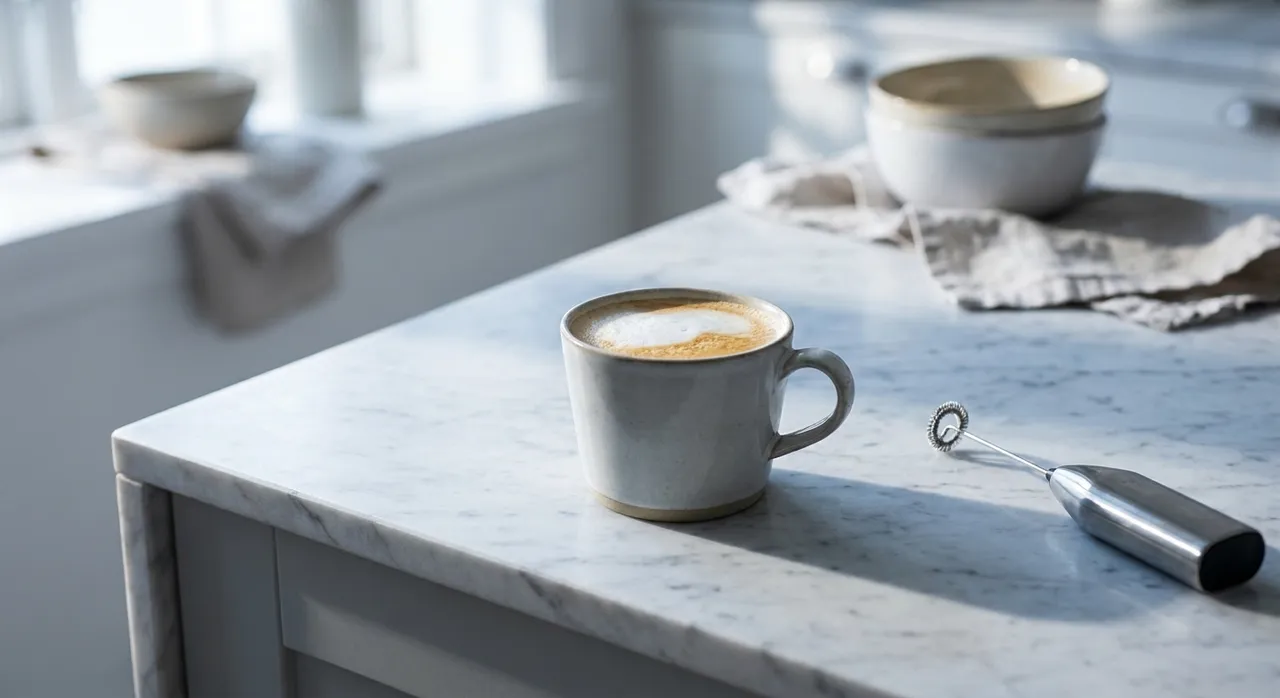
- Stir vigorously for 15–20 seconds, or — my preference — give it 10 seconds with a handheld frother. The frother is what gets it fully smooth and gives that little crema on top.
- Add your optional splash of milk and cinnamon, taste, and adjust.
- Drink it within a few minutes while it's hot and emulsified. (It can separate a bit if it sits — just re-stir.)
If you want an iced version: make it in a jar, add the creamer to a few ounces of warm water first to dissolve, then pour over ice and cold coffee and shake. Cold liquids dissolve powder more stubbornly, so the warm-water head start matters.
So — is a collagen creamer for skin worth it?
If you're already drinking coffee every morning, swapping in a creamer that's actually doing something is a low-effort upgrade. The mechanisms are real and the human trials, especially around hydration and elasticity at 6 to 12 weeks, are genuinely encouraging. The collagen-plus-hyaluronic-acid pairing covers two different angles — matrix support and water retention — which is more than most single-ingredient products offer.
Would I promise you a new face in a week? No. But as someone who reads these studies for a living and still drinks this every morning, I think it's a smart, evidence-aligned habit — and an enjoyable one. As one reviewer wrote, "My only regret is not trying it sooner!"
These statements have not been evaluated by the Food and Drug Administration. The studies referenced above describe the individual ingredients (collagen peptides, hyaluronic acid, and MCT oil), not the finished Amazing Creamer product. Amazing Creamer is not intended to diagnose, treat, cure, or prevent any disease. Individual results vary, and a creamer is one part of a broader routine that includes sun protection, sleep, and overall nutrition. If you're pregnant, nursing, or managing a health condition, talk with your healthcare provider before starting any new supplement.
Priya is a registered dietitian who reviews the science behind every ingredient we use. She spends her days turning clinical research into plain English.
Ready to try it for yourself?
Shop Superfoods Company