What Creatine Prime+ Actually Does in Your Body (and Why We Added Rhodiola)

The first time I really paid attention to creatine, I was standing in a hospital cafeteria at 2 p.m. with a half-eaten sandwich, watching a physician colleague rub her temples and say she felt "scrambled." She wasn't tired exactly. She was depleted in that specific midday way — body fine, brain buffering. I've thought about that moment a lot while formulating, because it's the gap most supplements aim at and miss.
So let me do the thing I actually enjoy: take the two ingredients in Creatine Prime+ apart, explain what each one is doing at the cellular level, and tell you honestly where the evidence is strong and where it's still catching up.
Creatine isn't a "gym thing." It's an energy thing.
Here's the mechanism in one breath. Your cells run on ATP — the molecule that powers basically everything, from a bicep contraction to a neuron firing. ATP burns fast. Creatine's job is to recharge it. Stored as phosphocreatine, it donates a phosphate group to regenerate ATP almost instantly, which is why it matters most in tissues with sudden, high energy demand: muscle and brain.
That's also why creatine got typecast as a "muscle" supplement. It does build muscle — that part is settled. The International Society of Sports Nutrition's position stand concludes there is a large body of evidence that creatine can improve exercise performance, play a role in preventing or reducing injury severity, aid rehabilitation, and help athletes tolerate heavy training loads. But the same recharge system runs in your head.
The brain is hungry, and that's the interesting part
The brain is metabolically expensive — it sips a disproportionate share of your daily energy. Topping up brain creatine stores gives neurons a bigger buffer for demanding work like memory and attention. The research here is younger than the muscle research, and I want to be candid about that. A 2024 systematic review on creatine and cognition in aging found that the current limited evidence suggests creatine may be associated with benefits for cognition in generally healthy older adults, while noting that high-quality clinical trials are still warranted to validate the relationship.
"May" and "limited evidence" are not marketing words, and I'm leaving them in on purpose. The signal is real and biologically sensible; the certainty isn't all the way there yet. That's the honest version.

Why this matters more for women — especially at midlife
I formulated this thinking partly about that colleague, and partly about a pattern I kept seeing in the women's-health literature. Two threads stand out.
Muscle and strength. Research on creatine in women's health notes that short-term higher-dose creatine combined with resistance training has consistently shown that older women can increase muscle mass and strength. Creatine expands the muscle's phosphocreatine pool so cells regenerate ATP faster during effort — and paired with everyday activity or resistance work, that translates into real gains in strength and lean tissue. This is your lever against the muscle loss that quietly accelerates with age.
Brain fog and mood through the menopause transition. Hormonal shifts in peri- and post-menopause are linked to lower brain energy and that foggy, can't-find-the-word feeling. The work in this space — including the CONCRET-MENOPAUSE trial and broader reviews on creatine in women's health — points to supplemental creatine raising frontal-lobe creatine and supporting faster reaction time and steadier mood during the transition. Again: promising, not a cure.
One thing reviewers and clinicians keep echoing in plain language. Practitioners describe creatine as potentially helpful for women experiencing muscle loss, and for those struggling with fatigue, low energy, or brain fog during menopause.
So why did we add rhodiola?
Creatine handles the energy plumbing. Rhodiola handles the stress weather. They're solving different problems, which is exactly why I wanted both in one stick pack rather than two pills.
Rhodiola rosea is an adaptogen — its active compounds, rosavins and salidroside, modulate the stress response and central neurotransmission. We use RhodioPrime 6x, a standardized extract, because with botanicals the standardization is the whole ballgame; "some rhodiola" tells you nothing. In demanding, fatiguing conditions, the SHR-5 night-duty physician study and a systematic review on rhodiola for physical and mental fatigue describe improvements in concentration, short-term memory, and speed of perception, alongside a reduced feeling of mental fatigue.
I find the framing useful: rhodiola is described as an adaptogen that helps the body handle stress by supporting the HPA axis, with a long history of traditional use in harsh climates for stamina. For burnout and prolonged-fatigue states specifically, open-label and controlled trials report improvement in perceived stress and exhaustion. It's the ingredient aimed squarely at "handles busy days a little better."
What our customers actually report
I read reviews the way I read studies — looking for patterns, discounting outliers. The themes are consistent and, notably, modest in tone, which I trust more than breathless claims:
"I just feel steadier and more focused lately." / "My mind feels a bit clearer throughout the day." / "I've noticed my recovery feels smoother after workouts." / "It's been a small but real help for me."
That word "steadier" comes up a lot, and it fits the mechanism: creatine is a steady energy buffer, not a stimulant. No caffeine, no jitters, no crash — the lift is metabolic, not adrenal.
The practical stuff: dose, taste, routine
- How much. The well-studied maintenance dose for creatine monohydrate is about 3–5 g daily. For a faster loading approach, the ISSN guidance is to multiply body weight in kilograms by 0.3 — so an 80 kg person would take roughly 24 g per day during a short loading phase. You don't have to load; consistency over weeks is what builds your stores.
- When. Daily and consistent beats perfectly timed. Pick a moment you won't skip — mine is mid-morning.
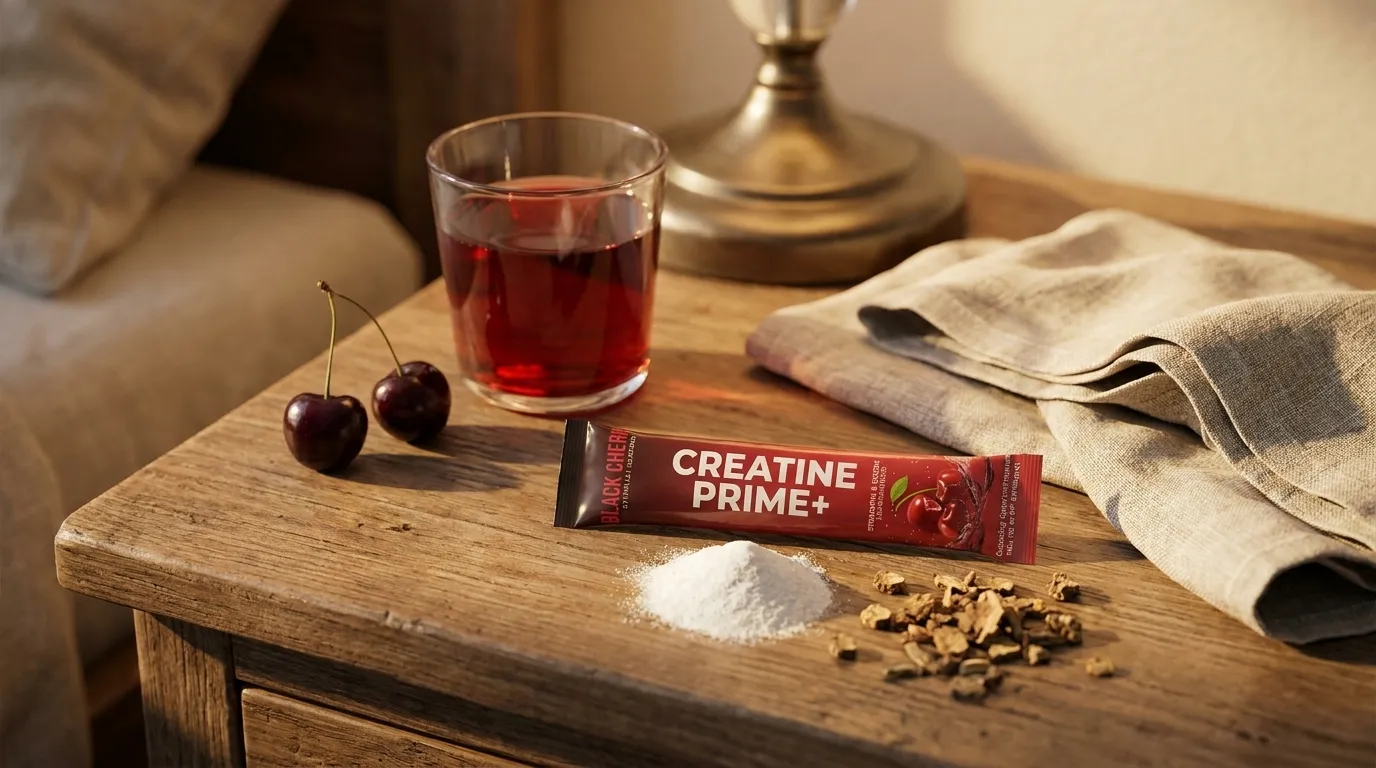
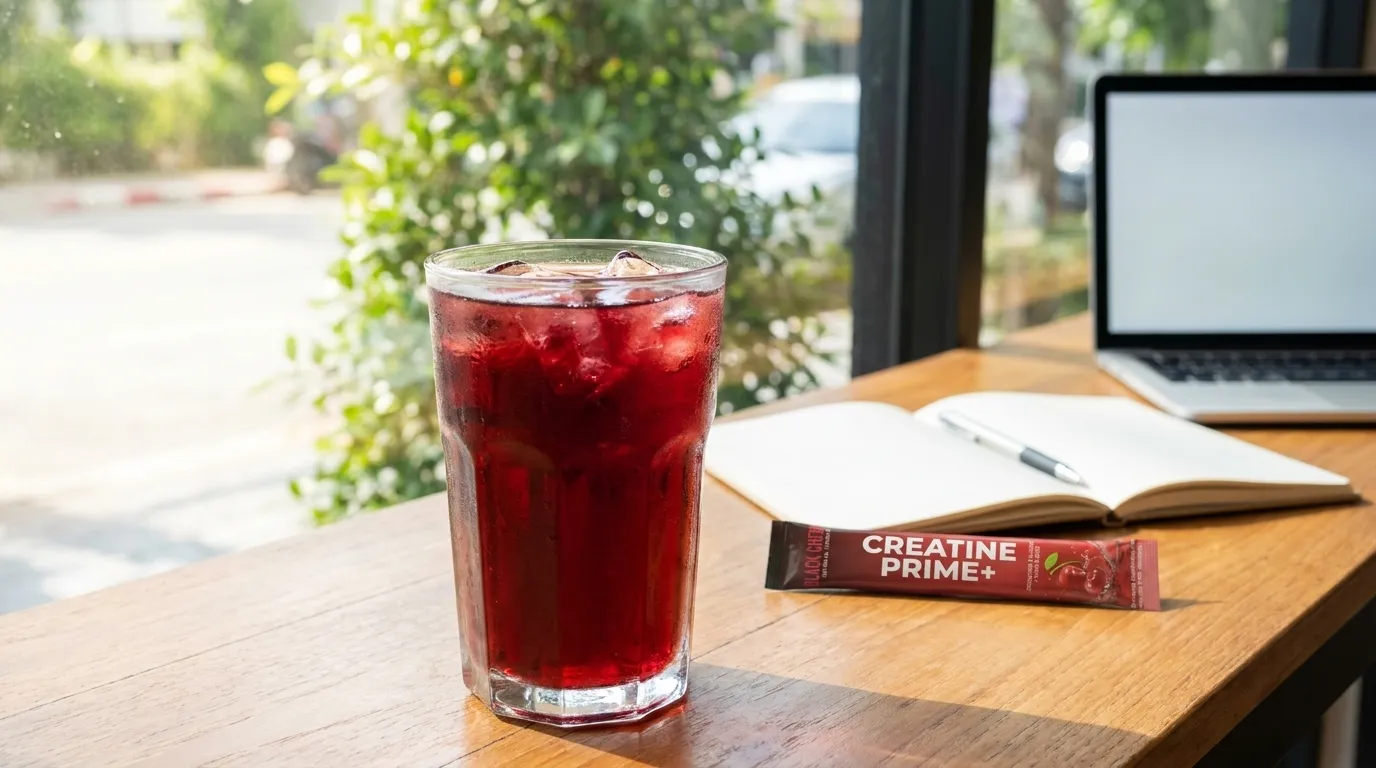
- How it goes down. This is where I'll happily brag a little. The single-serve stick packs mix instantly, no chalk, no clumps at the bottom of the glass. The most common review phrase about the Black Cherry is that it's easy to drink and not overly sweet — sorry, that's a customer line, but it matches my own kitchen-table test. "No mess, no measuring" is the actual appeal of the format.
A small honest caveat: creatine pulls a little water into muscle cells, so some people notice a pound or two on the scale early on. That's intracellular water, not fat, and it's a sign it's working. Drink your normal water and don't overthink it.
These statements have not been evaluated by the Food and Drug Administration. This product is not intended to diagnose, treat, cure, or prevent any disease. The research referenced above describes the individual ingredients — creatine monohydrate and rhodiola — and not the finished Creatine Prime+ product. Individual results vary. If you are pregnant, nursing, taking medication, or managing a health condition, talk with your healthcare provider before starting any new supplement.
Priya is a registered dietitian who reviews the science behind every ingredient we use. She spends her days turning clinical research into plain English.
Ready to try it for yourself?
Shop Superfoods Company