The 3:00 PM Cup That Doesn't Betray You: How Amazing Coffee K-Cups Actually Work

I used to keep a granola bar in my desk drawer for the 3:00 p.m. wall. You know the one — the moment your eyes go soft, the paragraph you're reading turns to static, and your hand starts wandering toward anything with sugar in it. For years that was my afternoon. As a dietitian, I found it a little embarrassing. I knew exactly why it was happening, and I still couldn't out-willpower it.
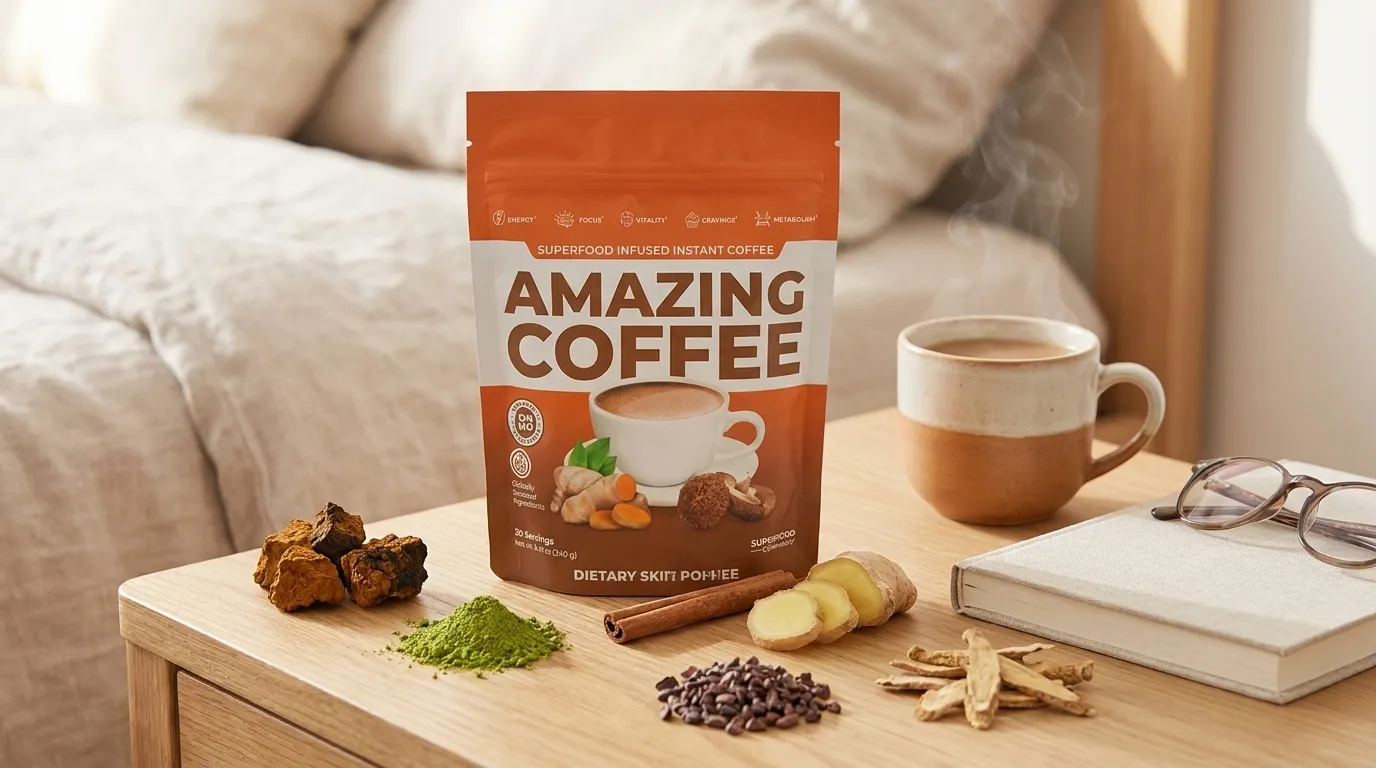
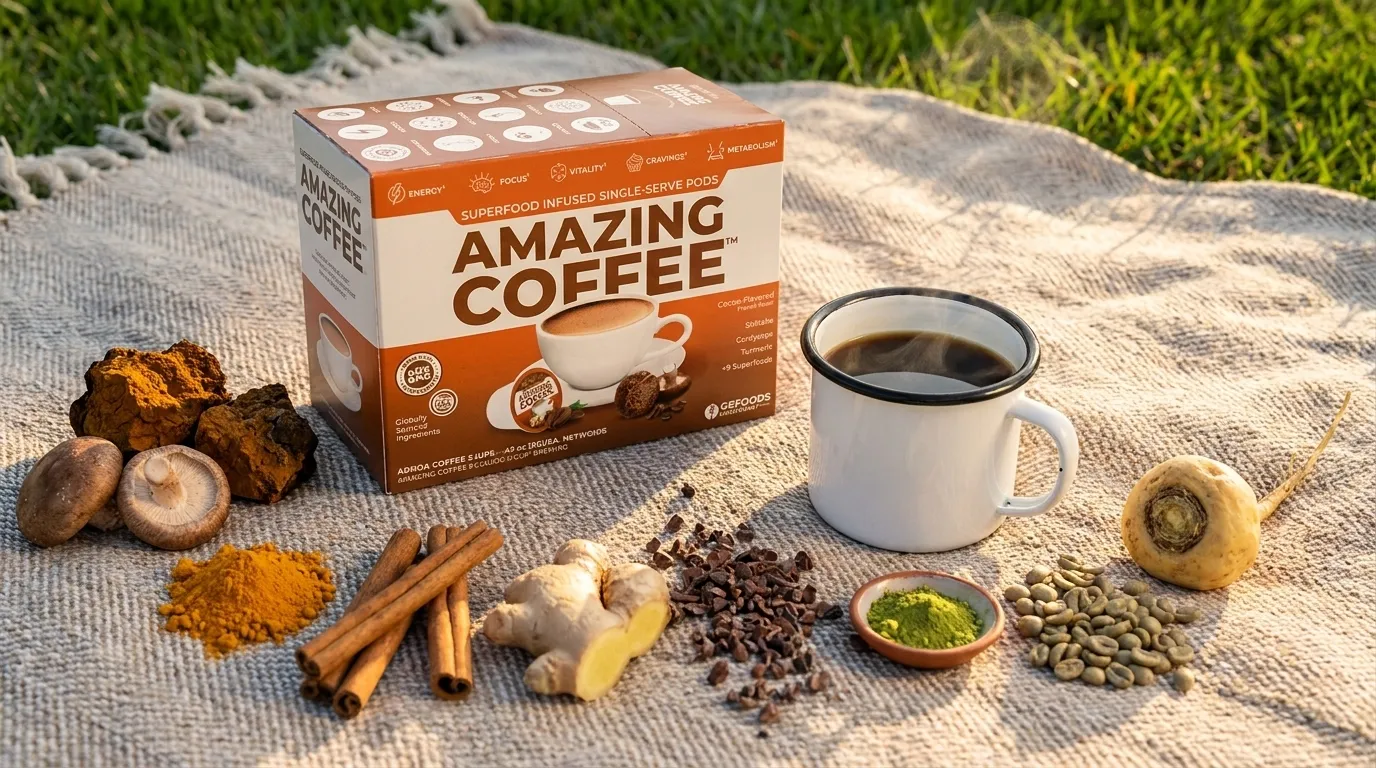
What actually fixed it wasn't willpower. It was rethinking what was in the cup. So let me open the hood on Amazing Coffee K-Cups and walk you through how the thing actually works — ingredient by ingredient, in plain English, with the honest caveats included. If you already bought a box, this is the "why it feels different" you were looking for. If you're still deciding, this is me showing my work.
First, the part that feels familiar: real caffeine, done gently
There's genuine coffee in here — French roast plus green (unroasted) coffee — so you get real caffeine. That matters because caffeine isn't hype; it's one of the best-studied compounds in the world. Caffeine works by blocking adenosine receptors in the brain, which reduces your perception of fatigue and bumps up alertness, vigilance, reaction time and attention. That mechanism is laid out in reviews like A review of caffeine's effects on cognitive, physical and occupational performance and confirmed in real-life settings in Effect of Caffeine on Attention and Alertness Measured in a Home-Setting, Using Web-Based Cognition Tests.
So why doesn't it feel like your usual jittery cup? That's the interesting part, and it's not one ingredient — it's a combination.
Why the energy is steady instead of spiky
The "no jitters, no crash" thing is the most common thing our reviewers say, in almost identical words. One put it simply:
"it doesn't give me the jitters" — and another: "more energy for a longer period of time."One reviewer even said they "stopped needing naps during the day." I don't take those lightly, so here's the mechanism I'd point to.
Matcha's L-theanine takes the edge off
There's matcha in the blend, and matcha is a concentrated green tea unusually rich in L-theanine, an amino acid that promotes a relaxed-yet-alert state. Paired with caffeine, L-theanine supports attention while smoothing the stimulant's sharp edge — that's the finding across trials summarized in Effects of Tea (Camellia sinensis) or its Bioactive Compounds l-Theanine or l-Theanine plus Caffeine on Cognition, Sleep, and Mood in Healthy Participants, and echoed in the 12-month matcha study on cognition in older adults. This is, mechanically, why "calm focus" is a real category and not just a marketing phrase.
Adaptogens that push back on fatigue
Two ingredients do quiet work on the fatigue side. Cordyceps, a functional mushroom, has been studied for improving oxygen utilization and tolerance to hard exercise — see Cordyceps militaris Improves Tolerance to High-Intensity Exercise After Acute and Chronic Supplementation — which can translate into less perceived effort during an ordinary day. And Panax ginseng is an adaptogen whose ginsenosides have been studied specifically for easing mental fatigue and supporting working memory, in trials like Antifatigue Effects of Panax ginseng C.A. Meyer: A Randomised, Double-Blind, Placebo-Controlled Trial. Maca root rounds it out; it's a Peruvian adaptogen studied for improving self-reported mood and energy in a randomized, placebo-controlled trial on black and red maca extracts.
None of these are stimulants. They don't spike you — which is exactly why they don't drop you. That's the whole point of the design.

The craving piece — where "I'm not hungry" comes from
This is the benefit that surprises people most. A reviewer told us, in a line I think about often:
"Most importantly, it suppresses my hunger."Others said things like "curbed my appetite" and — my personal favorite for its honesty — "my muffin top is shrinking daily."
I want to be careful here, because appetite is complicated and no coffee is magic. But there are real mechanisms worth knowing:
- Green coffee's chlorogenic acids. Green (unroasted) coffee is rich in chlorogenic acids, polyphenols that may slow glucose absorption and influence fat metabolism, supporting modest body-weight reduction — the subject of Chlorogenic acid in green bean coffee on body weight: a systematic review and meta-analysis of randomized controlled trials.
- Green tea catechins. Green tea catechins, especially EGCG alongside caffeine, modestly raise energy expenditure and fat oxidation, as reviewed in Effect of green tea catechins with or without caffeine on anthropometric measures.
- Cinnamon for steadier blood sugar. Cinnamon polyphenols may improve insulin sensitivity and slow gastric emptying, supporting more stable post-meal glucose (see the updated dose-response meta-analysis on cinnamon and glycemic control). Steadier blood sugar tends to mean fewer of those out-of-nowhere sugar cravings.
Put those together and the "I forgot to snack" effect starts to make sense. Modest is the operative word — think "the drawer granola bar lost its grip," not "appetite vanished."
The stuff working quietly in the background
A few ingredients you won't feel in the moment, but they're part of why the blend is more than caffeine with a marketing story:
- Cocoa flavanols. These improve blood-vessel function and cerebral blood flow — linked to better mood, less mental fatigue and supported cognition in trials like the Cocoa, Cognition, and Aging (CoCoA) Study. They also happen to be why it tastes like a mocha.
- Turmeric and ginger. Curcumin down-regulates inflammatory signaling (NF-kB), lowering markers like CRP, IL-6 and TNF-alpha per an umbrella meta-analysis, while ginger's gingerols and shogaols add antioxidant, anti-inflammatory activity.
- Shiitake and chaga. Shiitake is rich in beta-glucans that prime immune cells — daily intake improved immune markers and lowered CRP in a human trial in healthy young adults — and chaga contributes antioxidant polyphenols and polysaccharides, studied mostly in lab and animal models so far.
That last honesty note matters to me: some of these ingredients (chaga especially) have their strongest evidence in preclinical work, not big human trials. I'd rather tell you that than pretend every line item is bulletproof.
"Gentle on the stomach" — is that real?
A fair number of people who can't do regular coffee report they can do this. I won't over-claim a mechanism, but the pieces line up: cinnamon and ginger are traditionally settling, the cocoa and mushroom content dilute the straight-black-coffee intensity, and the whole thing is a smoother, rounder cup than an espresso hit. One reviewer summed up the daily ritual better than I could:
"This is my dessert and my liquid brain during the day."Another simply noticed the brain fog lift. That's the experience the science above is quietly underwriting.

How I'd actually use it (a dietitian's real routine)
- Brew one K-Cup on the standard 8-oz setting. Let it sit 60 seconds — the flavors round out as it cools slightly.
- Drink it before the slump, not during it. I aim for around 1:30–2:00 p.m., because the point is to head off the crash, not rescue yourself from one.
- Pair it with a little protein if it's replacing a snack — the coffee curbs the craving, but you still want real nourishment on the day.
- Keep total caffeine in mind. This is real coffee. If you're sensitive, make it your one afternoon cup rather than an add-on to three others.
That's the whole machine. Real caffeine for alertness, L-theanine and adaptogens to keep it steady, green coffee and catechins nudging metabolism and appetite, and a background crew of anti-inflammatory and immune-supporting ingredients that also happen to make it taste like cinnamon-chocolate. If you want to try the exact blend I've been describing, it's Amazing Coffee K-Cups.
These statements have not been evaluated by the Food and Drug Administration. This product is not intended to diagnose, treat, cure, or prevent any disease. The research cited above describes the individual ingredients studied in isolation, not this finished product, and individual results vary. If you are pregnant, nursing, taking medication, or managing a health condition, talk with your healthcare provider before adding a new functional coffee to your routine.
Priya is a registered dietitian who reviews the science behind every ingredient we use. She spends her days turning clinical research into plain English.
Ready to try it for yourself?
Shop Superfoods Company