What "Zen" Actually Feels Like: How Ashwavana Zen Relax Works, Ingredient by Ingredient

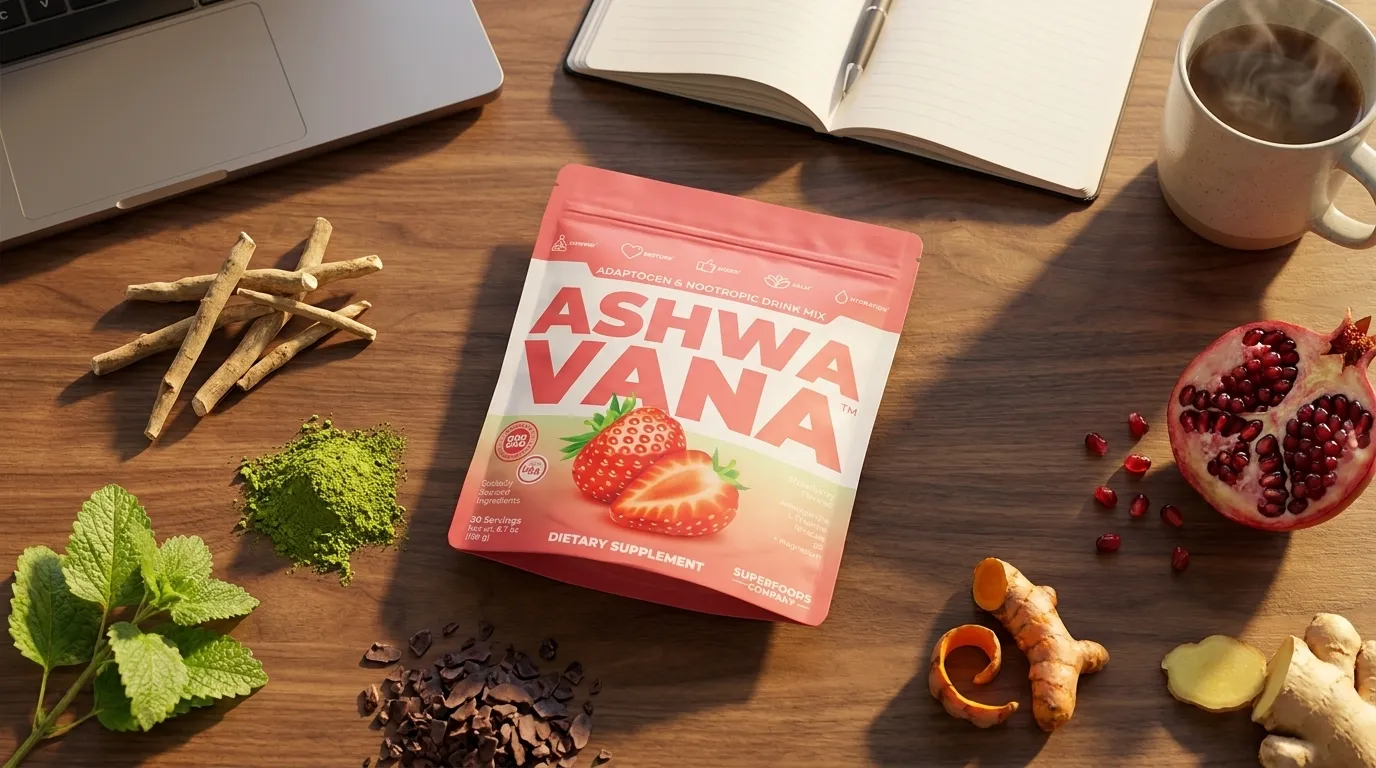
The first time I really noticed it was on a Tuesday that had no business being calm. Two deadlines, a stack of ingredient-review PDFs, and a phone that would not stop buzzing. I'd had my glass about forty minutes earlier — nothing dramatic happened, no wave, no fog. I just realized around 2 p.m. that my shoulders had come down from around my ears and I'd stopped bracing for the next email. That's the thing about this stuff: it doesn't announce itself. It just quietly takes the edge off.
I get asked constantly *how* Ashwavana Zen Relax actually works — is it the ashwagandha? The magnesium? Some placebo dressed up in a nice pouch? So let me do what I do all day at this job: take the label apart and walk through what each piece is actually doing, in plain English.
First, the "why now" — calm is having a moment for a reason
People aren't reaching for adaptogenic drinks because they're trendy (okay, partly). They're reaching for them because a lot of us are looking for a way to unwind that doesn't come in a wine glass. Alcohol consumption is falling as functional beverages surge in popularity , and a big part of that shift is people wanting something that helps them wind down and think clearly at the same time. One of our reviewers put it about as well as I could: it's a "healthier alternative to alcohol" that still marks the end of the workday.
What makes Zen Relax different from a generic "calm" powder is that it isn't leaning on one hero ingredient. It's a stack — adaptogens, an amino acid, minerals, and a few superfoods — chosen to hit stress from several angles at once. Here's how the important players work.
The adaptogens: teaching your stress system to chill out
Sensoril Ashwagandha — the cortisol dial
This is the backbone. Sensoril is a standardized Withania somnifera extract drawn from both the root and the leaf, and it works right on the stress axis — nudging GABA and serotonin activity while lowering circulating cortisol, the hormone your body pumps out when it's running on stress. The clinical record here is genuinely good, not hand-wavy: a dedicated clinical trial in people with generalized anxiety disorder, plus a systematic review and meta-analysis titled Effects of Ashwagandha Supplements on Cortisol, Stress, and Anxiety Levels in Adults, both point the same direction — lower cortisol, less anxiety.
Is it going to erase a genuinely awful day? No, and I'd distrust anyone who promised that. But "keeps my stress levels down" — a real phrase from our reviews — is exactly the kind of steady, undramatic effect the science supports.
RhodioPrime 6X Rhodiola — for the mental fatigue part
Rhodiola rosea is the adaptogen I recommend when the problem isn't just anxiety, it's the wrung-out, foggy feeling that comes with it. It helps the body resist physical and mental fatigue, and the concentrated RhodioPrime 6X extract we use has research behind it — including a randomized controlled trial in nursing students (a famously stressed, sleep-short group) showing it helped with mental and physical fatigue. Rhodiola is why several people describe not just calm but "focus and drive throughout the day." It takes the edge off without flattening you out.
L-Theanine and matcha: the calm-but-alert trick
If you've ever wondered why Zen Relax doesn't make you sleepy, this is the answer. L-theanine is an amino acid from tea leaves, and it increases alpha brain-wave activity — the pattern your brain shows during wakeful, eyes-open relaxation. It lowers perceived stress and salivary cortisol while *supporting* attention, so you get a settled feeling without the drowsiness. That's backed by trials like the Safety and Efficacy of AlphaWave L-Theanine study in adults with moderate stress.
We layer it with matcha — whole-leaf green tea that's naturally rich in both L-theanine and EGCG. Clinical work (there's a nice line of research on matcha's stress-reducing function) shows it lowers stress and modestly sharpens attention, and crucially, the theanine balances matcha's caffeine so you get steady focus instead of a spike. This is the mechanism behind one of my favorite reviews: "Keeps me calm and energized no jittery feelings and no crashes." That's not marketing luck. That's what theanine-plus-caffeine is supposed to do.
"Super chill and zen. I feel relaxed and in a good mood no matter how stressful the day gets."
Magnesium and Vitamin D3: the quiet foundation
These two aren't flashy, and that's the point — they're the nutrients a lot of us are simply short on. Magnesium is involved in nervous-system regulation and the stress response itself, and many adults don't get enough. Restoring it is associated with less stress, better mood, and better sleep; there's even a randomized trial showing magnesium (paired with B6) outperformed magnesium alone in people with low magnesium levels and severe stress. It also helps your body absorb other nutrients, so it's earning its spot twice over.
Vitamin D3 is the form that most effectively raises your blood levels, and low vitamin D tracks with low mood. A dose-response meta-analysis found supplementation modestly reduces depressive symptoms — with the clearest benefit in people who were deficient or already feeling low to begin with. That's an honest caveat worth repeating: if your levels are fine, don't expect fireworks. If they're low, this matters more.
Lemon balm and turmeric: the mood-and-inflammation corner
Lemon balm (Melissa officinalis) is an old, boring, reliable calming herb — I mean that as a compliment. Its rosmarinic acid supports GABA activity, and clinical trials show it reduces anxiety and improves sleep quality, including a placebo-controlled study in post-surgery patients. It's part of why "helping me sleep better too" shows up in our reviews.
Turmeric earns its place through curcumin, which lowers inflammatory and oxidative-stress pathways and nudges neurotransmitters; meta-analyses link it to reduced anxiety and depressive symptoms on top of its well-known anti-inflammatory effects. Chronic stress and inflammation feed each other, so calming one helps the other.
The supporting cast (they're not filler)
The rest of the blend does real work, mostly on circulation, recovery, and the body underneath the stress:
- Beet root — rich in dietary nitrate that your body turns into nitric oxide to relax and widen blood vessels; trials show it lowers blood pressure and improves blood flow.
- Grape seed extract — proanthocyanidins (OPCs) that support vascular function and cerebral blood flow, with trials in older adults showing better processing speed and attention.
- Ginger root — gingerols that raise antioxidant capacity and lower inflammatory markers like CRP, IL-6 and TNF-alpha in RCT meta-analyses.
- Shiitake mushroom — beta-glucans that prime immune cells; a randomized dietary trial found daily shiitake improved immune markers and lowered inflammation.
- Goji berry, pomegranate, chlorella, cinnamon — antioxidant-dense superfoods that round out the polyphenol and micronutrient profile.
So what does it add up to?
Here's how I explain it to friends: the adaptogens (ashwagandha, rhodiola) turn down the stress signal at the source. Theanine and matcha give you calm you can still think through. Magnesium and D3 fill in the nutritional gaps that make stress worse. And the superfoods work on the body underneath — blood flow, inflammation, recovery — so you're not just masking a bad day, you're supporting the system that handles it.
That's why the review that always sticks with me isn't the dramatic one. It's this: "I feel SO zen, I'm in a better mood, and it's helping me sleep better too." Calm, mood, sleep — three different mechanisms, one glass. When someone tells me "anxiety is completely gone which I can't believe," I don't think it's magic. I think it's a well-built stack doing several small things at once.
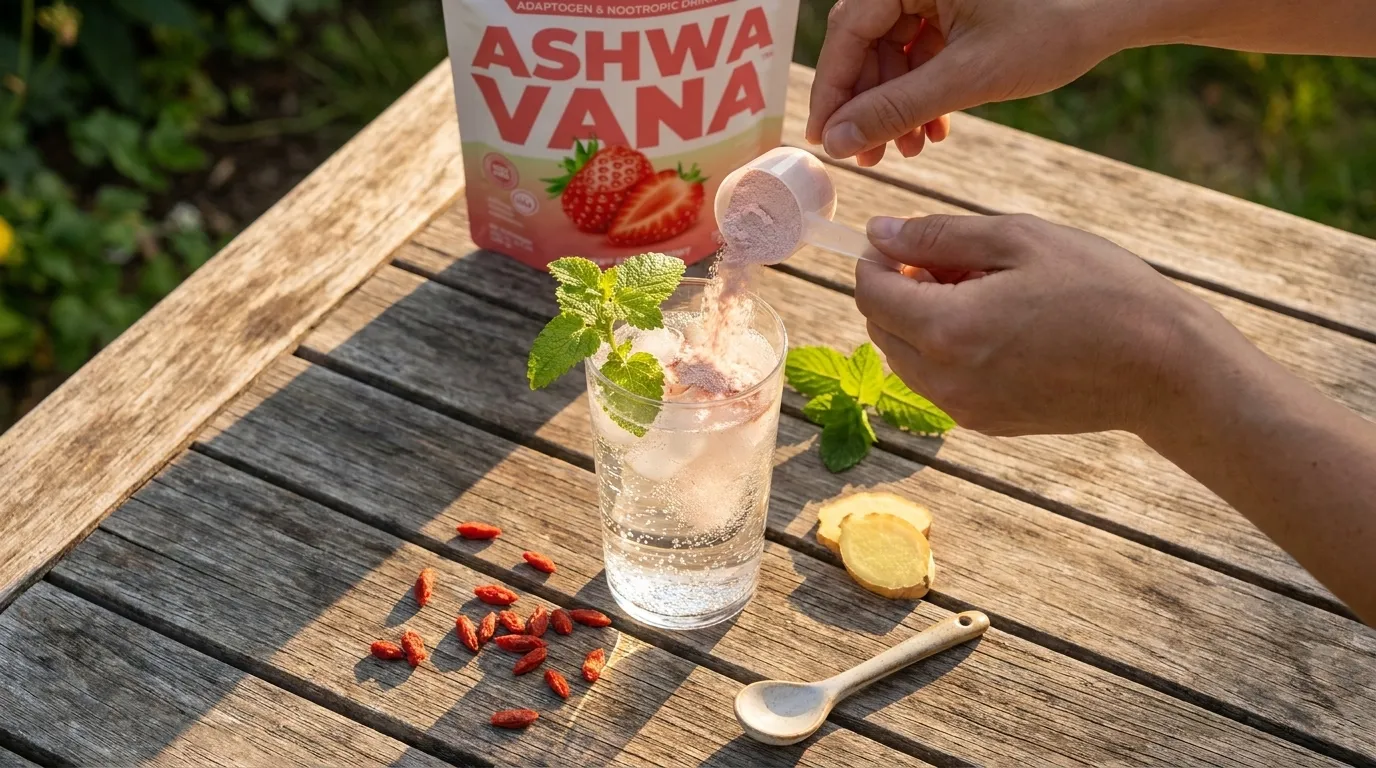
A practical note from someone who tests it daily: give it a couple of weeks. Adaptogens and magnesium build over time — the Tuesday I described wasn't day one, it was after the routine had settled in. Have it in the late afternoon or early evening if winding down is your goal, or mid-morning if you want the calm-focus version.
These statements have not been evaluated by the Food and Drug Administration. This product is not intended to diagnose, treat, cure, or prevent any disease. The research described above refers to individual ingredients and their studied effects, not to the finished Ashwavana Zen Relax product, and individual results will vary. If you're pregnant, nursing, taking medication, or managing a health condition, talk with your healthcare provider before adding any new supplement.
Priya is a registered dietitian who reviews the science behind every ingredient we use. She spends her days turning clinical research into plain English.
Ready to try it for yourself?
Shop Superfoods Company