Where a Gut-Health Fizzy Tablet Actually Goes (A Dietitian Walks You Through It)

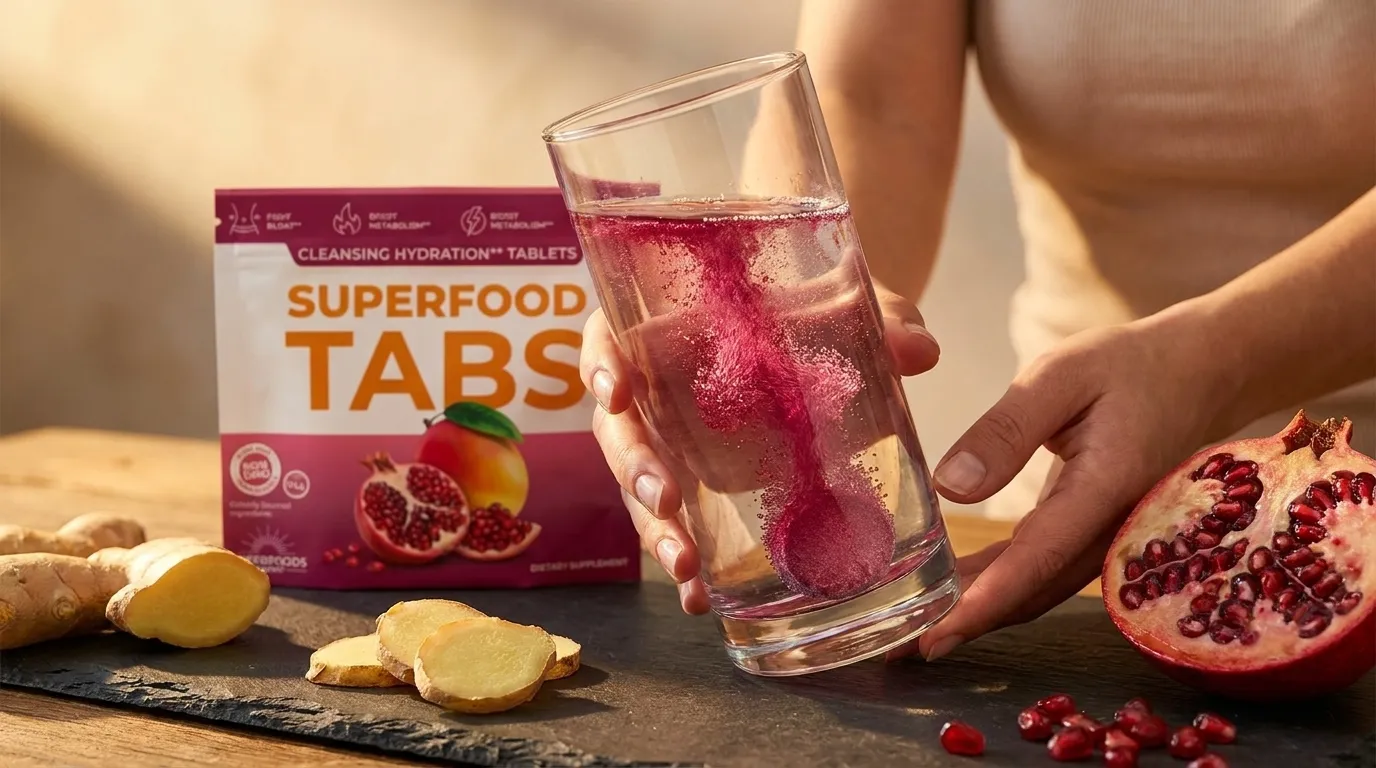
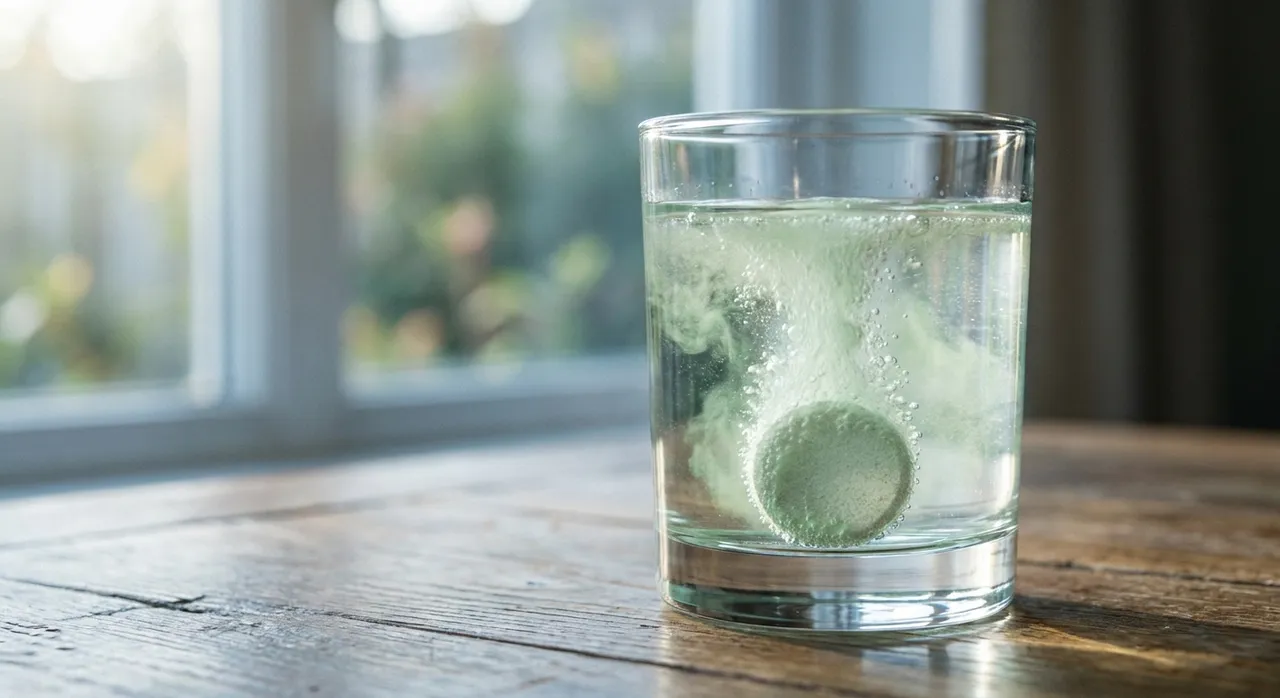
The first time someone asked me what actually happens to a fizzy tablet after it stops fizzing, I realized I'd been skipping the most interesting part. I was standing in my kitchen at 6:40 a.m., watching a tablet spin and hiss in a glass of water, turning it a cloudy pale green. Pretty. But my client's question was better: "Okay, but does any of that reach my gut, or am I just drinking expensive bubbles?"
Fair. Let me walk you through it the way I wish more labels would — from the glass to your gut, one honest step at a time.
Step one: the fizz isn't a gimmick
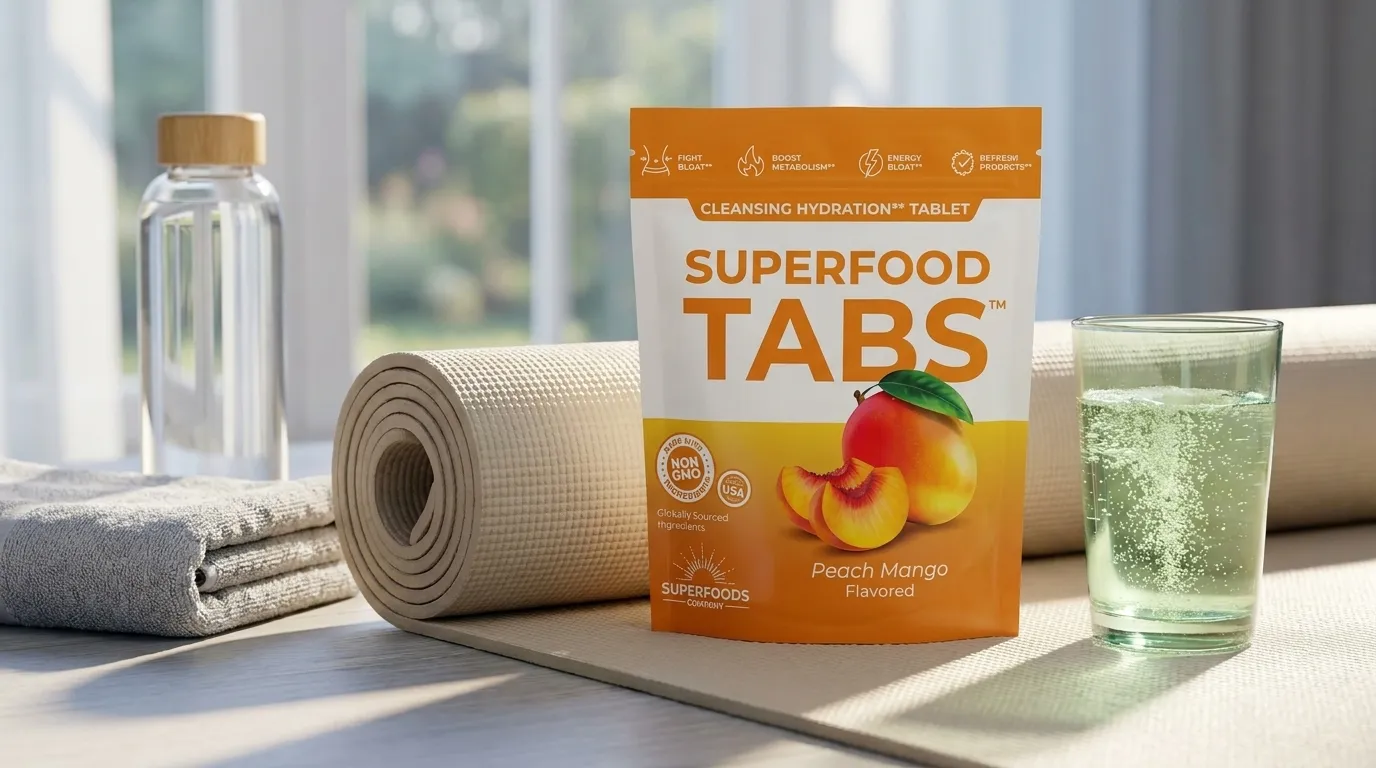
That satisfying hiss is a small, deliberate chemistry lesson. Superfood Tabs are an effervescent format, which means they carry an acid and a base that sit quietly dry inside the tablet and only react once they hit water. When effervescent tablets meet water, citric acid and sodium bicarbonate react instantly, producing carbon dioxide gas, and this reaction breaks down the tablet matrix and releases the active ingredients into solution.
So by the time the bubbles calm down, the tablet is gone — dissolved. That matters more than it sounds. A conventional pill has to disintegrate in your stomach acid before absorption can even begin, whereas an effervescent formulation arrives already in liquid form, letting nutrients reach the small intestine faster. You're not asking your gut to do the crushing and unpacking. You hand it a glass of already-dissolved ingredients.
Small aside: this is also why they're easier to actually take. One of our reviewers put it more bluntly than I ever could —
"I love these. I had to stop my subscription for a period of time but realized I enjoyed them so much, it became a non negotiable."A supplement you'll drink every day beats a "better" one gathering dust in a cabinet. That's not marketing. That's just how habits work.
Step two: the water is doing half the job
Here's the part people skip past on the way to the ingredient list. A gut-health fizzy tablet is, structurally, a reason to drink a full glass of water — and water is genuinely one of the most underrated tools for digestion.
Water is essential to the digestive process; it helps dissolve nutrients and supports nutrient transport, digestion, and waste removal. Skimp on it and things slow down. Dehydration can slow gut motility — the rhythmic contractions that move food through your system — which is where that heavy, sluggish, "full but not in a good way" feeling comes from. Fiber, in particular, works best paired with adequate water, which together help move waste through efficiently.
This is why so many people report the same quiet win: less bloating and a lighter middle. Some of that is the ingredients. But a chunk of it is simply that a fizzy tab makes a glass of water something you look forward to instead of a chore. As one reviewer said,
"no more sugar craving or want to eat snacks"— and steady hydration is a boring, real part of why cravings ease off.
Step three: what the superfoods are actually there to do
Now the ingredients. I won't pretend all sixteen are equally studied — they're not — so let me tell you which ones I'd point to first, and what the research actually says about each.
Ginger root — the one I'd defend hardest
If you care about digestion, ginger earns its spot. Its active compounds, gingerols and shogaols, act as 5-HT3 receptor antagonists and accelerate gastric emptying, which is the clinical way of saying they help your stomach settle and move things along. A comprehensive systematic review of 109 randomized controlled trials on ginger found it consistently relieves nausea. And in a GRADE-assessed meta-analysis of 27 randomized trials, ginger reduced body weight, BMI, waist circumference, and percent body fat — while separate meta-analyses report lower C-reactive protein and TNF-α, two markers of inflammation.
Pomegranate — the polyphenol workhorse
Pomegranate is one of the highest-antioxidant fruits there is, thanks to tannins, anthocyanins, and ellagic acid derivatives. But the gut connection is my favorite detail: it's rich in ellagitannins and punicalagins that your gut bacteria convert into compounds called urolithins, which support fat metabolism and lower oxidative stress. Clinical reviews link pomegranate to reductions in body weight and waist measures, and meta-analyses of randomized trials show meaningful drops in blood pressure via its effect on ACE activity.
Green tea & matcha — steady energy, no cliff
The 100mg of caffeine here comes from green tea leaf extract, and the catechins (especially EGCG) do double duty. A dose-response meta-analysis of RCTs found green tea extract lowered body mass, BMI, and body-fat percentage while raising adiponectin, and other meta-analyses show catechins lowering triglycerides and raising HDL in people carrying extra weight. In plain English: clean, steady energy — which reviewers describe over and over as the thing that finally clicked for them.
Ginseng & lemon balm — the stress-and-focus corner
Ginseng deserves a mention for the gut-weight link specifically: in a clinical study of obese middle-aged women, eight weeks of Panax ginseng produced significant reductions in body weight and BMI, with effects that varied by each woman's baseline gut bacteria. And a randomized, double-blind, placebo-controlled trial found ginseng significantly reduced mental and physical fatigue. Lemon balm rounds it out — its rosmarinic acid raises calming GABA tone, and a randomized placebo-controlled trial in surgical patients found 1.5 g/day cut anxiety by roughly 49%. Why does a dietitian care about calm? Because elevated cortisol drives abdominal fat storage and cravings for comfort food. Managing stress isn't separate from gut and weight goals — it's tangled up in them.
The rest of the blend — burdock root, milk thistle, beet root, chlorella, dandelion, elderberry, wheat grass, aloe vera, goji berry — rounds out the antioxidant and greens profile. I'll be honest: these have thinner human evidence than the headliners above, and I'd rather say that plainly than oversell it.
So — does it reach your gut?
Yes, in the sense that matters: the tablet dissolves fully, the ingredients enter solution before you ever swallow, and the water you drink alongside supports the motility and transport your gut relies on. What it isn't is a magic wand. The people who see the biggest results pair it with a daily habit and, usually, the rest of their eating and moving.
That said, the reviews are hard to ignore.
"They have helped me lose over 60 pounds and I have kept it off for over 2 years."Another:
"Lost 78 lbs and gained energy... What more could you ask for!"Individual results, obviously — but the through-line in almost every one is the same: they became a daily thing people genuinely looked forward to. That's the real mechanism nobody puts on a supplement fact panel.
How I'd actually use them
- Drop one tablet into 12–16 oz (about 350–475 ml) of cold water.
- Let it fizz all the way out — usually 60–90 seconds — until the water is cloudy and the bubbling stops.
- Drink it in the morning if you want the 100mg caffeine to do its job; earlier in the day if caffeine keeps you up.
- Follow with a second plain glass of water. Hydration is half the point.
If you're already a customer, the one tweak I'd suggest: stop treating it as a "supplement" and start treating it as your first glass of water of the day. That reframe is what makes it stick.
These statements have not been evaluated by the Food and Drug Administration. This product is not intended to diagnose, treat, cure, or prevent any disease. The research described above refers to individual ingredients studied on their own, not to this finished product, and results will vary from person to person. If you're pregnant, nursing, taking medication, or managing a health condition, talk with your healthcare provider before starting any new supplement.
Priya is a registered dietitian who reviews the science behind every ingredient we use. She spends her days turning clinical research into plain English.
Ready to try it for yourself?
Shop Superfoods Company