The Two-Ingredient Logic Behind Creatine Prime+ (and What It Actually Does)

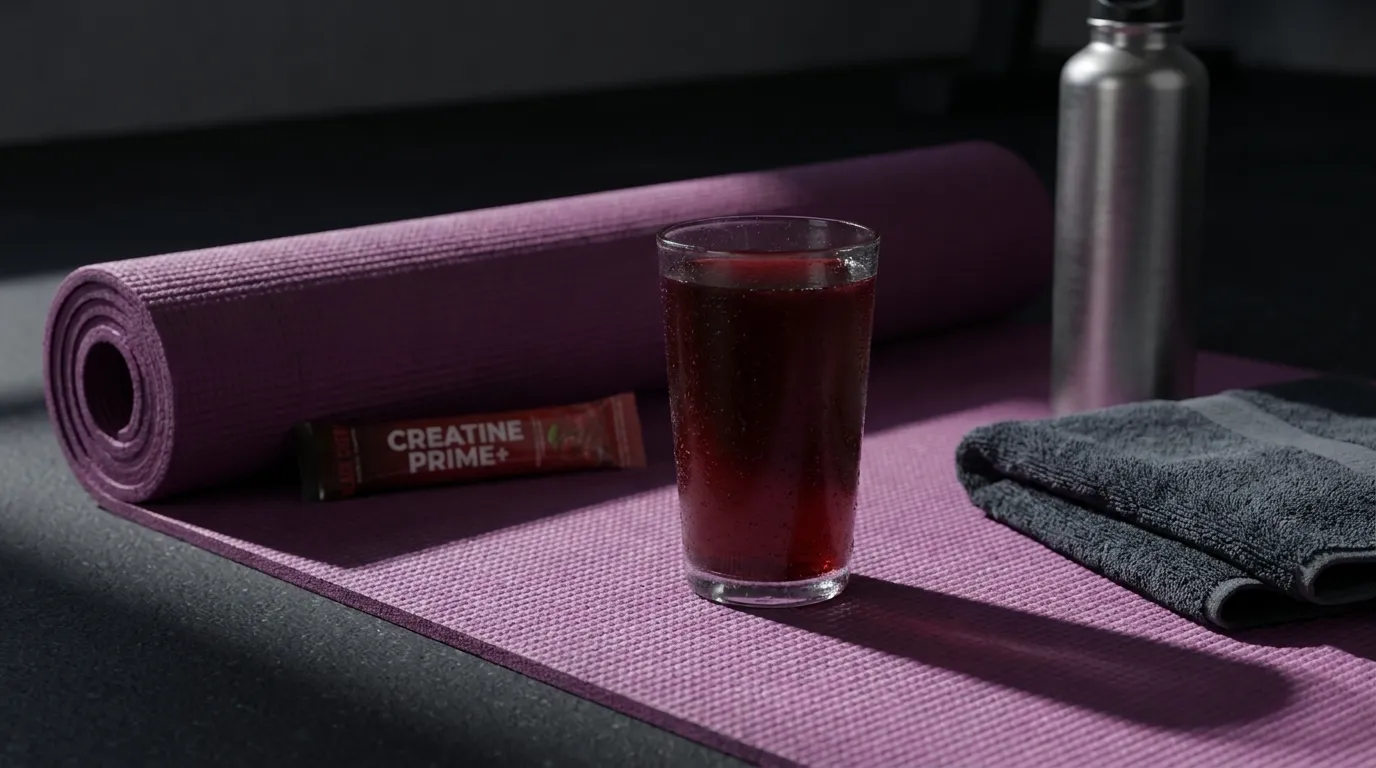
The first time I really noticed it was on a Tuesday, mid-afternoon, in that stretch where I usually reach for a second coffee I don't want. I'd had a stick pack of Creatine Prime+ that morning after a short lift. No jitters, no coffee, and yet the 3 p.m. wall just… wasn't there in the same way. That's the whole reason I'm writing this — because "it works" is a useless sentence unless I can tell you how.
So here's the honest, dietitian version. Two ingredients. Two jobs. And a couple of caveats I'd want a friend to know before spending money.
Start with the energy problem creatine is quietly solving
Your cells run on a molecule called ATP — think of it as a rechargeable battery that gets spent almost instantly during hard effort. Creatine's job is to help recharge that battery fast. It does this by topping up your muscles' phosphocreatine stores, which cells draw on to regenerate ATP during short, intense bursts. More phosphocreatine on hand means a bigger, faster energy buffer.
This isn't fringe science. Creatine monohydrate remains one of the few nutritional supplements for which research has consistently shown ergogenic benefits, and a number of potential health benefits have been reported from creatine supplementation. The International Society of Sports Nutrition position stand on creatine is about as close to a consensus document as this field gets, and it's the reason we chose monohydrate specifically — it's the most studied form and well tolerated for long-term use.
What that means in practice: this is a steady, background kind of energy. No caffeine, no jitters, no crash. One customer put it plainly, and it matches what I feel:
"I just feel steadier and more focused lately."
Why recovery feels "smoother"
The same phosphocreatine system that fuels effort also supports what happens after it. By keeping your ATP recharge system topped up, creatine helps your muscles handle and bounce back from training loads. For recovery specifically, the research is refreshingly boring in a good way: for recovery applications, a maintenance dose of 3–5 grams of creatine daily proves most effective, while loading phases can saturate muscle creatine stores faster but aren't necessary for recovery benefits.
That's a big reason we dose the way we do — one stick pack, once a day, no loading ritual required. Taking a lower daily maintenance dose of 3–5 grams achieves muscle saturation over a longer period, usually 3–4 weeks, and both methods ultimately lead to similar maximal muscle creatine stores — the loading phase simply gets you there faster. So if you're a few days in and not feeling superhuman, that's expected. Give it three to four weeks. One reviewer described the payoff this way: "I've noticed my recovery feels smoother after workouts."
The part people don't expect: creatine and your brain
Here's what changed my own thinking. Your brain is metabolically greedy — it burns a lot of energy for its size. Raising brain creatine stores gives neurons a larger energy buffer for demanding work like memory and attention. This is exactly the kind of thing that gets more relevant with age, as natural creatine levels and brain energy tend to decline.
Two systematic reviews I keep coming back to — Creatine and Cognition in Aging: A Systematic Review of Evidence in Older Adults and Effects of creatine supplementation on memory in healthy individuals: a systematic review and meta-analysis of randomized controlled trials — point in the same direction on memory and attention support. I'll be a realist here: the cognitive evidence is younger and messier than the muscle evidence. A critical perspective published in The Journal of Nutrition weighs the promise, proof, and public perception of creatine for cognition — which is a polite way of saying the science is promising but still catching up to the hype. I'd rather tell you that than oversell it.
Where it feels most tangible, based on our reviews, is the everyday version of "brain fog." As one customer said:
"My mind feels a bit clearer throughout the day."
For women specifically, this thread runs deeper. Creatine has been studied for building and preserving strength in older women (see Efficacy of Creatine Supplementation Combined with Resistance Training on Muscle Strength and Muscle Mass in Older Females), and for the mental-clarity side of the menopause transition, when hormonal shifts are linked to lower brain energy — the CONCRET-MENOPA trial and the review Creatine in women's health both explore this territory.

So why add rhodiola? Because energy isn't the same as resilience
Creatine handles the cellular fuel. But "handling a busy day" is also about how your stress system holds up — and that's a different lever. So we added RhodioPrime 6x, a standardized rhodiola extract.
Rhodiola is an adaptogen: a natural substance that helps the body resist and adapt to physical, mental, and environmental stress. Its active compounds do the work here. The main active compounds in rhodiola are rosavins and salidroside, which appear to enhance cellular energy production and help keep cortisol in a healthier range, supporting steady energy and focus throughout the day.
Where it earns its place is under fatigue and pressure. Studies have shown promise for rhodiola improving focus, concentration, speed of perception, mental work capacity and fatigue-related cognitive performance. The classic trial I cite most is the night-shift study — Rhodiola rosea in stress induced fatigue, run on physicians working overnight — plus the broader review Rhodiola rosea for physical and mental fatigue. For the deeper end of chronic stress and burnout, there's the open-label trial in people with prolonged fatigue symptoms. On mechanism, rhodiola appears to enhance the activity of neurotransmitters including serotonin, dopamine, and norepinephrine, which may contribute to its impact on focus and energy.
Put simply: creatine tops up the battery; rhodiola helps you not drain it as fast when the day gets loud. A reviewer summed up the combined effect better than my clinical notes do — "Feels like my body handles busy days a little better."
How I'd actually use it
- One stick pack a day, most days. Consistency beats timing. Saturation is the goal, and that takes a few weeks.
- Post-workout or with a meal is fine — but honestly, the "best" time is the time you'll remember. I do mornings.
- Mix it in cold water. The Black Cherry dissolves fast; one customer noted it "mixes instantly and tastes better than I expected," and another liked that it's "easy to drink and not overly sweet."
- Stay hydrated. Creatine pulls a little water into muscle, so drink your normal amount of fluids.
The stick-pack format is genuinely the part I'd have been skeptical of and now won't give up — "no mess, no measuring, which I appreciate." Tub creatine has a way of turning into a chalky chore. This doesn't.
If you're weighing whether to start, I'll leave you with the most honest review of the bunch, because it's the expectation I'd want you to have: "It's been a small but real help for me." That's the register I'd set your dial to — not a transformation, but a steady, noticeable assist. You can read more or grab a box of Creatine Prime+ whenever you're ready, and the ingredient science I linked above is all published and searchable if you like to check my work.
These statements have not been evaluated by the Food and Drug Administration. This product is not intended to diagnose, treat, cure, or prevent any disease. The studies referenced above investigate individual ingredients — creatine monohydrate and rhodiola — and do not represent research on the finished Creatine Prime+ product. Individual results vary. If you are pregnant, nursing, taking medication, or have a medical condition, talk with your healthcare provider before starting any supplement.
Priya is a registered dietitian who reviews the science behind every ingredient we use. She spends her days turning clinical research into plain English.
Ready to try it for yourself?
Shop Superfoods Company